NetDocuments: AI's Context Crisis Solved? [New Org]
AI is ravenous for context. NetDocuments just announced a bold new strategy to feed it.

A prosecutor who quit over alleged political pressure is now running for Congress. Can one person truly fix what ails Washington?
AI is ravenous for context. NetDocuments just announced a bold new strategy to feed it.

Another week, another Department of Justice filing that reads less like seasoned legal strategy and more like a rambling pronouncement from a gilded ballroom. The question on everyone's mind: who's actually writing these things?
This week's Legal AI Beat articles reveal intensifying legal scrutiny on AI, particularly concerning privacy and the foundational principles of AI development. Expect next week to bring further fallout from major trials, escalating privacy concerns, and a deepening divide in legal AI adoption and regulatory preparedness.
Your AI morning briefing for May 17, 2026 — the top stories you need to know.
Forget the legal AI hype for a second. The real work is getting your data in order. 2026 is the year legal professionals must prioritize data readiness, treating it as a critical spring project.
LLM agents are poised to supercharge mass surveillance by connecting anonymized data to real people. Meanwhile, the Elon Musk vs. OpenAI trial enters week two with explosive revelations.
The gavel has fallen on the high-stakes Musk v. Altman trial, leaving a lingering question about AI's custodians. Yet, the founder machine keeps churning, propelled by SpaceX's IPO ambitions.
The Patent Trial and Appeal Board is tightening rules on claim construction consistency, while a bill to shift the Copyright Office to the Executive Branch gains momentum. The CJEU also weighed in on publisher rights.
When a court steps in to build the challenger's case for patent ineligibility, is that justice, or judicial overreach? Polar Electro thinks the latter, and they've taken their fight to the Supreme Court.
The first domino has fallen. Snap, YouTube, and TikTok are settling a landmark lawsuit accusing them of fueling student addiction and costing public schools millions. But the battle isn't over.
Growth capital can be a powerful accelerant, but for beauty brands, it might be a double-edged sword. Is the pursuit of profit erasing the very essence that made these brands attractive in the first place?
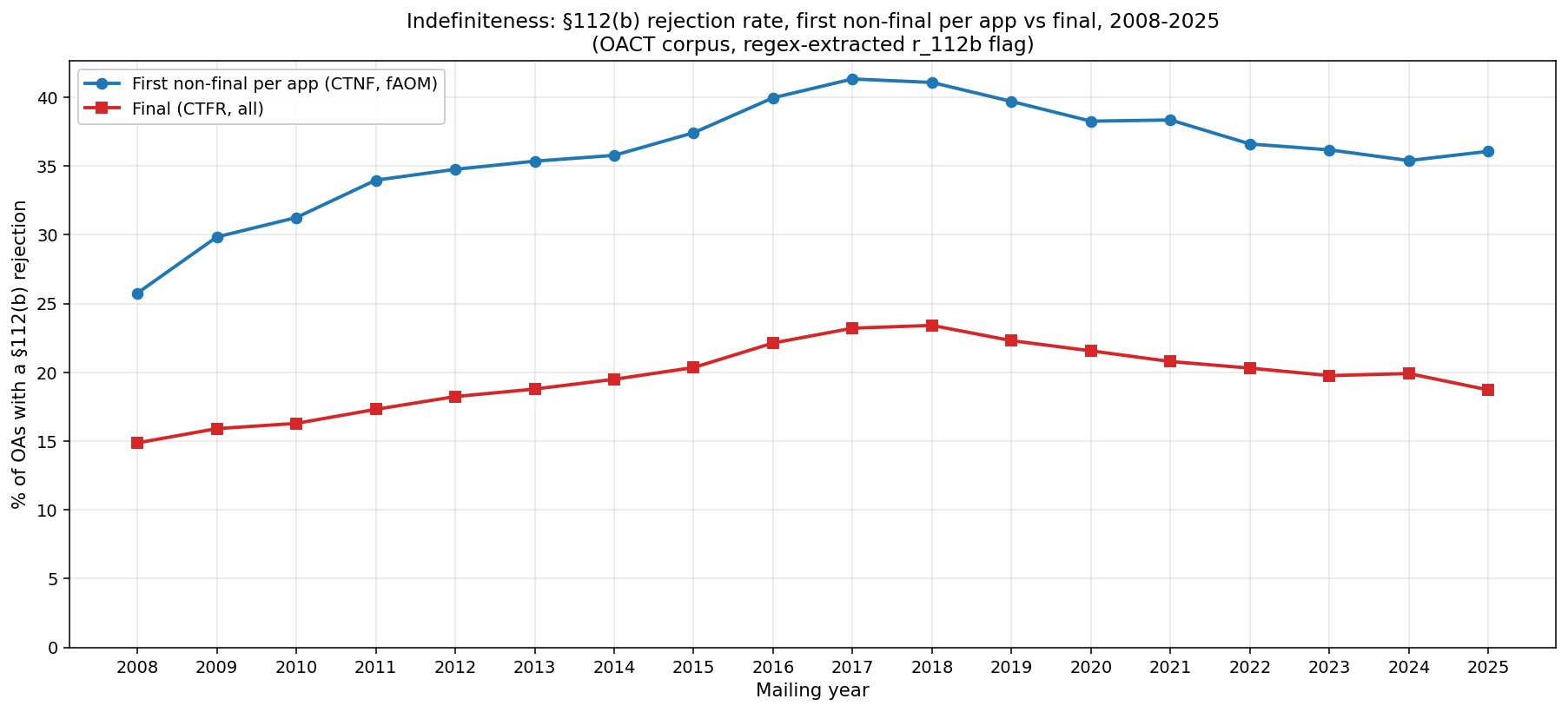
Examiners are flagging patent application issues in predictable ways. But the data tells a story of two very different types of problems.