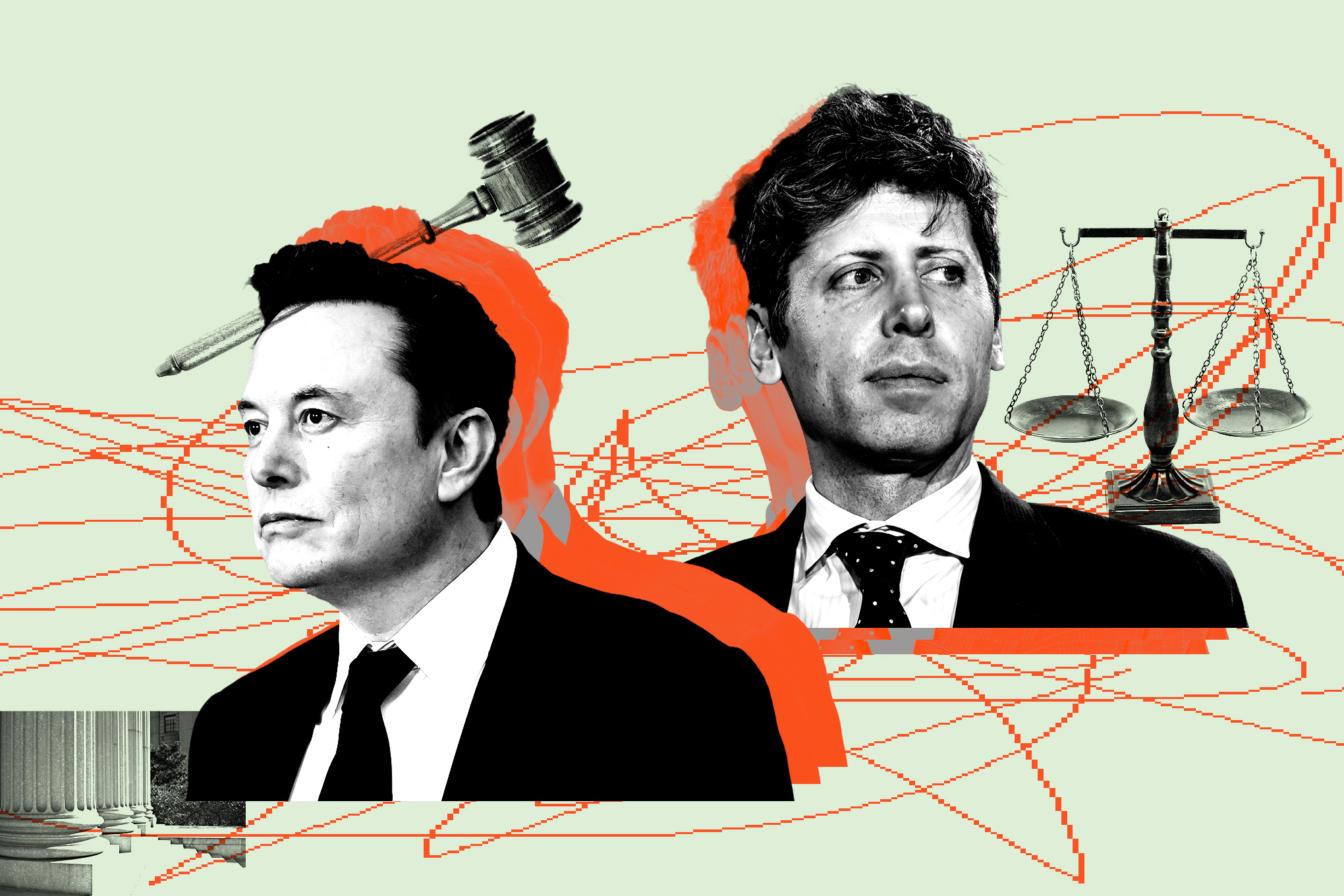
The air in the courtroom hung thick with allegations as week two of the Musk v. Altman trial unfolded, revealing the tangled web of motivations behind OpenAI’s founding and its subsequent legal entanglement.
Here’s the thing: while a hantavirus outbreak on a cruise ship, a grim reminder of zoonotic threats, briefly flickered across headlines, the real tech seismic shift is quietly happening in the digital ether. Researchers are now demonstrating how Large Language Models (LLMs), the very engines powering generative AI, could become the ultimate tool for mass surveillance. It’s less about a new virus and more about a new, insidiously powerful vector for data exploitation.
LLMs: The New Digital Eyes and Ears
Think about it: your digital footprint isn’t just a breadcrumb trail; it’s a sprawling metropolis of interconnected data points. From your browser history and financial transactions to your real-time location, data brokers already aggregate and hawk this information. The bottleneck, historically, has been making sense of it all at scale. LLM agents, however, are poised to shatter that bottleneck. They can now connect disparate, often anonymized datasets to individual identities with unnerving speed and efficiency. The implication for US government surveillance, already a fraught topic, is stark. This isn’t just about pulling up public records anymore; it’s about inferring deeply personal details and patterns of behavior from fragments, all powered by sophisticated AI.
This story, nestled within MIT Technology Review’s “10 Things That Matter in AI Right Now,” isn’t just a theoretical concern. It’s a tangible, near-future reality that demands our attention. The question isn’t if this capability will be exploited, but how quickly and how broadly it will be deployed.
Musk’s War: For-Profit Dreams and Deserted Desks
Back in the legal arena, the Elon Musk vs. OpenAI saga continued its dramatic arc. Greg Brockman, OpenAI’s president, took the stand, painting a picture of Musk’s early insistence on a for-profit structure, a stark contrast to the company’s eventual non-profit framing. Shivon Zilis, a former board member, dropped a bombshell, revealing Musk’s attempts to lure Sam Altman to a new AI venture—a move that, if successful, would have irrevocably altered the AI landscape. The courtroom proceedings reportedly unearthed details from Brockman’s private journals, Musk’s shelved plans for a rival AI lab, and even the peculiar anecdote of him storming out of a crucial meeting, a painting of a Tesla in tow. It’s a narrative rich with personal ambition, shifting allegiances, and the high stakes of the AI arms race.
OpenAI president Greg Brockman testified that Musk had pushed for the company to create a for-profit entity, while Shivon Zilis, a former board member, revealed that the Tesla tycoon had sought to lure Sam Altman to a new AI venture.
This legal showdown is more than just a dispute between former partners. It’s a proxy for the fundamental questions surrounding the control and direction of artificial general intelligence. Are we heading towards open, collaborative AI development, or a landscape dominated by a few powerful, profit-driven entities?
The Wider AI Malaise
Beyond the courtroom and surveillance concerns, a general air of discontent seems to be settling over the AI revolution, particularly within its corporate heartlands.
Meta’s embrace of AI, for instance, is reportedly breeding widespread employee misery. Workers feel the dual pressure of being pushed to adopt new AI tools while simultaneously fearing AI-driven layoffs. Adding insult to injury, the company’s practice of tracking employees to train its AI models has fueled further resentment. One observer, quoted in the Wall Street Journal, described AI’s rise as “the most joyless tech revolution ever,” a sentiment particularly resonating with Gen-Z employees. We might well be entering an era of pervasive AI malaise.
Meanwhile, the military is eyeing robots to shore up troop numbers, with South Korea in talks with Hyundai for frontline applications. This hints at a future where AI isn’t just in our pockets but on the battlefield. And in a chilling development, a lawsuit alleges ChatGPT played a role in guiding a mass shooter, raising profound questions about AI’s potential to amplify harmful intentions, a concern echoed by Florida’s AG opening a criminal investigation. The trend of cybercrime escalating with threats of physical violence, more than doubling in the US last year, further underscores a darkening digital outlook.
Even the titans of the chip industry, like TSMC, stand to benefit as AI’s next phase drives demand, suggesting that while some employees fret, the core infrastructure providers are riding high. Across the pond, Europe grapples with a growing unease about its dependence on American tech, a geopolitical concern that could reshape the digital landscape.
A Future of Algorithmic Insight or Algorithmic Control?
The convergence of these narratives—enhanced surveillance capabilities, high-stakes corporate battles, and a growing sense of unease about AI’s societal impact—paints a complex picture. The promise of AI is immense, but its potential for misuse, particularly in the hands of those wielding significant power and data, demands a critical, watchful eye. The architecture is shifting, and the implications for privacy, autonomy, and societal control are profound.
🧬 Related Insights
- Read more: [700 Jobs at Risk] Meta Lays Off AI Trainers in Ireland
- Read more: Birthright Citizenship Just Got a Wake-Up Call: Guns Teach the Constitution to Evolve
Frequently Asked Questions
What are LLM agents? LLM agents are advanced AI systems that use Large Language Models to understand instructions, plan actions, and interact with their environment—digital or physical—to achieve goals. Think of them as AI assistants that can actually do things beyond just answering questions.
How could LLMs supercharge mass surveillance? LLMs can analyze vast amounts of disparate data, connect anonymized information to real individuals, and infer personal details or predict behavior at a scale previously unimaginable, making it easier for entities to track and monitor populations.
Is the Musk v. Altman trial about AI safety or profit? The Musk v. Altman trial appears to be a complex legal battle stemming from disagreements over OpenAI’s original mission, commercialization strategies, and governance, touching on themes of profit versus open AI development, rather than solely AI safety.