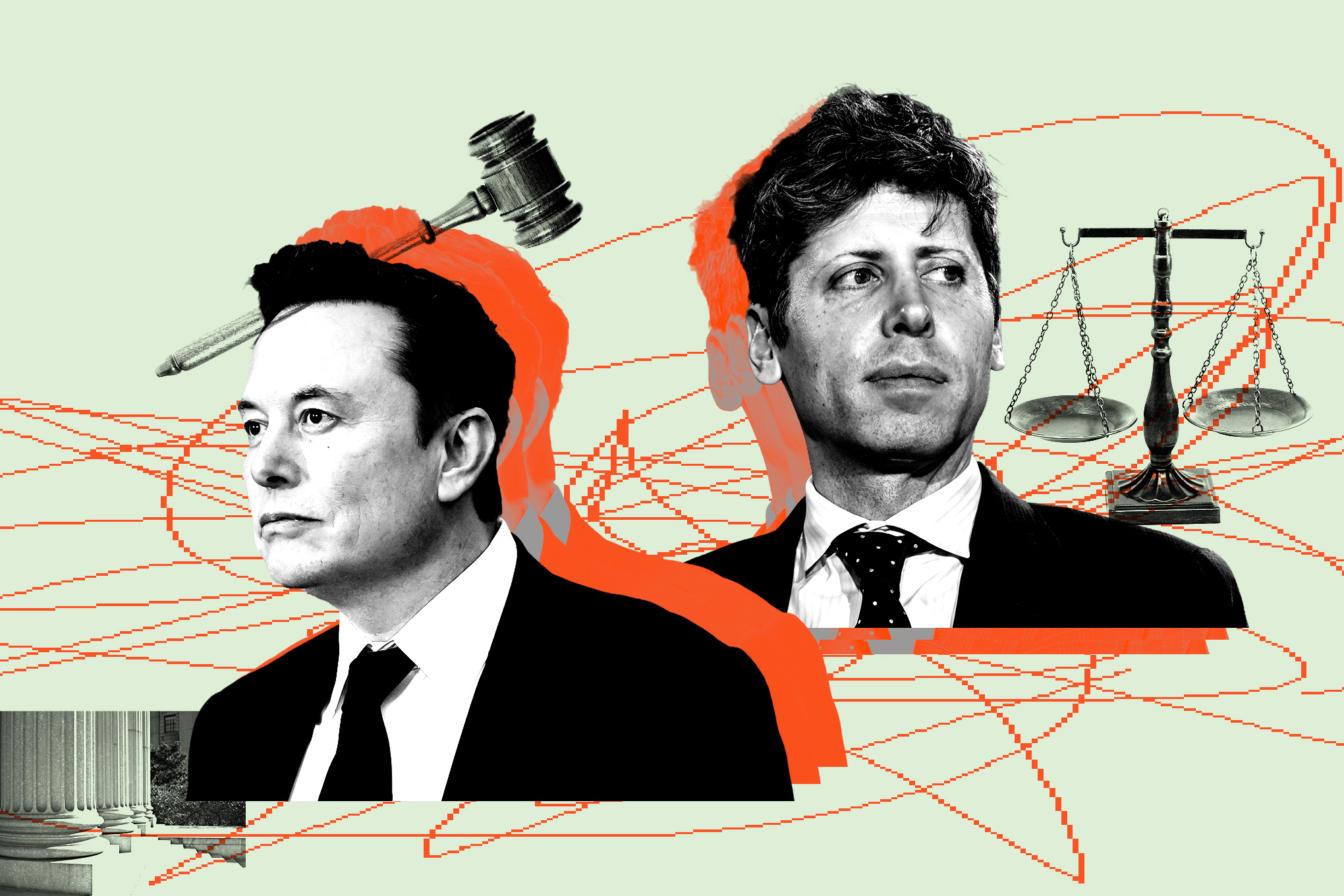
So, here we are. The Musk v. Altman circus is packing up, leaving a jury to sort through the mudslinging and, let’s be honest, the pure theater of it all. Forget the legalese for a second. What does this actually mean for anyone trying to use an AI chatbot for their TPS reports, or a lawyer using AI to sift through discovery documents? It means uncertainty, plain and simple. Because if this trial throws OpenAI’s corporate structure into question, it ripples through every single product they’ve rolled out, every partnership they’ve inked, and frankly, every dollar invested by folks hoping for a piece of that sweet, sweet AI pie.
This whole debacle boils down to who’s telling the truth: Was Sam Altman a greedy suit who sold out a noble nonprofit dream for billions, or is Elon Musk just a sore loser trying to kneecap a competitor to his own nascent AI venture? OpenAI’s legal team wants you to believe Musk’s only goal is sabotage, pointing to his shiny new xAI venture as Exhibit A. His lawyers, however, hammer home the idea that Altman and his pals broke faith, transforming a public good into a personal goldmine. It’s a classic tale of ambition versus ideals, with the future of potentially the most impactful technology humanity has ever created hanging in the balance.
Is This Just About Money, Or Ideals?
Musk, bless his heart, came out swinging claiming he was the champion of AI safety, the one true guardian of humanity’s digital destiny. Now, with his lawyers finishing their arguments, the narrative has morphed. Altman, reportedly grilled about his own alleged knack for bending the truth and his personal investments in companies that also happen to do business with OpenAI – yes, like that little nuclear energy play where he owns a third – fought back. He painted Musk not as a white knight, but as a control freak, a megalomaniac who saw AGI as his personal kingdom to rule. Remember that donkey’s ass trophy? A bit much, even for Silicon Valley.
During his closing statement, Molo put Altman’s credibility on the stand again. “Imagine that you’re on a hike, and you come upon one of those wooden bridges that you see on a trail, and it’s over a gorge,” he said. “A woman standing by the entry to the bridge says, ‘Don’t worry—the bridge is built on Sam Altman’s version of the truth.’ Would you walk across that bridge?”
It’s a heck of a metaphor, isn’t it? And Altman’s crew returned fire, suggesting Musk “never cared about the nonprofit structure,” his real motivation being “winning.” Oddly enough, Musk himself was MIA for the final act, jetting off to China with President Trump while his legal battle raged. Priorities, I guess.
Why Does This Matter for OpenAI’s IPO?
Here’s where it gets really interesting for the venture capital sharks and the everyday folks watching from the sidelines. If the judge sides with Musk, that $1 trillion IPO OpenAI is reportedly eyeing? Poof. Gone. Or at least, severely complicated. Suddenly, all those promises about developing AI for humanity’s benefit might have to be re-evaluated, and the financial scaffolding holding up that lofty valuation could crumble. Meanwhile, Musk’s xAI is getting ready to blast off, potentially as part of SpaceX, aiming for an eye-watering $1.75 trillion valuation. It’s a race, alright, and the courtroom drama is just the latest pit stop.
Altman’s legal team insists there was never a solid promise to keep OpenAI a strict nonprofit, a claim that directly contradicts Musk’s core argument. They point to Musk’s own attempts in 2017 to establish a for-profit arm as evidence he wasn’t a purist from day one. It’s a messy legal and ethical tangle, where intent, promises, and the sheer pursuit of power and profit collide.
The jury now holds the fate of OpenAI’s corporate structure, and by extension, a significant chunk of the AI landscape, in their hands. It’s a high-stakes game of chicken, and the outcome will undoubtedly shape how AI technology is governed and commercialized for years to come. And for the rest of us? We wait, hoping for clarity, but bracing for more chaos.
🧬 Related Insights
- Read more: The FAA’s 21-Month ‘Temporary’ Drone Ban Near ICE Is a Constitutional Disaster Waiting for Court
- Read more: Patent Strategy Shifts: Tech Inventions Now Key to Business Method Protection
Frequently Asked Questions
What is the main accusation against Sam Altman?
Elon Musk’s lawsuit accuses Sam Altman and OpenAI of breaking their founding promise to operate as a nonprofit and benefit humanity, instead prioritizing profit and personal gain through a restructured corporate entity.
Will this trial affect the price of OpenAI stock?
The jury’s advisory verdict is non-binding, but if the judge rules in Musk’s favor, it could significantly impact OpenAI’s planned IPO valuation and its future stock performance due to structural changes.
Did Sam Altman lie to former OpenAI executives?
Musk’s lawyers presented testimony from former OpenAI executives and board members claiming Altman had a history of lying, which was a central point in their argument questioning his credibility.