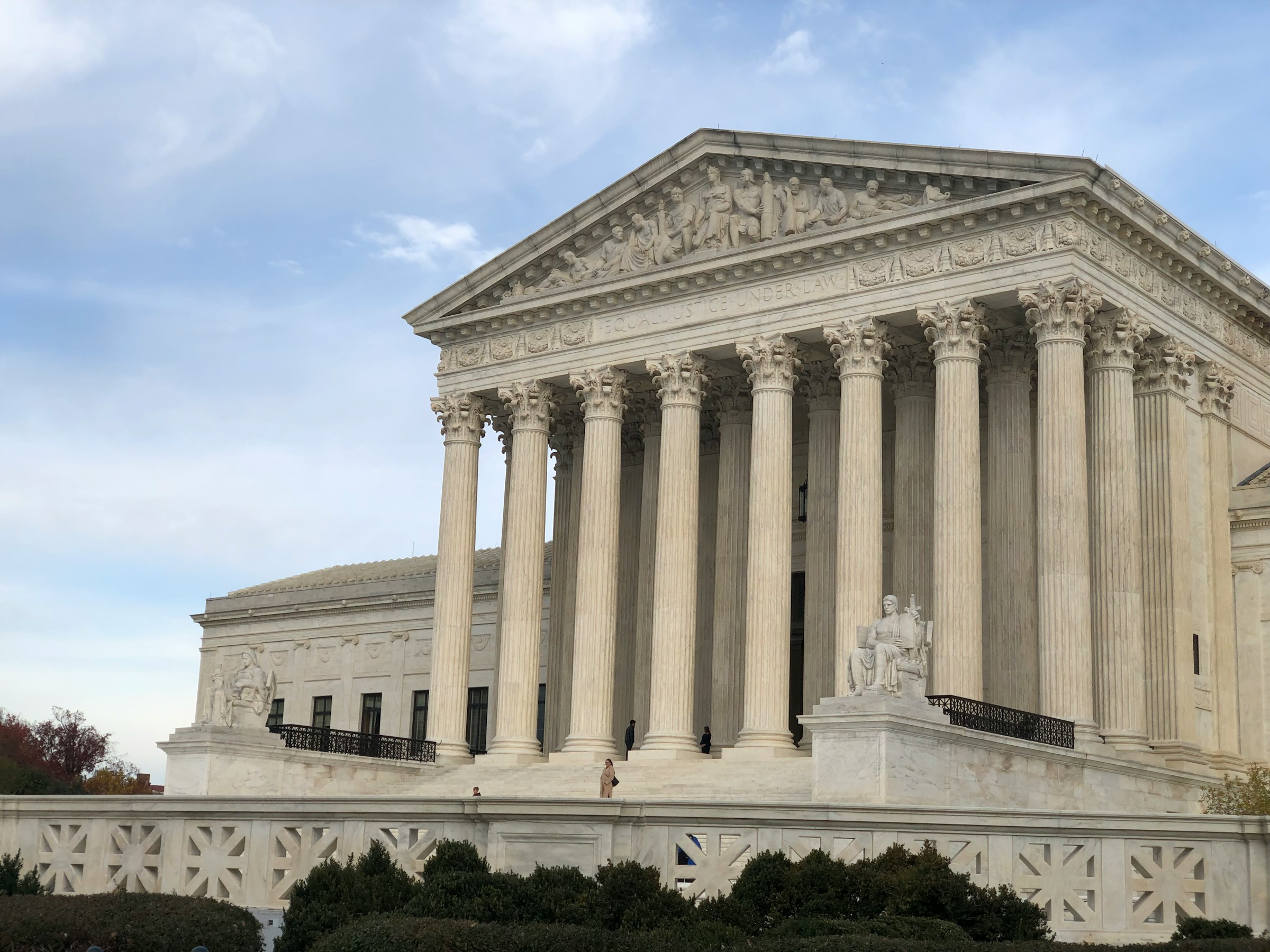
Here’s the thing: the Supreme Court just tossed out a huge chunk of the Voting Rights Act, and the logic behind it… well, it’s the kind of logic that makes you question if someone actually looked at a calculator.
Wednesday’s decision in Louisiana v. Callais effectively gutted Section 2 of the act. This isn’t just a minor tweak; it’s a clear signal that the court is paving the way for, and frankly enabling, racist gerrymandering. The court’s argument? That it’s now somehow “racist to remedy racism.” It’s an insult to the very history and purpose of the Voting Rights Act itself, an affront to American history, and, most pointedly, an affront to mathematics.
Is This Decision Mathematically Sound?
Louisiana, a state where roughly 30 percent of the population is Black, currently has six congressional districts. Of those, two are drawn to be majority-Black districts. That’s 33.3 percent of the districts reflecting a 30 percent population share. Pretty straightforward math, right?
Apparently not for this Supreme Court.
They’ve declared this map unconstitutional. The predictable outcome? Louisiana will almost certainly redraw its maps to include only one majority-Black district. So, a statewide Black population of 30 percent will see its voting power shrink to a mere 17 percent of the districts. This isn’t just a statistical anomaly; it’s a deliberate reduction of representation.
Now, voting isn’t just about race, obviously. Different people have different views, and no single demographic is a monolith. But let’s not pretend we live in some colorblind utopia. Especially when, as the original reporting points out, around 83 percent of Black American voters identify as Democrats. This alignment is particularly pronounced in Southern states like Louisiana, a state with a deeply complicated, and often brutal, racial history.
The Voting Rights Act’s provisions addressing racial discrimination weren’t born in a vacuum. They arose from centuries of systemic inequity, a history that the current court seems all too eager to overlook.
The Civil War, Civil Rights Movement, VRA, affirmative action — all of these things are part of a long struggle to correct the broken math of our society. 33 percent is not the same as 30 percent, but it’s a damn sight closer to it than 17 is.
The VRA’s Section 2 was intended to bring that number closer to a 1:1 ratio, to ensure proportionality. It was part of a larger, interconnected effort to correct the deeply ingrained “broken math” of American society.
A Deep-Diving Look at Historical Math Disparities
Think about it: the very foundation of the U.S. Constitution was built on a mathematical sleight of hand. States got electoral power based on population, but the very people who boosted those populations—enslaved individuals—couldn’t vote. And in the slaveholding South, that “three-fifths compromise” further warped representation, all while the Senate’s structure—still a hangover we deal with today, with tiny states having disproportionate power—favored certain states over others. Even after the Civil War, with constitutional amendments meant to ensure equality, states found inventive ways—poll taxes, literacy tests—to keep Black Americans from the ballot box. The VRA was the heavy-handed remedy.
The United States has undeniable racial disparities in wealth, education, income, and health. These aren’t accidents; they’re systemic. The Civil Rights Movement aimed to dismantle these systems. The conservative reaction, unfortunately, often seems to be a defense of the status quo, a rehashing of outdated ideas rather than an update of a flawed system.
There was a time, not so long ago, when the Supreme Court seemed to be nudging America’s moral compass in the right direction. But the drift rightward has been undeniable. And the court’s unwillingness to grapple with statistical evidence of systemic bias—as seen in the McCleskey v. Kemp case concerning the death penalty—is a recurring theme.
In McCleskey v. Kemp (1987), a study showed a clear racial pattern in the application of the death penalty. Black defendants were far more likely to receive a death sentence when their victims were white. The court’s response? Statistics might show a likelihood of bias, but not definitive proof. This was a legal sidestepping of math, a retreat from the concept of disparate impact, and it set a precedent that continues to influence how courts view statistical evidence of racial discrimination.
This latest ruling on the Voting Rights Act feels like a continuation of that same pattern: a discomfort with, or outright rejection of, the evidence presented by numbers. It’s a legal system struggling to reconcile its pronouncements of equality with the statistical reality of persistent inequality.
The core issue here isn’t just about Louisiana’s districts; it’s about a fundamental philosophical divide on the court regarding how to address—or whether to address—historical and ongoing racial inequities. By dismissing the clear mathematical disparities, the court is not just making a legal error; it’s actively undermining the very principle of equal representation that the Voting Rights Act was designed to protect.
🧬 Related Insights
- Read more: Law Firms: Hackers’ Goldmine in the Ransomware Era
- Read more: [Surprise Origin] Supreme Court Inscriptions’ Hidden History
Frequently Asked Questions
What is Section 2 of the Voting Rights Act? Section 2 of the Voting Rights Act prohibits voting practices or procedures that discriminate based on race, color, or membership in a language minority group. It’s designed to prevent practices that result in the denial or abridgment of the right to vote on account of race or color.
How does Louisiana v. Callais affect voting districts? The Supreme Court’s decision in Louisiana v. Callais weakens Section 2 of the Voting Rights Act, making it harder to challenge voting maps that dilute the voting power of minority communities. This decision allows states to create congressional districts that may not adequately represent minority populations, potentially leading to fewer majority-minority districts.
Will this ruling make it harder for Black voters to elect representatives of their choice? Yes, experts and civil rights advocates argue that weakening Section 2 of the Voting Rights Act will make it more difficult for Black voters and other minority groups to elect representatives of their choice. By reducing the ability to challenge racially discriminatory redistricting, the ruling could lead to the creation of more gerrymandered maps that dilute minority voting strength.