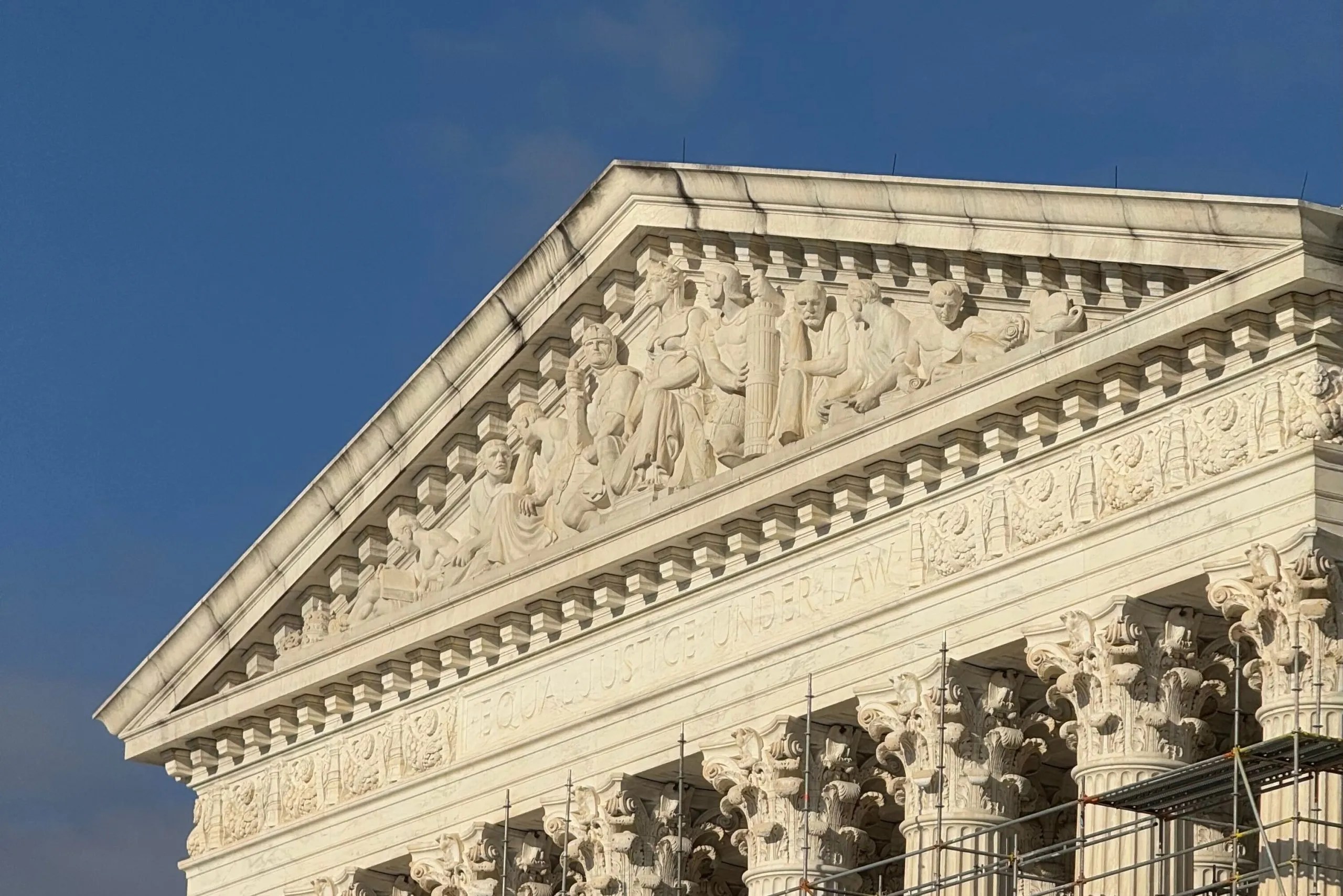
Chief Justice Charles Evans Hughes scribbles a note from the bench—‘I rather prefer ‘Justice the Guardian of Liberty’’—and just like that, the Supreme Court’s east pediment gets its motto.
We’re dropping right into 1932, mid-court session maybe, as this exchange with Justice Willis Van Devanter seals a phrase that’s stared down at Washington for nearly a century. Zoom out: these inscriptions, front and back of the iconic building, aren’t pulled from dusty tomes of Roman law or Jeffersonian wisdom. No. They’re modern inventions, cooked up in the 1930s by architects and judges racing to finish the place before FDR’s New Deal steamrollered everything else.
Who Really Wrote ‘Equal Justice Under Law’?
Look, every Supreme Court junkie knows the west entrance blazes “Equal Justice Under Law” toward the Capitol—pure Americana. But its origin? Cass Gilbert’s firm, the architect tapped in 1929, slapped it on a drawing dated July 7, 1931. Not a jurist. Not a philosopher. An architectural sketch.
Earlier versions? Placeholders like “LEX ET JUSTITIA” (Law and Justice, yawn) or “EQUAL AND EXACT JUSTICE,” yanked straight from Thomas Jefferson’s 1801 inaugural. Gilbert might’ve dreamed it up himself—we don’t know—but it stuck. And here’s the kicker: Hughes nixed Latin for everything, pushing English so the common folk could actually read it. Accessibility over elitism, in a building meant to scream permanence.
That choice alone tells you something. The Court, fresh off the Lochner era’s wreckage, wanted symbols that landed with everyday Americans, not Latin scholars.
But the east side’s tale is juicier. Original pitch: “Equal Justice is the Foundation of Liberty.” Solid, right? Hughes rejects it outright. His handwritten gem—possibly dashed off during oral arguments—wins Van Devanter’s curt “Good (W.V.D.).” Boom. “Justice the Guardian of Liberty” it is. No ancient source traced. Zero literary roots. Just two justices playing wordsmith.
“I rather prefer ‘Justice the Guardian of Liberty.’” — Chief Justice Charles Evans Hughes, in a 1932 note to Justice Willis Van Devanter
Why English Over Latin? Hughes’ Public Play
Hughes could’ve gone full classical—pediments scream for it. Think Parthenon vibes. But no. He demanded English for the “sake of public accessibility.” Smart move in 1935, as the building opens amid Depression-era grit. These weren’t ivory-tower flourishes; they were billboards for democracy.
Fast-as-you-can context: The Supreme Court Building Commission picked Gilbert after a beauty contest of sorts. Construction dragged through Hoover’s crash, finished under Roosevelt. Inscriptions? Final tweaks before the marble gleamed in ‘35. They’ve since “symboliz[ed] the American heritage of democracy and the rule of law,” as the official line goes.
Yet here’s my sharp take, the one you won’t find in SCOTUSblog footnotes: this reeks of 1930s PR spin. Post-Scopes Trial, post-Dred Scott echoes, the Court needed rebranding. What better way than bespoke mottos framing justice as both equal and liberty’s bodyguard? It’s not hypocrisy—it’s savvy marketing. Echoes today’s tech giants etching “Don’t be evil” on campuses, only to pivot when profits call. History rhymes: symbols outlive their makers’ intent.
Picture it. 1929 drafts floating Latin platitudes. 1931: boom, English punch. 1932: Hughes’ bench-note veto. By 1935, the building’s done, inscriptions carved, and the Court moves in—first time with its own digs, no more Capitol basement. Market dynamic? Supreme Court real estate was booming symbolically, staking claim amid executive-branch bloat.
Data point: Gilbert’s firm iterated fast—three major phrase shifts in three years. Efficiency born of deadline pressure, not divine inspiration. And no one’s pinned exact origins. Gilbert? Hughes? Some junior drafter? The ambiguity fuels the myth.
Does This Change How We See SCOTUS Today?
Hell yes—or at least it should tweak your lens. These phrases aren’t eternal truths; they’re 20th-century ad copy, tested and approved like A/B variants. Bold prediction: in our meme-trial era, with SCOTUS approval scraping 40% (Gallup, 2024), expect challengers to weaponize this. “Guardian of Liberty? Since when?” tweets incoming.
Historical parallel? Think Lincoln’s Gettysburg Address—hastily penned, no direct classical lift, yet it redefined union. Hughes’ scribble did the same for judicial aura. But skepticism check: if origins are this pedestrian, why the pedestal treatment? Corporate hype alert—the Court’s own narrative polishes them as sacred, glossing the backroom tweaks. We’re not buying it wholesale.
And the building itself? Marble facade facing Capitol—equal justice to Congress. Rear to the people—liberty’s guard. Poetic symmetry, sure. But engineered, not fated.
Single sentence punch: Symbols lie when unchecked.
Deeper dive: Van Devanter, the “Good (W.V.D.)” guy, was a Taft appointee, building commission vet. Hughes? Progressive Republican, FDR foe. Their collab birthed phrases enduring Watergate, Bush v. Gore, Dobbs. Market impact? These words anchor bar exam lore, law school merch, endless op-eds. Valuation? Priceless in cultural capital.
Yet peel back: no Jefferson for the east side (ironic, given his west borrow). No Cicero. Just American improvisation. In a polarized 2024, that’s refreshing—or damning, depending on your bench.
What if they’d stuck with Latin? Elitist relic. English made it populist. Hughes got that right.
Why Does SCOTUS Inscription History Matter Now?
Because myths underpin power. SCOTUS leans on these portals—west for equality, east for liberty—to burnish legitimacy. But knowing they’re Gilbert’s brainchild strips the varnish. It’s like learning the Constitution’s Preamble wasn’t chiseled by angels; delegates haggled it overnight. Humanizes the institution at a time when trust craters.
My unique insight: This foreshadows modern legal tech’s symbol wars. AI ethics boards etching “Fairness First” on HQs—same game. Will they age into irony like Lochner-era mottoes? Bet on it. Critique the spin: SCOTUStoday’s piece romanticizes without calling out the made-up-ness. We’re skeptics here at Legal AI Beat—facts first, halos optional.
**
🧬 Related Insights
- Read more: EFF to Supreme Court: Cisco Built China’s Torture Machine—Time to Pay Up
- Read more: Professors Slam PTAB’s ODP Twist in Baurin — Citing Overlooked CAFC Wins
Frequently Asked Questions**
What is the origin of ‘Equal Justice Under Law’?
It came from architect Cass Gilbert’s firm in a 1931 drawing, not a famous thinker—earlier drafts used Latin or Jefferson quotes.
Who chose ‘Justice the Guardian of Liberty’?
Chief Justice Hughes proposed it in a 1932 note to Justice Van Devanter, overriding ‘Equal Justice is the Foundation of Liberty.’
Why English instead of Latin on SCOTUS building?
Hughes pushed for public accessibility—no classics required.