Look, we all thought AI was going to be the big platform shift, right? And it is! But sometimes, the really seismic tremors happen in places you least expect, in industries that seem, well, a bit… analog. This whole Standard Essential Patent (SEP) kerfuffle? It’s turning into one of those places, and frankly, it’s fascinating.
Everyone expects the world of Standard Essential Patents (SEPs) to just work. You develop a crucial piece of technology that becomes part of a global standard – think 5G, Wi-Fi, or even how your smart TV talks to your streaming service – and if someone else uses it, they pay you a fair and reasonable royalty. Simple. Except it’s not. Not even close.
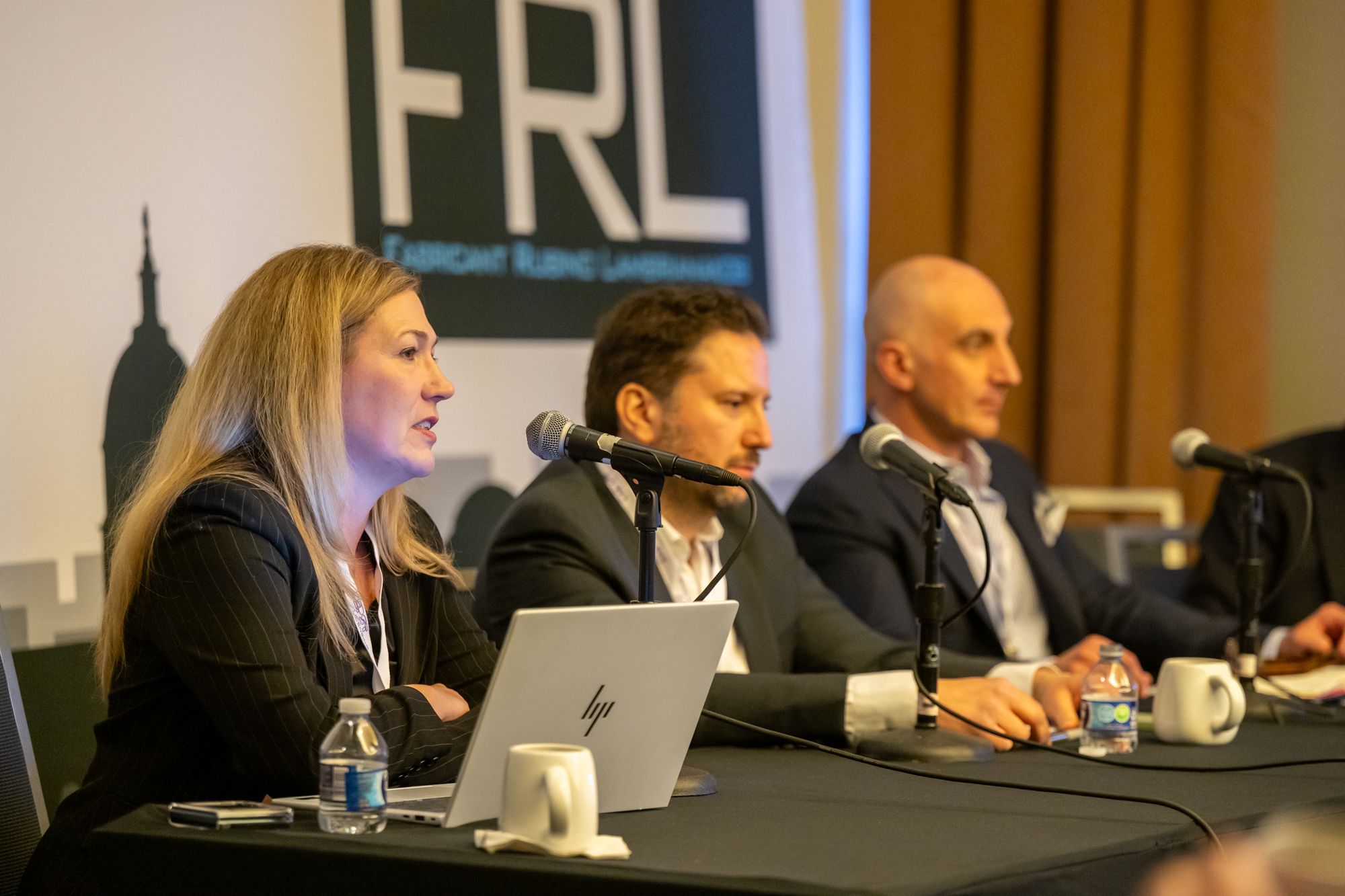
At IPWatchdog LIVE 2026, a panel of heavy hitters—Shawnna Yashar, Ali Allawi, Matteo Sabattini, and David Yurkerwich—drew back the curtain, and what they revealed wasn’t a unified theory of FRAND (Fair, Reasonable, and Non-Discriminatory licensing), but a global ecosystem groaning under the strain of vastly different judicial interpretations and negotiation tactics.
When Standards Clash: The Interoperability Conundrum
The whole point of standards is to make things work together. It’s the digital equivalent of agreeing that everyone will drive on the right side of the road, or that all electrical plugs will fit a standard socket. SEPs are the patents that enable this interoperability. And the organizations that set these standards? They’ve got policies, sure, but those policies are deliberately fuzzy on the commercial nuts and bolts. This isn’t an accident; it’s by design to let the market sort out the money. But oh boy, is the market struggling.
It’s like building a universal translator app, but every country has a different price for English, French, and Mandarin, and some countries won’t let you speak at all unless you pay an upfront ‘language tax’ that keeps changing.
A Global Game of FRAND Hot Potato
This is where things get really spicy. The global FRAND rate-setting landscape is less a landscape and more a minefield. For years, the UK courts, especially after the Unwired Planet v. Huawei decision, have been a go-to spot. Why? Because they’ve shown a willingness to set global FRAND terms. Think of it as London saying, ‘We’ll set the worldwide toll for this highway, and everyone better pay up.’
Germany, however, is a different beast. Historically, German courts leaned heavily on injunctions—basically saying, ‘Stop using the tech if you don’t pay!’ But they’re shifting. Now, Munich courts are increasingly digging into the economics of FRAND rates themselves. And under the Huawei v. ZTE framework, if you want to be considered a ‘willing licensee’ in Germany, you have to put your money where your mouth is. Post security, show consistent negotiation, don’t just declare willingness. It’s a demanding standard, almost like requiring a marriage license before you can even discuss dating.
And the U.S.? Well, American courts often play a more passive role. They generally don’t jump in to set rates unless specifically asked, leaving implementers and patent owners in a kind of limbo, searching for that elusive middle ground between a bungalow and a skyscraper in terms of value.
The Two-Class System: Early Adopters vs. The Holdouts
Here’s the insight that really struck me: the panel articulated a “two-class problem” among SEP owners. It’s elegant, and it cuts to the core of the dispute.
On one side, you have the proactive folks. These are the SEP holders who engage early. They’re like the friendly neighborhood grocery store owner who clearly labels all their prices. They offer licensing clarity before a technology is widely deployed, allowing businesses to bake those royalty costs into their pricing from day one. Patent pools, where multiple SEPs are bundled for a single license fee, are the epitome of this model functioning smoothly. Ali Allawi put it perfectly:
“I’m happy to pay the tax to use the technology. I just need to know what the tax is so I can structure my business model appropriately.”
Then you have the other class—the ones who wait. They let technology mature, become indispensable, and then they swoop in, demanding royalties based on the inflated value the standard has acquired in use. It’s like letting someone build their dream house on your land and then demanding the land’s worth based on the mansion they built, not the unimproved plot you originally owned. As Allawi also warned:
“We’re constantly being asked to provide a skyscraper or face injunction. Patent owners pursuing higher and higher rates are killing the golden goose.”
Matteo Sabattini’s toll road analogy for this is spot on. The FRAND system is like a toll road without a gate. Some people pay, some don’t, and it creates an imbalance. This isn’t just about fairness; it’s about market distortion. If some players can effectively get a ‘free ride’ on essential technology while others are shouldering the full, and often unpredictable, cost, it stifles genuine innovation and fair competition.
It feels like a race to the bottom, or perhaps more accurately, a race to find the deepest pocket. And the irony? The very system designed to foster innovation through shared standards is now actively hindering it through fractured and unpredictable financial demands.
What’s my unique insight here? This isn’t just about patent law; it’s about the evolution of platform economies. We’re witnessing a classic “tragedy of the commons” scenario, but with intellectual property instead of grazing land. The commons is the global standard; the users are the implementers; and the potential exploiters are the SEP holders demanding ever-increasing tolls. The system needs a guardian, a referee that can enforce consistent rules across this global commons, or we risk seeing the very infrastructure that enables our connected world crumble under the weight of its own success.
The future of truly interoperable tech, from our smartphones to our cars, might just depend on sorting out this mess. It’s a messy, complicated dance, but one that’s absolutely critical for the next wave of innovation.
FAQs
What are Standard Essential Patents (SEPs)?
SEPs are patents that cover technology essential to implementing a specific industry standard, like 5G or Wi-Fi. Using these standards means you’re likely infringing on an SEP.
What is FRAND licensing?
FRAND stands for Fair, Reasonable, and Non-Discriminatory. It’s the principle that SEP holders should license their patented technology on terms that are fair, reasonable, and not discriminatory against any potential licensee.
Why is global FRAND rate-setting so complicated?
Global FRAND is complicated because different countries’ courts interpret and apply licensing principles differently, leading to conflicting rulings and making it difficult for companies to achieve predictable licensing costs worldwide.