When did challenging a patent’s validity at the USPTO become an exercise in futility?
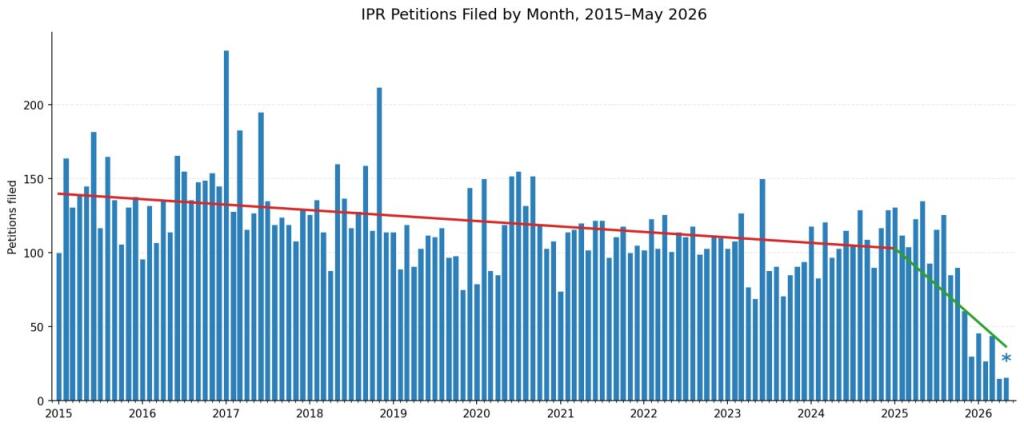
Look at the numbers. For years, the USPTO’s Inter Partes Review (IPR) system was a remarkably consistent, albeit sometimes contentious, venue for patent validity challenges. Filings generally danced between 100 and 185 per month, a predictable rhythm that informed patent strategy. Then, in 2025, the music stopped. Filings fell off a cliff, and 2026 is shaping up to be the quietest year since the America Invents Act’s post-grant review mechanisms came into full swing. This isn’t a blip; it’s a seismic shift.
The Director’s Hand on the Scales
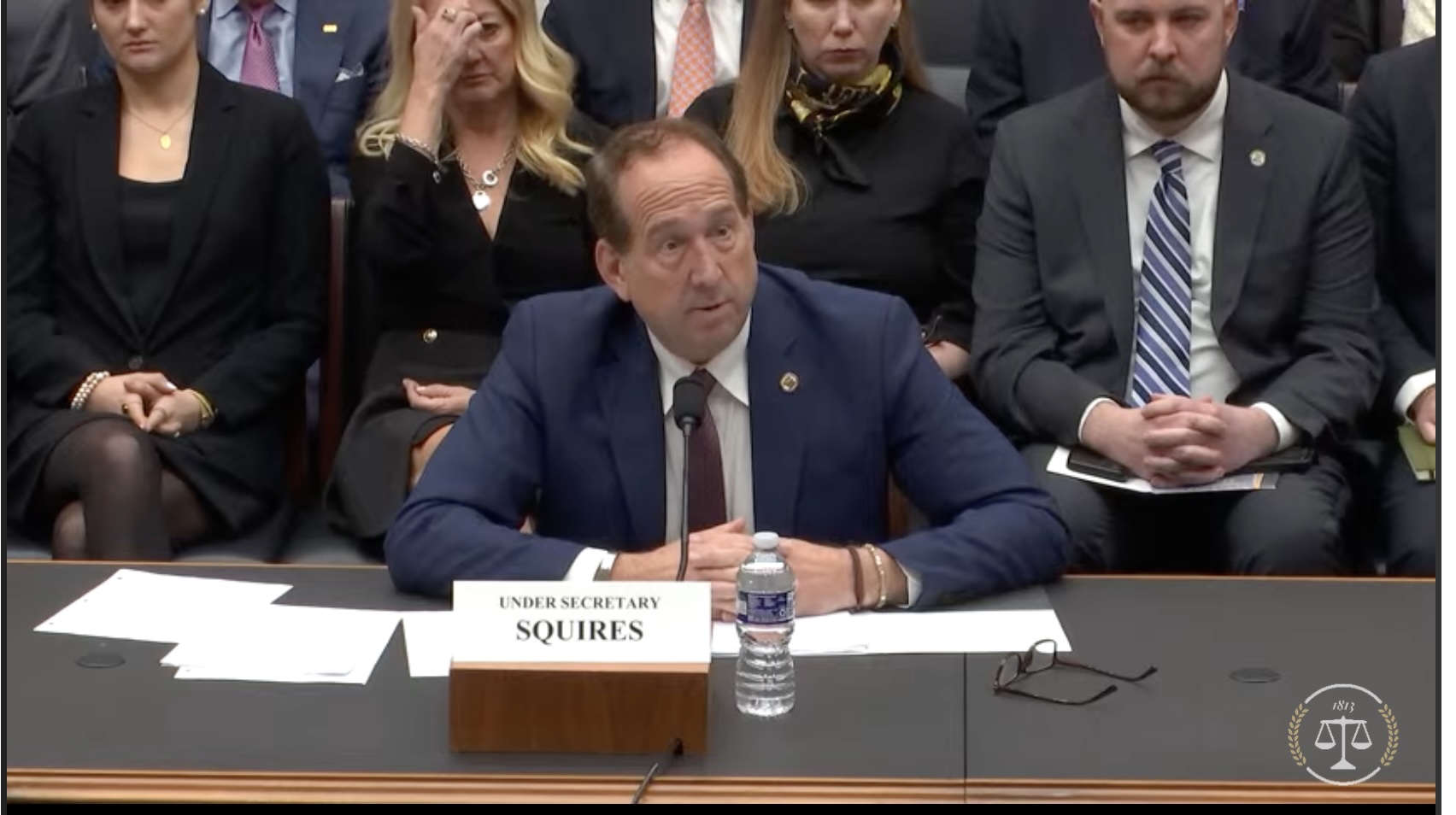
What happened? The original analysis points to a change in administrative policy. Specifically, it highlights that in October 2025, Director Kathi Squires took direct control of all institution decisions. Her approach? Denying petitions at a rate approaching zero. It’s a stark pivot from the system’s intent. The IPR was designed to be a more efficient and cost-effective alternative to clogging up district courts with validity arguments. Now, the very gateway to that efficiency seems to have slammed shut.
The market, as it always does, has responded. Practitioners, the folks whose livelihoods depend on navigating these systems, have crunched the numbers. If the Patent Trial and Appeal Board (PTAB) is going to reject petitions regardless of their underlying merit—or at least give that impression with an almost non-existent institution rate—the cost-benefit analysis for filing an IPR simply no longer holds up. Why spend the time and money on a challenge when the odds of even getting a hearing feel infinitesimally small?
A System Suspended, Not Reformed
This isn’t a subtle tweak; it’s an existential blow to the IPR as a functional tool for patent challengers. The system, at least in its original conception as a cost-effective way to sidestep the complexities and expenses of district court patent litigation, is now, for all intents and purposes, suspended. This has massive implications, not just for patent trolls and large corporations, but for smaller innovators who relied on the IPR to level the playing field.
But here’s the deeper, more architectural question: is this a deliberate throttling of IPRs, or an unintended consequence of a new administrative philosophy? The narrative from the USPTO likely emphasizes efficiency and focus. But the raw data suggests something more profound is happening—a strategic narrowing of access that might serve a specific, unstated agenda. It’s a classic example of how policy, wielded decisively at the top, can reshape an entire legal ecosystem with breathtaking speed.
This isn’t merely about the mechanics of filing a petition; it’s about the perceived fairness and accessibility of the patent system itself. When a crucial administrative pathway starts to feel like a dead end, the faith in the system erodes. This decline in IPR filings isn’t just a statistic; it’s a market signal, a loud and clear declaration that the game has changed, and not necessarily for the better. The question for patent holders and challengers alike is what comes next, and whether the USPTO will pivot before the IPR becomes a relic.
What Does This Mean for Patent Litigation?
Predictably, this shift is likely to push more patent validity challenges back into district court. While district courts handle patent cases, they are notoriously slower and more expensive than the PTAB. For defendants accused of infringement, the IPR offered a relatively quicker and cheaper way to try and invalidate the patent at the heart of the dispute. With that avenue largely closed, patent litigation is poised to become even more protracted and costly. This could disproportionately impact smaller companies and startups that lack the deep pockets required for extended court battles.
Furthermore, the reduced activity at the PTAB could also embolden patent holders. If they perceive fewer obstacles to enforcing their patents, they might be more inclined to assert them aggressively. This could lead to an uptick in infringement lawsuits, as the perceived effectiveness of defensive patent challenges diminishes. It’s a cascade effect, starting with a change in administrative policy at the USPTO and rippling out through the entire patent landscape.
Is the USPTO Intentionally Limiting Access?
While the original content attributes the drop to Director Squires’ personal control and a near-zero institution rate, the underlying why remains a subject for speculation, or at least requires a healthy dose of skepticism regarding official pronouncements. Is this a move to streamline the PTAB’s workload, as might be suggested? Or is it a more strategic effort to de-fang a mechanism that some in the patent establishment view as disruptive to patent rights? The current administration has made no secret of its desire to rebalance the scales in patent disputes, and this could be a significant, albeit blunt, instrument in that effort. The absence of strong statistical data explaining this drastic policy reversal only fuels such questions.
What is an Inter Partes Review (IPR)?
An Inter Partes Review (IPR) is a trial proceeding conducted at the U.S. Patent and Trademark Office (USPTO) to review the validity of issued patent claims. It’s initiated by a third party (usually a competitor accused of infringement) who files a petition arguing that certain claims of a patent are invalid based on prior art. If the PTAB institutes the review, it proceeds much like a trial, with opportunities for discovery, briefing, and oral argument, ultimately leading to a decision on patentability. It was designed to be a more streamlined and cost-effective alternative to challenging patent validity in federal district court.
Will IPRs Ever Recover?
It’s unlikely IPR filings will return to their previous levels without a significant policy reversal at the USPTO. The market’s response to the current low institution rates is a clear signal that the cost-benefit calculation has fundamentally shifted. A recovery would likely require a change in administrative leadership or a directive to significantly increase the institution rate, demonstrating a renewed commitment to the IPR as a viable challenge mechanism.
What’s the Impact of Fewer IPRs on Patent Holders?
For patent holders, fewer IPR filings might initially seem like a win, as it reduces the immediate threat of their patents being invalidated through this specific administrative process. However, it also means that patent validity challenges are more likely to end up in district courts, which can be a more expensive and unpredictable arena for prolonged litigation. It might also lead to an overall increase in patent litigation as challengers seek alternative venues, potentially keeping patents embroiled in disputes for longer periods.