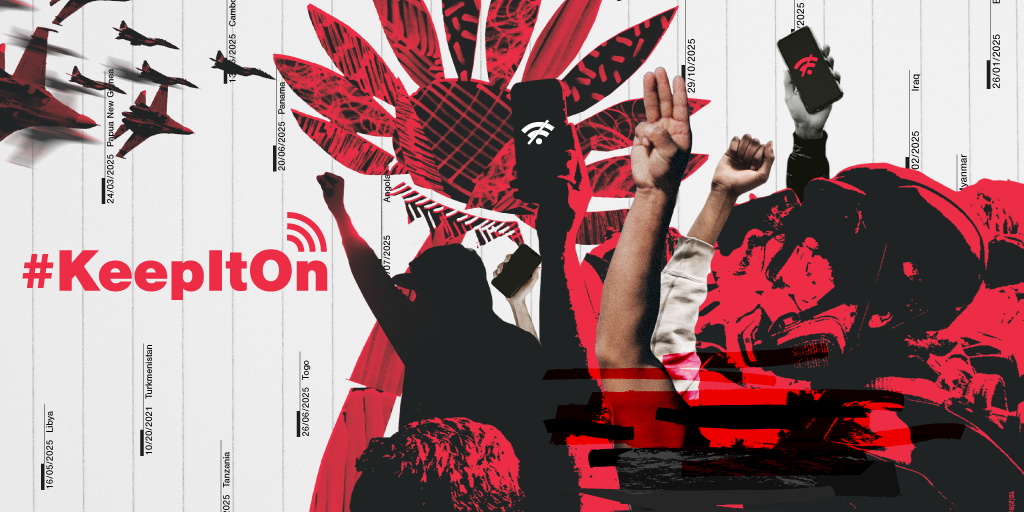
Are we truly headed for a more connected world, or is the digital divide widening through deliberate shutdowns? The data from 2025 paints a grim, undeniable picture: internet shutdowns aren’t a relic of the past; they’re an escalating weapon in the hands of governments worldwide.
Access Now and the #KeepItOn coalition’s latest report, ‘Rising repression meets global resistance: Internet shutdowns in 2025,’ doesn’t mince words. We’re talking about 313 documented shutdowns across 52 countries. That’s a new record, folks, shattering previous highs and signaling a disturbing trend that’s been steadily climbing since 2020. This isn’t just a number; it represents lives disrupted, silenced, and terrorized.
What’s fueling this digital iron curtain? Conflict, as it turns out, remains the leading trigger for a third consecutive year, with 125 shutdowns directly linked to war zones. Governments are using blackouts as a cover, a crude but effective tool to conceal atrocities, terrorize populations, and simply hide their war crimes. The digital blackout is now an integral part of the modern battlefield, obscuring truths and enabling unchecked brutality.
Cross-border shutdowns are also on the rise. Eighteen instances were recorded, impacting seven countries and occupied territories. This is a chilling expansion, compounding suffering in already volatile regions. And here’s a new wrinkle: perpetrators are increasingly targeting Low Earth Orbit (LEO) satellite internet systems—the very lifelines people are desperately clinging to during these digital sieges. Fourteen such shutdowns were documented, a sharp jump from just four in 2024. This demonstrates a sophisticated, evolving playbook by those intent on controlling information.
A Shadow Over Human Rights
The correlation between internet shutdowns and grave human rights abuses is, frankly, horrifying. In 2025, 70 shutdowns coincided with murder, torture, rape, and apparent war crimes across 21 countries. Think about that. Entire populations were plunged into darkness precisely when they were most vulnerable, during the world’s worst humanitarian crises in Sudan, or amid the unfolding horror in Gaza, or during violent police crackdowns in Kenya, Libya, Myanmar, Pakistan, and Tanzania. The information vacuum created by these shutdowns isn’t accidental; it’s a deliberate strategy to prevent the world from seeing, and to ensure perpetrators can act with impunity.
The report makes a powerful point: these shutdowns erode public trust in democratic systems and enable heinous crimes. And the numbers bear this out, with at least 241 shutdowns coinciding with grave human rights abuses since 2022 alone. The #KeepItOn coalition isn’t just calling for an end to these practices; they’re advocating for these shutdowns to be considered in international crime investigations, highlighting how they can conceal evidence and demonstrate intent to harm.
The Usual Suspects, Amplified
While any shutdown is a violation, some countries are institutionalizing this tactic with alarming regularity. Myanmar, under its military regime, experienced a record 95 shutdowns in 2025—a staggering majority (76) imposed by the junta. India continued its pattern with 65 shutdowns, while Pakistan (20) and Iran (11) also featured prominently. Tanzania’s eight shutdowns represent a notable surge, clearly aimed at quelling dissent. Russia, too, has emerged as a significant player, with emerging information pointing to hundreds, possibly thousands, of disruptions across its regions, ostensibly as a countermeasure against drone attacks—a justification that reeks of expediency.
My take on this escalating trend? It’s a stark reminder that digital infrastructure, often seen as a force for progress and transparency, is just as susceptible to authoritarian control as any other tool. The global push for connectivity is being met by an equally determined push for digital silence. This isn’t just about access to information; it’s about fundamental human rights and the ability of citizens to hold their governments accountable.
Is Resistance Growing?
But it’s not all bleak. The report also shines a light on the growing global resistance. From Myanmar to Iran, Tanzania to Nepal, communities are pushing back. They’re demanding accountability and, critically, they’re developing innovative ways to stay connected during these blackouts. This resilience is a critical counterpoint to the repression, a proof to the enduring human drive for communication and truth.
This data isn’t just for academics or policymakers. It’s a call to action. As these shutdowns become more sophisticated and pervasive, the need for strong, multi-stakeholder efforts to combat them becomes ever more urgent. Ignoring this trend is not an option; it’s an abdication of responsibility.
What are the key findings of the 2025 internet shutdown report? The report documents a record 313 internet shutdowns in 52 countries in 2025. Conflict was the leading trigger, and there was a significant increase in targeting of LEO satellite internet systems. It also highlights the correlation between shutdowns and grave human rights abuses, alongside growing global resistance.
How do internet shutdowns impact human rights? Internet shutdowns silence populations, prevent journalists and human rights monitors from documenting abuses, and enable perpetrators to commit crimes like murder, torture, and rape with impunity. They erode public trust and can directly facilitate international crimes.
What is being done to combat internet shutdowns? The #KeepItOn coalition advocates for investigations into international crimes related to shutdowns, pushing for accountability. The report also highlights community-led resistance and the development of new ways to maintain connectivity during blackouts.
🧬 Related Insights
- Read more: What is the EU AI Act?
- Read more: Supreme Court Limits International Law Claims in U.S.