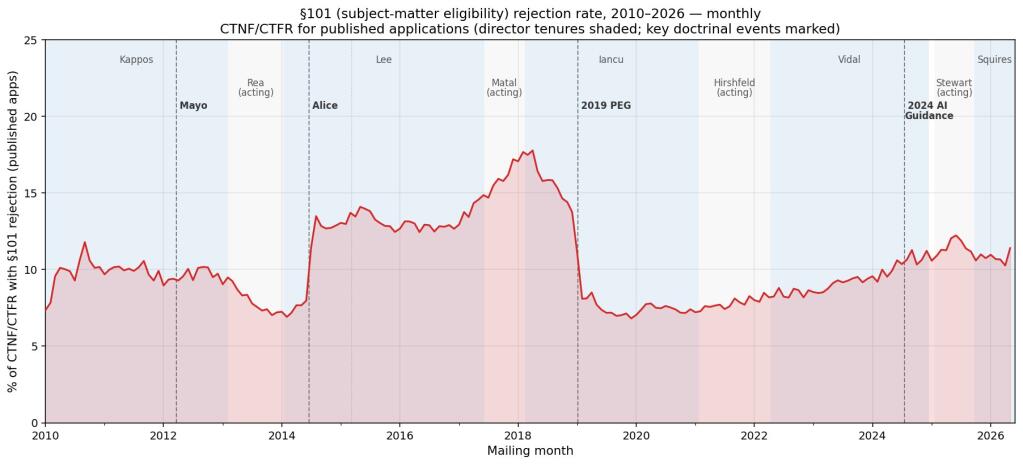
65,000 patent applications rejected last year solely on eligibility grounds under Alice. That’s not hyperbole; it’s the USPTO’s grinding reality, and their April Fool’s prank nailed it.
Sent via official GovDelivery this morning, the email introduced ‘MATTHEW’ — the McConaughey Agentic Tasking Technology Helping Examiner Workload. Director John Squires laid it out: this AI would blitz through thorny Section 101 questions with a simple thumbs-up or down, all hinging on that iconic ‘Alright, alright, alright’ from Dazed and Confused.
Brilliant.
And here’s the kicker — it casually drops that all precedent like Alice, Mayo, and Desjardins? Suspended. Poof. Happy April 1st.
The tool, Director John Squires explained, will resolve the thorniest eligibility questions by rendering a simple verdict: if MATTHEW says your invention is “Alright, Alright, Alright,” then it’s “Alright, Alright, Alright” with the USPTO.
Read that in McConaughey’s voice. You can’t unhear it.
Why McConaughey? The Trademark Tie-In
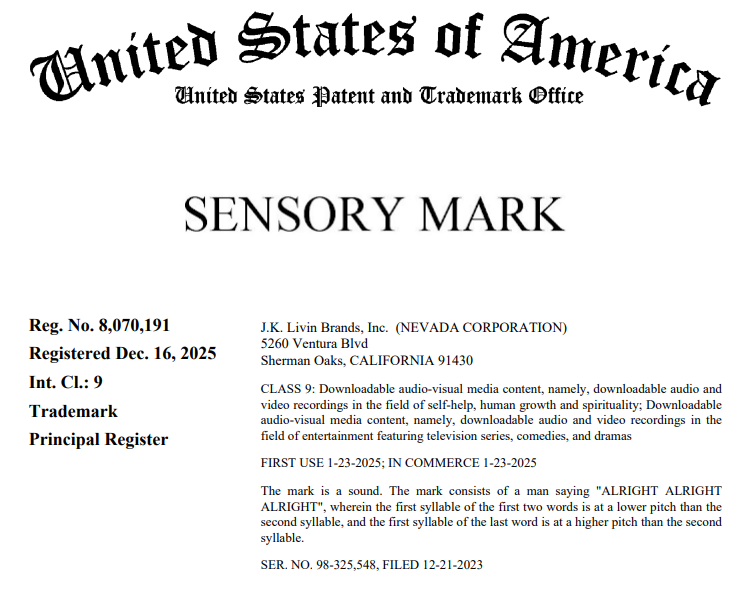
It ain’t random. McConaughey’s team just filed trademarks on his ‘alright’ catchphrase — including a wild ‘sensory mark’ capturing that gravelly delivery from the 1993 flick. USPTO examiners are probably chuckling over those apps right now, knee-deep in eligibility debates. This prank? It’s meta-commentary on their own workload, wrapped in Hollywood flair.
Think about it. Patents aren’t just dry legalese; they’re cultural artifacts. McConaughey’s line is etched in pop history, now fighting for IP protection. USPTO flipping it into an AI judge? That’s poetry — a nod to how inventions (even catchphrases) wrestle with abstract idea traps.
But zoom out. This isn’t just laughs. It’s the agency venting frustrations through comedy, the kind that says the quiet part loud.
Examiners drown in Alice rejections — software patents deemed too ‘abstract’ without a magical ‘practical application’ twist. MATTHEW mocks that binary hell: alright or bust.
One sentence. Punchy.
Now sprawl with me: Imagine examiners, bleary-eyed at 2 a.m., feeding claims into this fictional AI, watching it channel a stoner philosopher from ‘93 to spit verdicts — suspending Supreme Court precedents like yesterday’s news, because why not? It’s absurd, yes, but it mirrors the real absurdity of eligibility doctrine, a post-Alice mess where humans second-guess ‘inventiveness’ in ways even Solomon couldn’t.
And we’re not talking hypotheticals here.
Is AI Really Coming for Patent Eligibility?
Short answer: Bet on it.
Here’s my bold call, the one you’ll not find in Patently-O’s original post — this prank echoes the USPTO’s 2004 pivot to Google Patents search, when clunky manual prior art hunts gave way to algorithmic lightning. AI? That’s the next platform shift, turning eligibility from judicial roulette into probabilistic pattern-matching. Picture neural nets trained on 50 years of 101 rulings, spitting ‘alright’ probabilities faster than a human could brew coffee.
Skeptics scoff — AI hallucinating on law? Fair. But we’re already there: tools like ClaimMaster and PatentPal crunch claims daily. USPTO’s own AI pilots for classification are live. MATTHEW? Tomorrow’s punchline becomes next year’s pilot.
Look, I’ve seen platform shifts before. The iPhone didn’t kill phones; it redefined them. AI won’t replace examiners — it’ll supercharge them, slashing backlog from years to weeks. Inventors win. Economy booms.
Excitement builds.
Yet, that precedent suspension jab? Sharp. Alice turned patents into a casino — 90% software apps face 101 knocks. Prank or not, it screams for reform.
The Real Workload Crunch
Back to basics. USPTO’s email hit official channels — same as rulemakings. That’s the genius: blurring joke and reality to spotlight pain points.
Examiners handle 200+ apps yearly, eligibility chewing 40% of time. Squires’ sign-off? ‘Happy April Fool’s Day.’ But the fool’s the system, right?
(Or us, hoping for clarity.)
Inventors feel it most. Biotech? Squashed by Mayo. Fintech? Alice’s shadow. This gag humanizes the grind — McConaughey’s chill vibe versus bureaucratic frost.
And the timing? Post-McConaughey TM filings. USPTO winking at its own desk.
Why Does This Prank Matter for Inventors Right Now?
Because it spotlights the eligibility apocalypse.
Data: Alice-era rejections doubled since 2014. Appeals clog PTAB. Costs soar — $50k+ per fight.
MATTHEW jokes at a fix: AI consistency over human whim. No more Art Unit 36xx variance, where one examiner greenlights what another axes.
My historical parallel? Remember the 1980s patent troll scare? Led to reforms. This? Signals AI-driven overhaul, maybe statutory tweaks to 101.
Bold prediction: By 2026, USPTO deploys real ‘Matthew’ — not the actor, but agentic AI agents negotiating claims in real-time. Alright?
Inventors, gear up. The future’s drawling your way.
Energy surges. Wonder at the shift.
Critique time — USPTO’s PR spin? None needed. This raw humor cuts deeper than pressers. No hype, just truth in jest.
One para, dense: As we hurtle toward AI ubiquity — think autonomous agents drafting specs, simulating infringement — eligibility becomes the gatekeeper bottleneck; MATTHEW mocks it perfectly, forcing us to question if ‘inventive concept’ survives the machine age, or if we rewrite 101 for a world where software isn’t ‘abstract’ but the new physics, weaving code into reality like electricity once did, electrifying industries from steam to silicon.
Whew.
The McConaughey filings add spice — sensory marks? USPTO’s pushing boundaries there too. Alright.
🧬 Related Insights
- Read more: AI Act Governance: Commission’s Endless To-Do List
- Read more: Law Firms: Hackers’ Goldmine in the Ransomware Era
Frequently Asked Questions
What is USPTO’s MATTHEW AI tool?
It’s a fictional April Fool’s prank: an AI named after Matthew McConaughey that decides patent eligibility with his ‘Alright, alright, alright’ catchphrase.
Is the USPTO MATTHEW prank based on real trademark filings?
Yes — McConaughey’s team recently applied for trademarks on his delivery of the phrase, including a sensory mark.
Will AI really handle patent eligibility soon?
USPTO’s piloting AI tools already; expect agentic systems for 101 analysis by 2026, slashing examiner workload.