Forget blockades and seizures at the border. The real battleground for intellectual property in the modern age isn’t a dusty warehouse, it’s the silicon soul of a product: its firmware. And folks, a recent ruling out of the Federal Circuit is showing us just how malleable that soul can be, essentially proving that a software patch can be the ultimate digital Houdini, making once-banned products disappear from the ITC’s grip.
Think of it like this: the International Trade Commission slaps a “STOP” sign on a specific model of a foreign-made gadget because it infringes a US patent. Great victory, right? Well, for the infringing company, it’s less of a death knell and more of an inconvenient speed bump. The real genius, and here’s where it gets interesting for us mere mortals using these gadgets, lies in the fact that these exclusion orders are hyper-specific. They target that particular design, that exact configuration. But what if you could just… tweak it? Not fundamentally, not a whole engineering overhaul, but a subtle, almost cheeky modification.
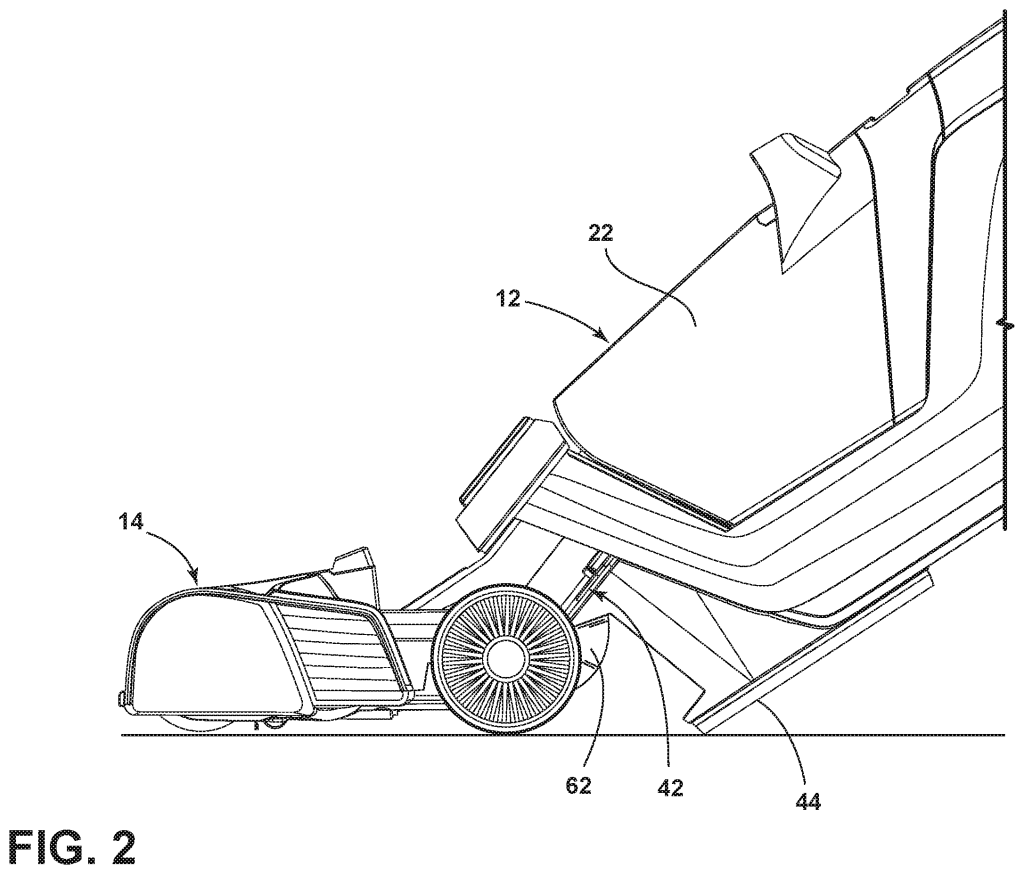
This is exactly what happened in the Bissell, Inc. v. International Trade Commission case. Bissell had a patent on a fancy wet/dry floor cleaner that, among other things, kept the battery charging circuit disabled during its automatic self-cleaning cycle. They went after Tineco, a Chinese manufacturer, alleging their Floor One S3 and S5 Pro devices were stepping on their patent toes. The ITC agreed, initially issuing a limited exclusion order. But Tineco, faced with a ban on their products, didn’t pack up and go home. Nope. They went back to their code.
Here’s the mind-bending part: Tineco didn’t rebuild their cleaner. They didn’t invent a whole new cleaning mechanism. They tweaked the timing of the cleanout cycle. The patent said the charger should stay off during the whole 120-second cycle. Tineco’s new firmware allowed the charging circuit to briefly activate twice during that cycle. Imagine a chef being told their cake can’t have butter during the baking. So, the chef just adds a tiny drizzle of butter at the beginning and another at the end. Technically, there’s no butter during the main baking phase, right? It’s a clever sidestep, a digital wink and a nod to the letter of the law, while perhaps completely ignoring the spirit of the patent holder’s intent.
The Federal Circuit, bless their black-robed hearts, upheld the ITC’s decision. They essentially said, ‘Yep, that’s not literal infringement anymore.’ And this is where my gears really start grinding. We’re talking about a fundamental shift here, a new era where software updates are becoming the ultimate patent-dodging superweapon.
The Firmware as a Swiss Army Knife
This isn’t just about vacuum cleaners, people. This is about how technology evolves at warp speed, leaving legal frameworks struggling to keep up. Think about it: a company can design a product, get it to market, and if it proves popular but also patent-infringing, a quick firmware rewrite becomes the first line of defense. It’s cheaper, faster, and apparently, more effective than a full redesign.
This creates a fascinating dynamic. Patent holders are now in a constant arms race, not just against original infringing designs, but against the ability of respondents to simply recode their way out of trouble. The doctrine of equivalents—that legal principle designed to catch things that are close enough to infringe even if not a perfect literal match—seems to be getting less traction in these digital skirmishes. It’s like trying to pin down smoke.
What this means for real people? For consumers, it might mean more affordable products that skirt the edges of IP law. For innovators, it’s a frustrating reminder that building a better mousetrap isn’t enough; you need to defend it against every digital phantom that can slip through the cracks. It’s a wild frontier out there, and firmware is proving to be one of the most potent tools in the modern tech arsenal.
Is This the End of ITC Power?
Probably not entirely. The ITC still has teeth. But this ruling signals a significant challenge to its authority when dealing with software-driven products. It highlights the need for legal frameworks to adapt more quickly to technological advancements. The ITC can still ban infringing products, but if a company can simply push an update that makes the next batch of products non-infringing (even if functionally identical in spirit), the impact of those orders diminishes considerably. It’s like fining a speeder, but they can then just drive slightly slower past the next speed camera. The core behavior, the reason for the fine, remains.
This case, at its heart, is a vivid illustration of how innovation in technology can outpace the legal mechanisms designed to regulate it. A simple firmware tweak, a few lines of code, can effectively dismantle the outcome of a lengthy and expensive patent dispute. It’s a stark reminder that in the digital age, the physical product is only half the story – the software running the show is increasingly where the real battles for control and market dominance will be fought and won.
🧬 Related Insights
- Read more: Patent Backlog Smashed: AI’s IP Floodgates Open
- Read more: Algorithmic Accountability: The Right to Explanation in Automated Decisions
Frequently Asked Questions
What does Bissell’s patent cover? Bissell’s patent covers a wet/dry floor cleaner with a self-cleaning mode that keeps the battery charging circuit disabled during the automatic cleanout cycle.
How did Tineco avoid the ITC exclusion order? Tineco altered the firmware of their floor cleaners to briefly activate the battery charging circuit twice during the self-cleaning cycle, which the court found was no longer literal infringement.
Does this mean patent enforcement is useless? No, but it highlights the challenges in enforcing patents against software-modifiable products and suggests that patent holders may need to consider how firmware updates can impact infringement claims.