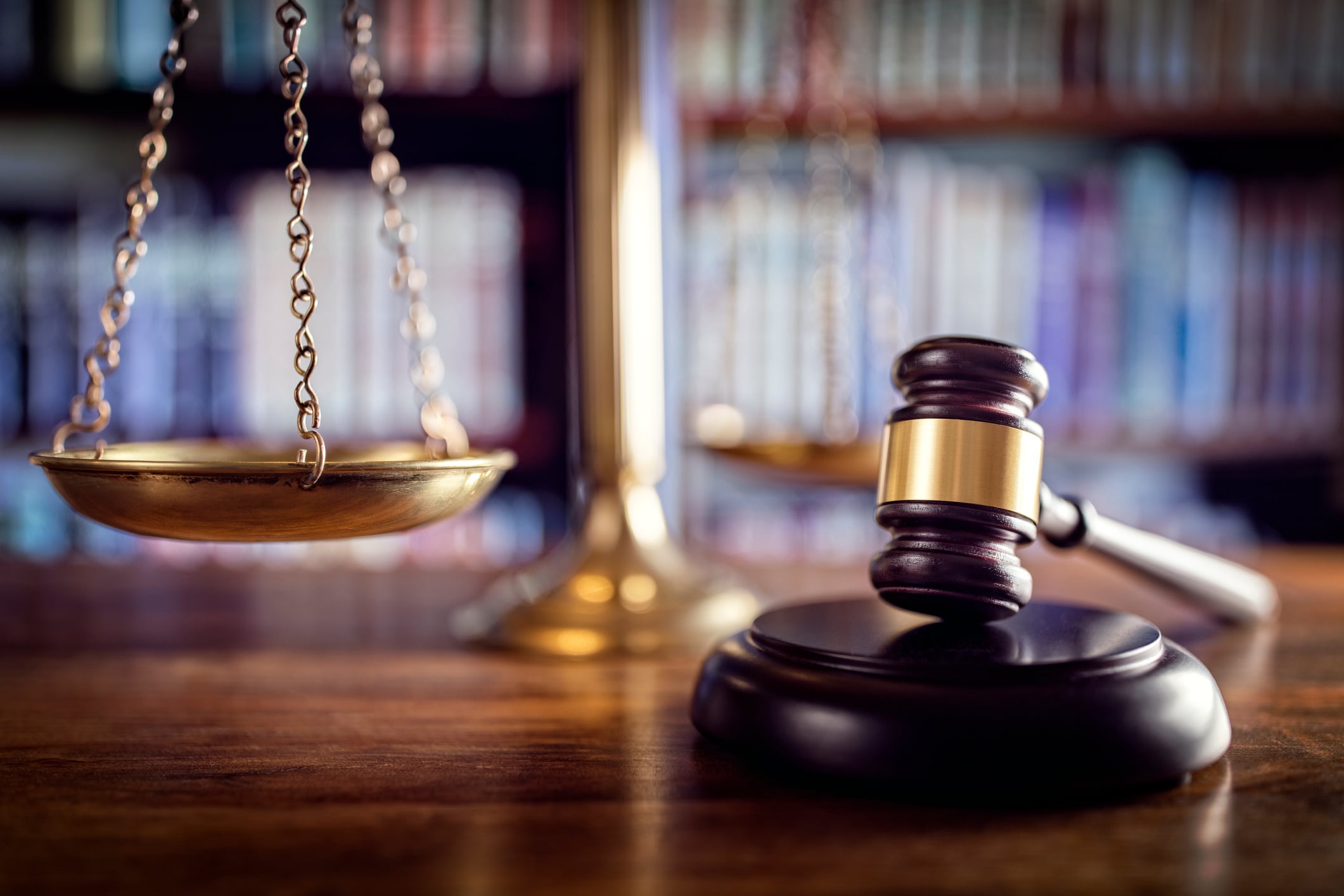
Forget Lady Justice in her blindfold; at least, that’s the revised iconography whispered from the Old Supreme Court Chamber. Where justices once sat from 1810 to 1860, the figure of Justice was notably sans blindfold, her gaze fixed on the U.S. Constitution. It’s a potent, if perhaps unintentional, symbol for our current moment.
Because as much as we might wish for an impartial arbiter of truth, the reality of the legal landscape right now feels anything but blind. From jury rooms echoing with partisan rancor to the halls of the DOJ itself admitting to what Slate calls “weaponizing a prosecution,” the optics aren’t great. This isn’t just noise; these are the tremors beneath the foundation.
Is the Rule of Law Actually Cratering?
Legal experts aren’t just raising eyebrows; they’re sounding alarms. A recent survey from UCLA Law and Bright Line Watch paints a grim picture: the rule of law in the United States has reportedly hit its lowest point in at least a decade. We’re talking about input from Article III judges, elite lawyers, and law professors—not exactly the firebrands of fringe opinion. When these groups, who live and breathe the legal system, collectively see such a decline, it’s time to stop scrolling and pay attention.
What does this mean architecturally? It suggests a systemic erosion of trust, a hardening of ideological lines that makes reasoned deliberation—the bedrock of justice—increasingly difficult. It’s a departure from the ideal of a neutral forum, moving instead toward a battlefield of competing, often irreconcilable, worldviews.
And then there’s the sheer punitive power unleashed. A jaw-dropping $3 million sanction is one headline that simply demands attention. While the original report doesn’t detail the why behind this particular penalty, the implication is clear: the courts are increasingly willing to hit lawyers and firms where it hurts most—their wallets—to enforce ethical boundaries, especially when misrepresentations to the court are involved. This isn’t just a slap on the wrist; it’s a financial demolition.
DOJ Caught in the Act
Perhaps most disturbingly, we’re seeing direct admissions of egregious misconduct from the Department of Justice itself. In the case of the Broadview Six, protesters accused of obstructing an ICE facility, federal prosecutors aren’t just being accused; they’re being excoriated by U.S. District Judge April Perry. The admission? Using illegal tactics to secure indictments. The targets? A group of protesters. The outcome? Charges tossed, and a public dressing-down of top DOJ officials for “incredibly shocking” malfeasance.
This isn’t just about one case; it’s about the integrity of the investigative and prosecutorial process. When the very entity tasked with upholding justice admits to playing dirty, the ripple effect is profound. It feeds the very distrust the UCLA survey highlights and makes the notion of blind justice seem like a quaint relic.
U.S. District Judge April Perry excoriated prosecutors for using illegal tactics to get the criminal charges past a skeptical grand jury, dressing down U.S. Attorney Andrew Boutros and his colleagues for their ‘incredibly shock[ing]’ malfeasance.
This kind of internal admission and judicial condemnation chips away at the presumed impartiality of federal law enforcement. It suggests that political or organizational pressures can, and have, compromised due process.
And let’s not forget the chilling implications for lawyer-client relationships. The ABA’s recent opinion allowing lawyers to drop uncooperative clients, while framed within existing rules, lands in this environment with a certain weight. In an era of increasing polarization and potential for difficult client interactions, this provides a clearer path for attorneys to extricate themselves from untenable situations—but it also raises questions about access to justice when relationships sour.
A Political Pipeline or a Fund for Grievances?
Then there’s the $1.8 billion fund established by the Trump administration, ostensibly to compensate those claiming they were targeted by the Biden Justice Department. Critics, however, are quick to label it a “slush fund” and a “brazen misuse” of the DOJ for political gain. The rapid resignation of Treasury Department General Counsel Brian Morrissey in its wake only adds to the suspicion. This move, regardless of its intent, injects another layer of partisan toxicity into the very machinery of government justice.
The specter of insider trading, even among seemingly successful BigLaw attorneys, further underscores the ethical tightrope lawyers walk. David Lat’s analysis points to a cocktail of psychological factors and greed, suggesting that the allure of illicit gains can override even the most polished professional veneer.
Looking at these disparate threads—the punitive sanctions, the DOJ’s admitted misconduct, the erosion of faith in the rule of law, and the politicization of government funds—we see a pattern emerge. It’s a legal system under immense strain, where ethical boundaries are being tested, pushed, and, in some instances, demonstrably breached. The blindfold is off Lady Justice, and what she sees isn’t pretty.