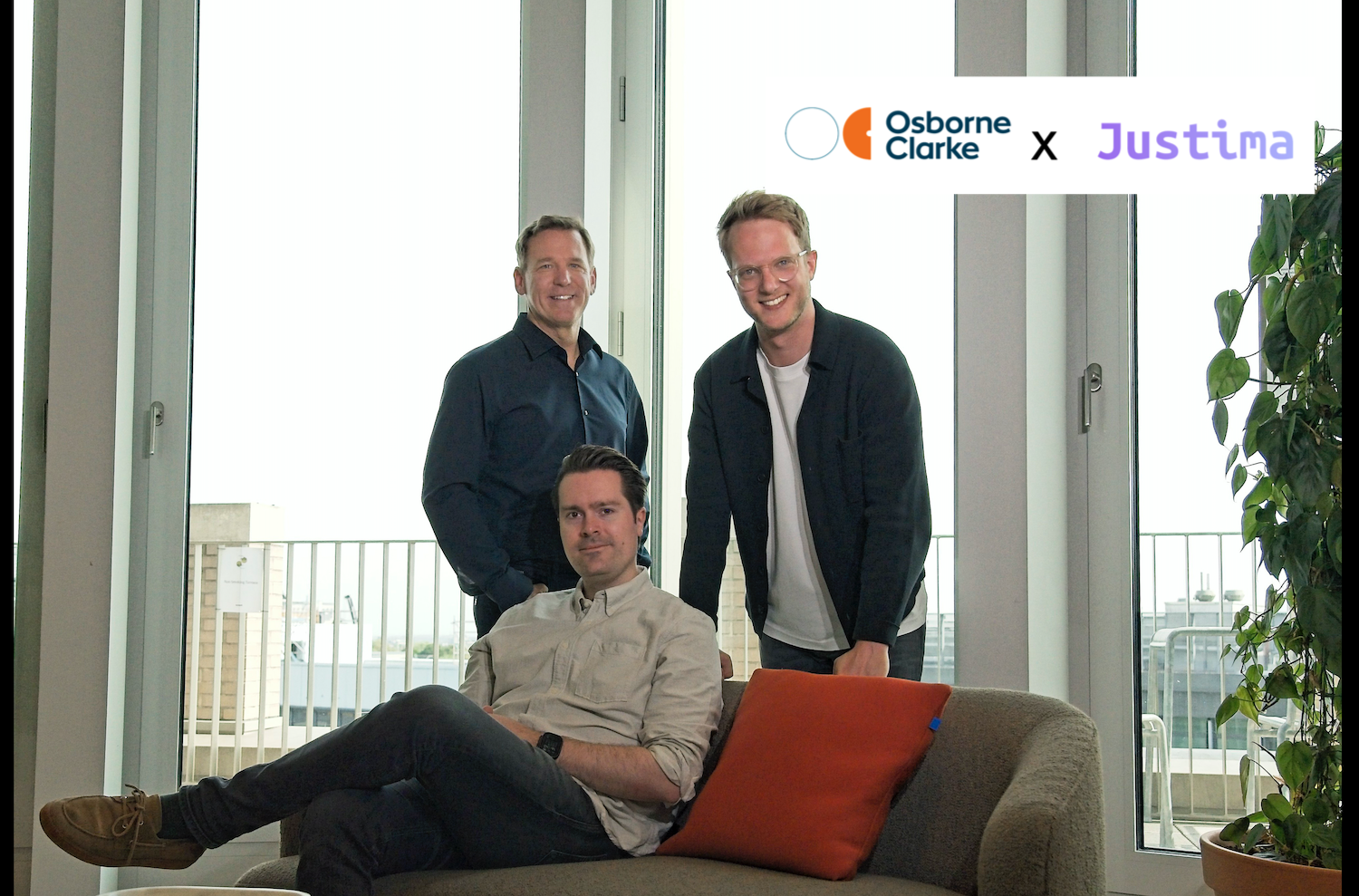
For those slogging through endless compliance checklists, the quiet hum of automated regulatory vigilance is a distant, almost mythical, siren song. Osborne Clarke, the international law firm, has just taken a significant step towards making that song a reality for a specific slice of the corporate world, spinning out Justima, a dedicated AI-powered platform for continuous regulatory monitoring.
This isn’t just another legal tech vendor announcing a new feature. This is a law firm, in a move unprecedented for Osborne Clarke, carving out a distinct business unit. The underlying architecture here is what’s truly fascinating: a deliberate architectural choice to disentangle high-volume, software-amenable tasks from the high-value, judgment-driven work lawyers are supposed to excel at. The goal? To stop clients from footing lawyerly bills for what AI can handle more efficiently, and frankly, more reliably.
Is This Just More Legal Tech Hype?
Osborne Clarke, through its German legal tech arm, is retaining a majority stake in Justima, which is set to operate as an independent AI-native SaaS platform. It’s a clever sidestep, allowing the firm to benefit from the venture’s success without becoming solely responsible for its operational overhead, while still maintaining strategic oversight. Gereon Abendroth, a partner at Osborne Clarke and Chair of its global AI Management Board, is at the helm as Chairman & Managing Director. He, along with co-founders Alexander Lilienbeck (CEO) and Christian Braun (CTO), represent a team clearly steeped in both legal practice and technological execution.
They’re not just saying their AI is good; they’ve put it through its paces. Around 30 corporate users have been beta testing Justima for months, ironing out kinks against real-world regulatory workloads. This isn’t a pie-in-the-sky concept; it’s a product forged in the trenches of corporate compliance, with its relevance logic refined by Osborne Clarke’s own regulatory experts. This grounding in practical application is key.
What’s driving this? A perfect storm, they claim: validation from real users, a glaring market need, and the technology finally being mature enough to deliver. The regulatory landscape across Europe, as anyone in-house can attest, is a sprawling, ever-shifting beast. Relying on scattered alerts and manual checks is, frankly, a recipe for disaster. The problem isn’t finding information; it’s discerning which information actually poses a risk or opportunity to your specific business.
The broader principle is simple: Osborne Clarke does not believe clients should pay lawyer rates for work that software can do. They should get lawyers where lawyers add the most value: judgement, interpretation, risk and strategy.
The Vertical AI Imperative
Here’s where the real architectural thinking kicks in, and where Justima’s approach diverges from the current generalist AI frenzy. While many are heralding the arrival of large language models (LLMs) as the universal solution, Osborne Clarke’s strategy with Justima is a bet on vertical AI. This isn’t about prompting a general-purpose model to act like a regulatory expert. It’s about engineering domain expertise into the AI system from the ground up. Think of it as building a specialized tool designed for one job – regulatory monitoring – rather than repurposing a Swiss Army knife.
This makes sense. A generic assistant, however sophisticated, will always struggle with the nuanced, context-specific demands of deep regulatory analysis compared to a system architected for that singular purpose. Justima is built to understand the intricacies of European and international regulations, flagging only what’s relevant to a company’s operational context. Legal advice, the interpretation of these updates, the assessment of enforcement risks – that remains firmly in the human lawyer’s domain, under a separate mandate. Justima is the tireless digital sentinel, not the courtroom advocate.
This spin-out reflects a broader trend: law firms realizing they can be both providers of legal services and creators of the very technology that transforms those services. It’s a recognition that the future of legal practice isn’t just about what lawyers know, but about how effectively they can use technology to deliver that knowledge. Justima’s lean, AI-agent-driven core team of five (with plans to expand) underscores this – humans are there for strategic direction, engineering, and customer interaction, while the heavy lifting of data analysis is automated.
It’s a bold move, certainly. But in an industry increasingly defined by efficiency and accuracy, separating the AI-executable from the human-essential seems not just smart, but increasingly necessary.
🧬 Related Insights
- Read more: Patent Monetization’s Death Spiral — And AI’s Wild Rescue Mission
- Read more: AI Ignites Legal Fireworks: Musk Sues States, Judges Berate Tech, Hallucinations Haunt Courts
Frequently Asked Questions
What does Justima do? Justima is an AI-native SaaS platform designed for continuous monitoring of hundreds of European and international regulatory sources, delivering business-relevant updates to clients.
Will Justima replace lawyers? No. Justima automates the monitoring and alerting of regulatory changes. Legal advice, interpretation, and strategy remain the domain of human lawyers.
How is Justima different from general legal AI tools? Justima is a vertical AI system, meaning it’s engineered from the ground up for the specific task of regulatory monitoring, incorporating deep domain expertise rather than relying on a general-purpose model.