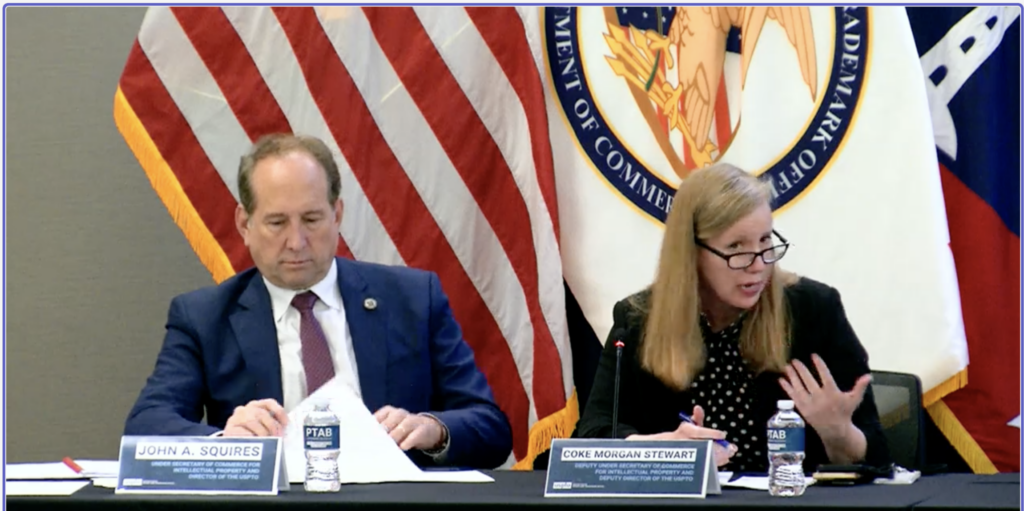
When did administrative agencies start wielding the kind of power that could undo a court’s decision without a fight? It’s a question that bubbles just beneath the surface of legal tech news, often buried under layers of AI advancements and regulatory shifts. But Justice Neil Gorsuch, in his dissent in Thryv, Inc. v. Click-to-Call Tech., LP, has ripped that veil away, offering a passionate, almost operatic defense of judicial authority that echoes through the halls of patent law.
This isn’t just about patents; it’s about power. It’s about whether unelected bureaucrats can effectively close the courthouse doors to inventors and innovators seeking justice. Gorsuch, with his characteristic blend of sharp intellect and, dare I say, righteous indignation, has painted a vivid picture of a system teetering on the brink, where the very concept of checks and balances seems to be fraying at the edges.
Here’s the thing: the patent community is buzzing. They see in Gorsuch’s words a champion for their cause, a voice willing to stand against the tide of ever-expanding administrative power. But to the rest of us watching the legal landscape morph under the relentless pressure of AI and new technological paradigms, this dissent is a seismic event, a crack in the foundation that could reshape how we understand the separation of powers itself.
The core of the issue, as Gorsuch lays it bare, hinges on a procedural snag. Thryv had challenged a patent’s validity through the Patent Trial and Appeal Board (PTAB). The PTAB, after some back-and-forth, sided with Thryv, declaring the patent invalid. Click-to-Call then appealed to the Federal Circuit. Now, here’s where it gets deliciously complicated: Thryv argued that a previous lawsuit meant the PTAB shouldn’t have even heard the case – a sort of legal “statute of limitations” for patent challenges. The Federal Circuit, however, decided they could review the PTAB’s decision on this time-bar issue.
But wait, there’s more! The patent law has this little clause, 35 U.S.C. § 314(d), which many interpret as a wall, preventing courts from reviewing any decision related to whether the PTAB should institute an IPR (Inter Partes Review). It’s like a speed bump designed to keep minor procedural squabbles out of the appellate courts, letting the PTAB do its thing without endless appeals on every little technicality.
The Majority’s “Bad Patent” Gambit
The Supreme Court majority, led by Justice Ginsburg, saw it differently. They essentially said, “Nope, that time-bar issue? It’s totally tied to the patentability question, so § 314(d) slams the door shut on judicial review.” Their reasoning, peppered with the phrase “bad patent” multiple times, suggests a desire to keep the PTAB focused on what they see as Congress’s intent: efficiently clearing out what they deem unworthy patents. It’s a pragmatic approach, in a way, aiming to streamline the process and prevent patent trolls from holding up innovation with weak claims. But it’s also a path that seems to implicitly trust the agency’s judgment above all else.
And here’s the kicker – the very thing that Gorsuch seizes upon with such ferocity: even the government, in supporting Thryv, didn’t dispute that the PTAB should have been barred by that one-year time limit. So, the substantive merits of the patent’s invalidity were not in contention. The entire fight was about whether a court could even look at whether the PTAB followed the rules in the first place.
Gorsuch: Sounding the Alarm on Article III Erosion
This is where Gorsuch’s dissent transforms from a legal analysis into a clarion call. He views the majority’s stance not just as a misinterpretation of the statute, but as a fundamental assault on the very structure of our government. His argument isn’t just about patents; it’s about preserving the integrity of Article III courts – the independent judiciary, the one branch designed to be the ultimate arbiter of disputes, insulated from political winds and executive or administrative overreach. He sees the PTAB, an Article I tribunal, creeping into the domain of Article III courts, and he’s having none of it.
“The agency held Click-to-Call’s patent claims invalid, and Click-to-Call does not contest that holding. It resists only the agency’s institution decision, mindful that if the institution decision is reversed, then the agency’s work will be undone and the canceled patent claims resurrected.”
This passage, quoted directly from the majority opinion, is the fuel for Gorsuch’s fire. He points out the inherent paradox: the patent is invalid, the parties agree, but the appeal is dismissed because the decision to decide was procedurally flawed. It’s like throwing out a guilty verdict because the jury foreman sneezed during deliberation. It’s Kafkaesque, and Gorsuch doesn’t shy away from highlighting the absurdity.
My unique insight here? Gorsuch isn’t just defending patent rights; he’s defending the process of justice itself. This dissent is a flashback to the legal battles of the Progressive Era, where the rise of administrative agencies first prompted profound questions about delegation of power and judicial review. We’re seeing that play out again, but this time, the context is the hyper-speed, complex world of AI-driven innovation and digital patents. Gorsuch’s warning about erosion of Article III courts feels less like a historical echo and more like a prophecy for our AI-dominated future. If agencies can become unassailable arbiters of rights and validity without strong judicial oversight, what does that mean for due process when the “things” being regulated are complex algorithms and vast datasets?
This isn’t the end of the story. Dissenting opinions, especially those from justices as influential as Gorsuch, often become the bedrock for future legal challenges and even legislative reform. The implications for AI regulation, intellectual property, and the very definition of judicial review in the digital age are immense. As AI systems become increasingly capable of making complex determinations in fields like patent law, the question of who ultimately oversees and checks that power becomes paramount. Gorsuch’s dissent is a powerful reminder that technology’s advance doesn’t absolve us of our responsibility to safeguard fundamental legal principles.
🧬 Related Insights
- Read more: ServiceNow Taps Eudia for Legal AI: 10x Hype or Real Edge?
- Read more: Anthropic’s Private Market Momentum Is Real—But SpaceX Could Steal the Show
Frequently Asked Questions
What is the PTAB and why is it important? The Patent Trial and Appeal Board (PTAB) is an administrative tribunal within the U.S. Patent and Trademark Office (USPTO) that hears challenges to the validity of issued patents. It’s crucial because it offers a faster and often less expensive alternative to district court litigation for invalidating patents.
Why did Justice Gorsuch dissent in this case? Justice Gorsuch dissented because he believed the Supreme Court majority’s interpretation of patent law prevented federal courts from reviewing critical procedural decisions made by the PTAB, which he felt undermined the authority of Article III courts and the principle of judicial review.
Could this dissent impact future AI patent disputes? Potentially, yes. As AI systems become more complex and the subject of patent filings, the PTAB’s role in adjudicating patent validity will grow. Gorsuch’s arguments about judicial oversight and agency power could become highly relevant in ensuring fairness and due process in these high-stakes disputes.