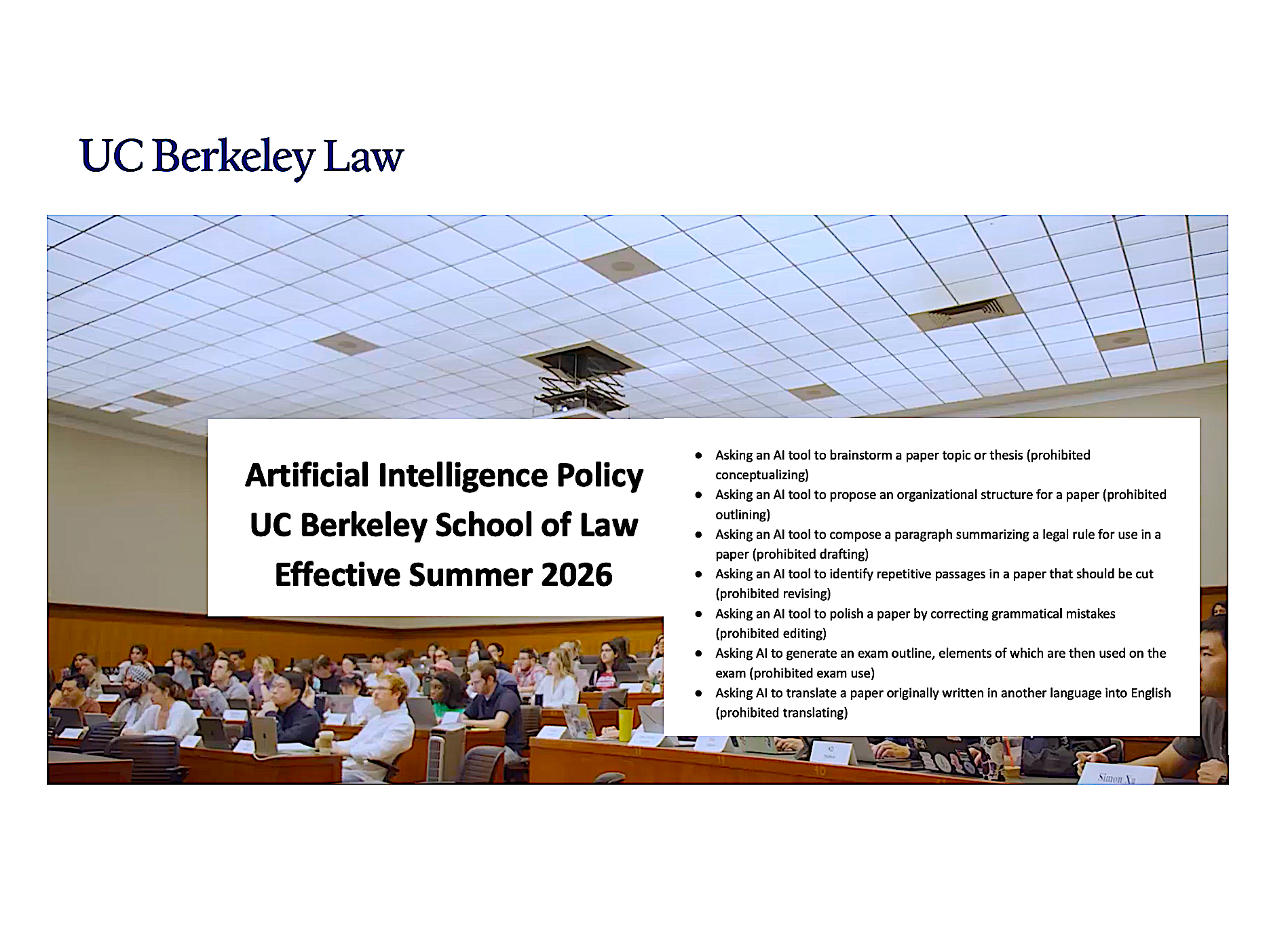
Everyone’s been waiting with bated breath for how academic institutions, especially those churning out future lawyers, would tackle the AI beast. The big question wasn’t if they’d do something, but what and how draconian it would be. Would it be a flat-out ban, a nudge towards responsible use, or something in between? UC Berkeley has now thrown its hat into the ring with a new policy, and honestly, it’s less about banning AI and more about a stern lecture on responsible usage. This isn’t the outright prohibition some might have feared, nor is it a free-for-all. It’s… complicated.
Let’s be clear: this isn’t a revolutionary move in the grand scheme of things. Many tech companies and even some smaller educational bodies have been wrestling with similar questions for months, if not years. The real surprise isn’t the policy itself, but that a major player like UC Berkeley is formally addressing it, and by extension, lending it a certain legitimacy. It signals that AI’s presence in legal scholarship and practice is no longer a fringe concern; it’s a core issue.
The Policy’s Punchline
So, what does this UC Berkeley decree actually say? The details are still emerging, but the general thrust is that students can use AI tools, but with extreme caution and full disclosure. Think of it as a parental warning: ‘You can play with that, but if you get hurt (or caught cheating), don’t come crying to us.’ The university wants students to understand the limitations, potential biases, and ethical implications. It’s a nudge towards critical thinking, forcing students to ask: ‘Is this AI-generated output accurate, fair, and truly my own work?’
Huge! How many schools will follow their lead?
That’s the million-dollar question, isn’t it? If a prestigious law school like UC Berkeley takes this stance, it sets a precedent. Other institutions will either follow suit, adapt their own policies, or risk looking out of touch. And let’s not forget the future employers; they’ll be watching to see how these emerging legal minds have been trained to interact with AI. Are they sophisticated users, or do they just blindly copy-paste?
Who’s Actually Making Money Here?
This is where the cynical journalist in me perks up. While UC Berkeley is busy drafting policies, the AI companies are raking in the dough. They’re selling their tools to students, educators, and eventually, law firms. The debate over academic integrity is a smokescreen for the inevitable integration of these technologies into every facet of the legal profession. The real beneficiaries are the companies that built these models and continue to refine them, pushing for wider adoption. Universities are playing catch-up, trying to impose order on a train that’s already left the station, picking up passengers (and revenue) along the way.
Is This About Integrity or Control?
Look, I’ve seen this playbook before. Tech disruption arrives, panic ensues, and then institutions scramble to assert control. Whether it’s the internet, social media, or now AI, the pattern is the same. The rhetoric often centers on ‘integrity’ and ‘ethics,’ which are undeniably important. But underneath it all, there’s a power struggle. Universities want to maintain their gatekeeping role, ensuring that knowledge and skills are acquired through traditional channels. AI tools threaten that. So, instead of outright prohibition – which is probably impossible to enforce anyway – they’re opting for a controlled integration. It’s a way to say, ‘We’re aware of this, we’re managing it, and we’re still in charge.’
This policy isn’t just about academic honesty; it’s about shaping how the next generation of legal professionals interacts with powerful new tools. It’s an attempt to steer the ship rather than letting it be commandeered. The question remains: how effective will this steering actually be when the AI itself is evolving at breakneck speed?
A Note on the Other Links: The original article bundled this UC Berkeley AI news with a rather eclectic mix of other Above the Law posts. While the pieces on law firm happiness, young lawyer timing, and the state of the rule of law offer their own insights (and frankly, paint a rather bleak picture of the legal world, with the Trump-related item adding a dash of the absurd), they’re distinct from the AI discussion. The core of this analysis remains focused on Berkeley’s policy and its implications.
🧬 Related Insights
- Read more: 2025 Saw Record Internet Shutdowns: A Global Backslide
- Read more: PTAB Reset: Is It Working? Deep Dive on Reforms
Frequently Asked Questions
What does UC Berkeley’s new AI policy actually say?
UC Berkeley’s policy allows students to use AI tools but requires full disclosure and emphasizes understanding the technology’s limitations, biases, and ethical implications. It promotes critical evaluation of AI-generated content.
Will this policy ban AI for law students?
No, it does not implement a complete ban on AI. Instead, it focuses on responsible usage and transparency.
Is this the first university to address AI in legal education?
While UC Berkeley is a prominent institution to issue such a policy, many other universities and educational bodies have been developing or implementing their own guidelines regarding AI use by students.