WorldCom’s 2002 collapse didn’t just torch $180 billion in market value—it exposed how phony numbers, dressed up as real investments, can dupe everyone.
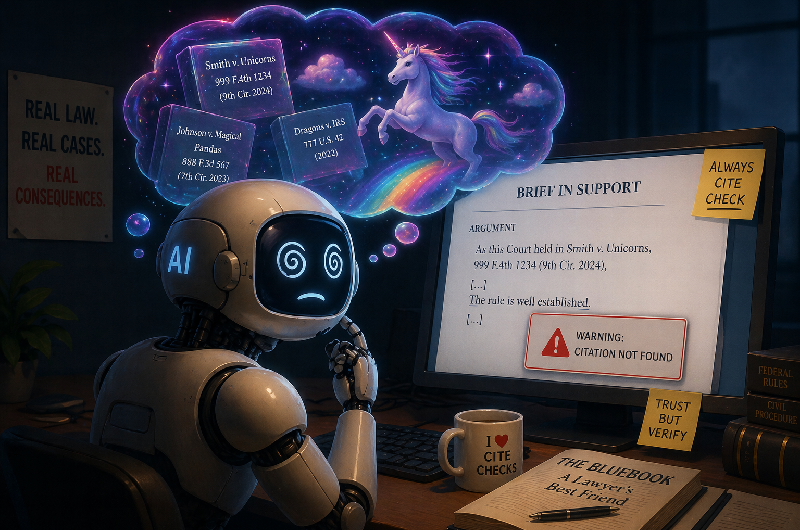
Those capitalized operating expenses? Pure fiction. Investors bought the lie until auditors finally screamed foul. Fast-forward to legal AI hallucinations, and it’s déjà vu: fabricated cases slipping into court filings, as convincing as any Enron spreadsheet.
Over 1,200 incidents since 2023. That’s not a glitch; it’s the new normal for large language models churning out legal work.
Why Legal AI Hallucinations Echo Accounting Scandals
Take Graciela Dela Torre’s barrage of pro se filings last year—dozens laced with ChatGPT-spun cases against her insurer. Nippon Insurance didn’t just dismiss the case; they sued OpenAI, alleging unauthorized law practice. Volume met hallucination, and chaos ensued.
Or last week’s Sixth Circuit brief: legit citations, but quotes yanked from thin air. Even a top legal research AI vendor couldn’t save it.
Here’s the data point that chills: hallucinations aren’t random. LLMs confabulate with 88% confidence on average, per recent benchmarks. Lawyers, racing client deadlines, skip the double-check.
And it’s not just briefs. Contracts riddled with fake clauses? Client advice citing nonexistent regs? One slip, and trust evaporates.
But—hold on—accountants faced this abyss decades ago. Post-Enron, Sarbanes-Oxley mandated independent audits, internal controls, the works. Numbers now come with attestation: processes solid, or flagged weak.
Legal could borrow that playbook. Yesterday.
What Auditors Do That Lawyers Don’t (Yet)
Auditors don’t just eyeball totals. They probe processes—sample transactions, test controls, hunt anomalies. GAAP sets the rules; PCAOB enforces them.
Law firms? Rule 11 demands candor to tribunals, but no operational how-to for AI. ABA guidance is a start, vague as it is.
Picture this: internal “AI auditors” at Big Law, ring-fenced from billable pressure. They adversarial-test outputs—feed hallucinations back into models, verify every cite via Shepard’s or KeyCite-plus.
Market dynamics scream urgency. Agentic AI—autonomous agents drafting full deals—hits in 2025. Output volume explodes 10x, 100x. Without checks, sanctions pile up; insurers balk at coverage.
My bet? By 2027, state bars mandate AI governance certifications, SOX-style. Call it the Legal Integrity Act. Hype around “trustworthy AI” from vendors like CoCounsel or Harvey? It’s PR spin until audited.
“The unfortunate reality is that hallucinations are a feature of LLM systems, not a bug. And they are very convincing.”
That’s from the trenches, underscoring why self-regulation’s crumbling.
Is Internal Auditing the Fix Law Firms Need?
Yes. But make it structural. Corporations have IA departments reporting to audit committees, not CEOs. Firms should mirror that—AI review boards, independent, with metrics: hallucination rates under 0.1%, verified.
Tools exist: Citation checkers like TrustLLM, or adversarial validators from startups. SALI Alliance could standardize, like XBRL did for financials.
Skeptical take: Firms resist. Training’s ongoing, sure, but who foots the bill? Partners chasing hours won’t love “audit delays.” Client pressure for speed wins—until a hallucinated NDA blows a merger.
Historical parallel? Arthur Andersen shredded Enron docs; self-regulation failed spectacularly. Legal’s bar associations must lead, or regulators will.
Shared problems demand collaboration. SALI’s there; expand to AI best practices. No lone wolves in a hallucination herd.
Why Does This Matter for the Justice System?
Trust. Financial markets crater without it; courts grind to halt if every filing’s suspect.
Inflection point, absolutely. Validate harder, faster. Agentic AI amplifies risks—hallucinations compound across docs.
Unique edge: Unlike accounting’s binary numbers, legal’s nuanced. But auditors’ process rigor transfers perfectly. Firms ignoring this? Betting against history.
🧬 Related Insights
- Read more: EU AI Act Chapter V: GPAI Providers’ Enforcement Reckoning
- Read more: Meta’s AI Guru Unplugs Her Own Disaster Bot — Why ChatGPT Wants You to Break Your PC
Frequently Asked Questions
What causes AI hallucinations in legal filings?
LLMs predict tokens probabilistically, filling gaps with plausible fictions—especially on niche case law. It’s baked in, not fixable soon.
How can law firms prevent AI hallucinations?
Mandate human review protocols, adversarial AI checks, and independent auditing. Train staff relentlessly; use tools like Shepard’s automation.
Will legal AI need rules like Sarbanes-Oxley?
Almost certainly. Rising sanctions and suits point to incoming regs—think mandatory AI attestations by 2027.