The USPTO, bless its bureaucratic heart, seems to be done with § 101 rejections. They’ve become practically extinct, a quaint artifact of a bygone era. Last year, out of 650,000 office actions, a mere 294 even dared to touch utility grounds. That’s a rounding error. And when they do show up, it’s because the inventor is pitching something that belongs in a sci-fi novel, not a patent application.
Let’s talk about the really, really strange stuff. A quick peek at early 2026 utility rejections reveals a curated collection of… well, science fiction made patent claims. We’re talking about curing leukemia and ensuring easy births via time travel and something called “inspiration zones.” Yes, you read that right. Time travel. For medical treatments.
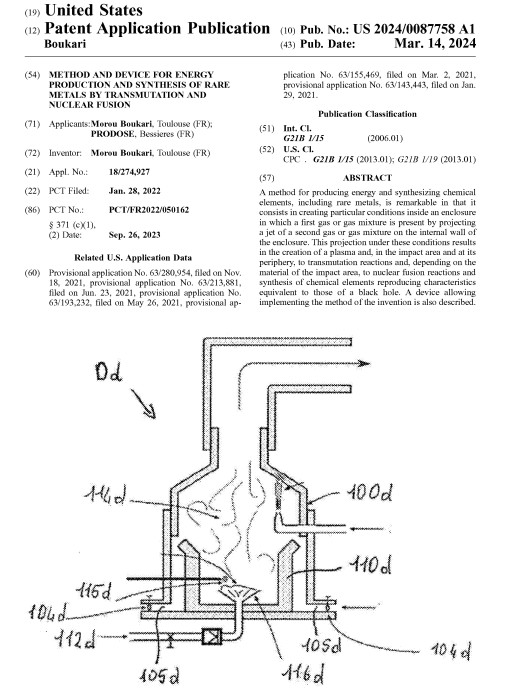
Then there’s the energy production angle. Apparently, you can generate power by recreating black hole conditions inside a heated steel enclosure. Because of course, that’s a Tuesday afternoon project for some. It’s almost cute, if it weren’t for the fact that someone actually submitted it.
We’ve also got the cold fusion adjacent crowd. You know, the perpetual motion machine enthusiasts of our time. Their device is apparently powered by “cycled electromagnetic radiation.” Fancy words for… what, exactly? The patent office, thankfully, seems to be asking.
And the biochemistry saga? A case now dragging its feet for THIRTEEN YEARS. The question: can melanin, that humble skin pigment, actually synthesize glucose from carbon dioxide? Thirteen years. For that. It’s enough to make you question the entire scientific method, let alone the patent process.
But the grand finale, the pièce de résistance of scientific absurdity? A room-temperature superconductor. Not from some garage inventor, mind you. This gem comes from one of the most prestigious condensed-matter labs in the country. Talk about a fall from grace.
Why is this sample so illuminating? Because each one of these claims, however outlandish, taps into a different corner of utility doctrine. They all harken back to the foundational cases like Brenner v. Manson, and more crucially, the Federal Circuit’s “implausible scientific principles” standard from In re Brana. That’s the judge-speak for when inventors try to sell the patent office on physics that sounds more like wishful thinking than actual science. The examiners are empowered to say ‘no’ when the applicant hasn’t made their fantastic claims credible.
It’s a stark reminder that even as AI and software patents face scrutiny, the fundamental requirement for a tangible, useful invention still reigns supreme. And sometimes, that usefulness is… aspirational, at best. The patent office is holding a firm line, forcing inventors to demonstrate actual, working science, not just hopeful theories. It’s a good thing. It keeps the patent system from becoming a literal time machine for speculative fiction.
Is § 101 Actually Dead?
Not quite. It’s just… hibernating. Or perhaps it’s been relegated to the land of the truly bizarre. While AI and abstract ideas have hogged the § 101 spotlight for years, utility rejections are still alive and kicking. They’re just for the fringe cases, the ones that make you scratch your head and wonder if the applicant has been sniffing their own experimental chemicals.
Utility rejections are typically an indication that the underlying disclosure is genuinely strange.
This quote, though simple, cuts to the core. When utility is questioned, it’s not usually about a nuanced legal interpretation. It’s about the invention itself being borderline impossible or simply not proven.
What About Real-World Inventions?
Of course, not every application is trying to bend the laws of physics. Most patent applications deal with incremental improvements, practical applications of known science. Those sail through § 101 just fine, assuming they meet the other patentability requirements. The utility rejections we’re seeing are the outliers, the ones that highlight the boundaries of what’s considered scientifically plausible. They serve as a high-profile warning to anyone thinking they can patent a pipe dream.
And frankly, that’s a good thing. It means the USPTO isn’t just rubber-stamping everything. There’s still a gatekeeper for truly outlandish claims. It’s a sanity check for the entire patent system. Even if it means wading through a bit of science fiction to find it.
🧬 Related Insights
- Read more: Axiom Unlocks Harvey AI for 14,000 On-Demand Lawyers—and Their Clients
- Read more: What is an AI Audit?
Frequently Asked Questions
What is a § 101 utility rejection? A § 101 utility rejection means the USPTO examiner believes the claimed invention does not have a specific, substantial, and credible use. It’s about whether the invention actually does something useful.
Are these rejections common? No, they are extremely rare. The data shows they’ve become almost obsolete, surfacing only for the most unconventional or unproven ideas.
Does this mean I can’t patent theoretical ideas? Theoretical ideas alone aren’t patentable. You need to demonstrate a concrete, useful application. If your theory is speculative or lacks a demonstrated, credible use, it’s likely to face a utility rejection.