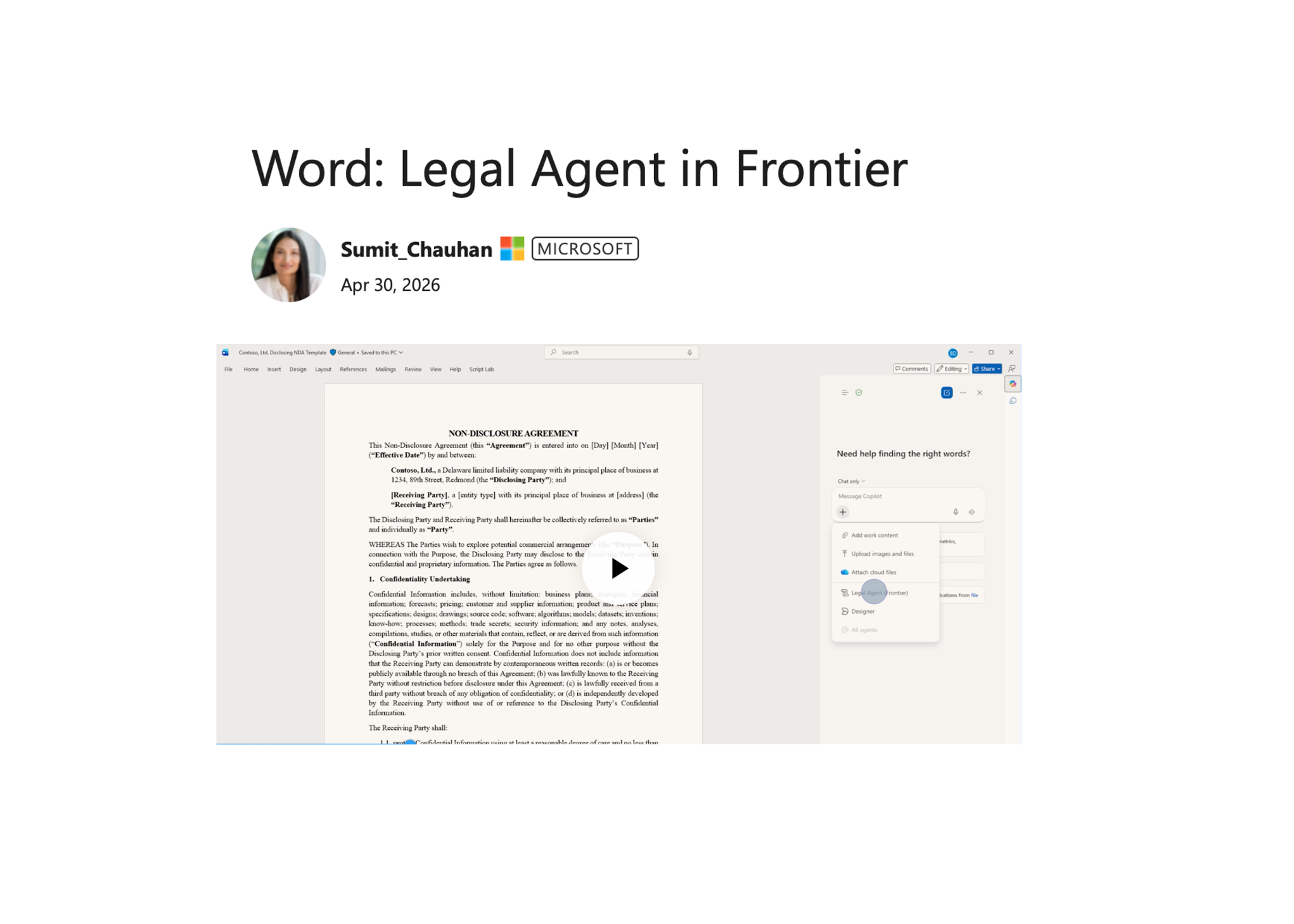
Forget the gentle nudges and the incremental upgrades we’ve come to expect from legal tech. The sector, long characterized by a steady march of innovation within defined niches, is facing a disruption of a magnitude that’s frankly terrifying for many incumbents. Microsoft’s entry with its Legal Agent, coupled with Anthropic’s Claude for Word integration, isn’t just a new contender entering the ring; it’s a seismic shift, an architectural redefinition that promises to reshape user behavior and, by extension, the entire market. Everyone was braced for sophisticated AI tools, sure, but perhaps not this aggressively integrated, this deeply embedded into existing workflows.
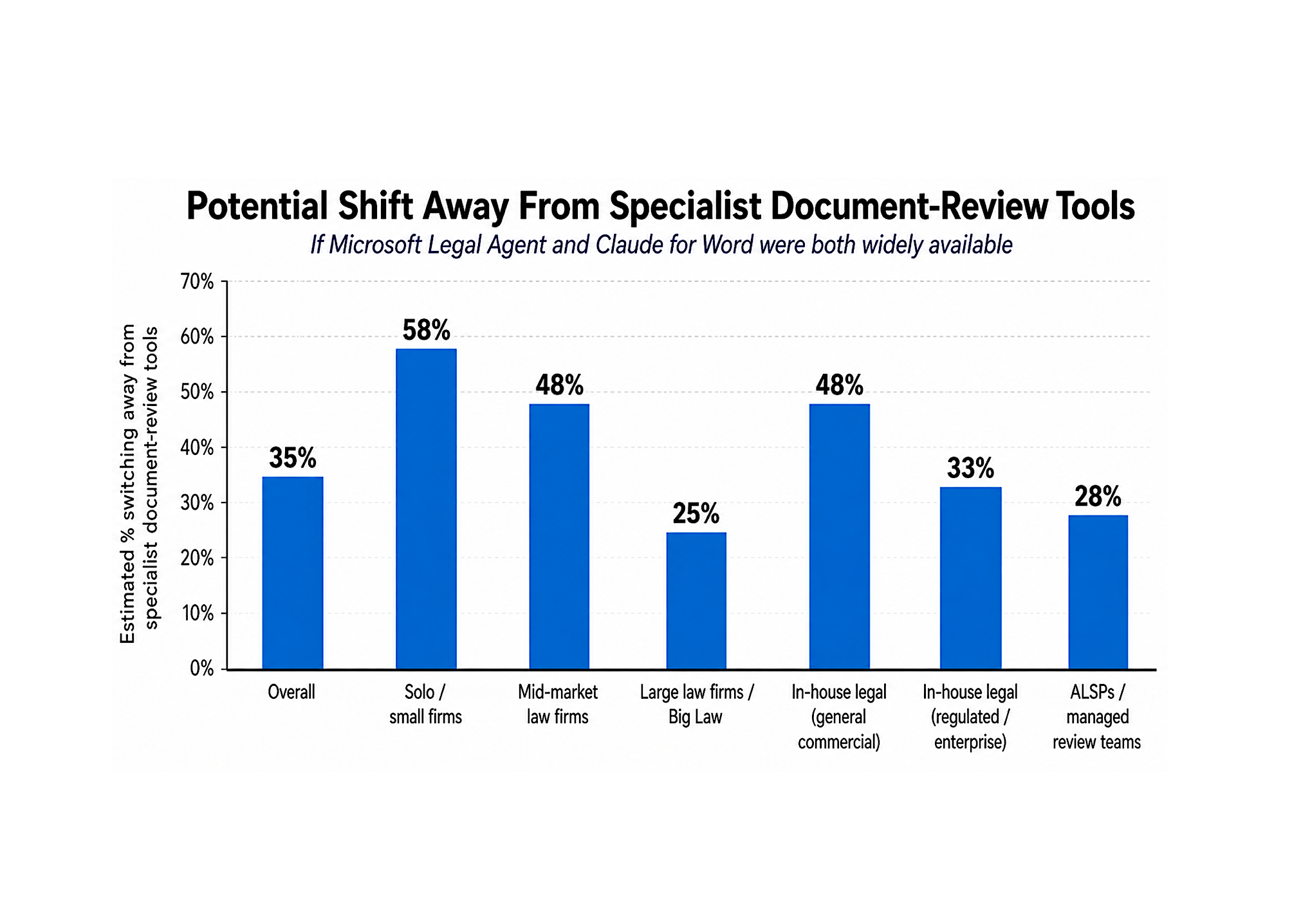
What’s truly striking isn’t just the technological leap, but the implication of that leap on user adoption. Estimates are already flying, suggesting that anywhere from 18% to a significant 25% of lawyers at large firms might pivot from their current specialized document review tools to these new integrated agents. For smaller firms and in-house legal departments, the seismic activity is even more pronounced, with figures leaning towards an even higher churn rate.
The Allure of Integration and Affordability
The math here is brutally simple, and frankly, it’s a logic that’s hard to argue with. Why would a lawyer, already immersed in the Microsoft suite and likely using Copilot, bother with a separate, potentially clunky, and often pricier legal AI tool if a powerful, integrated agent that lives right within their existing ecosystem can do the job? It’s the same pathway that made Claude for Word so compelling before its official integration – if the tool is accessible, cost-effective, and performs well, the switch becomes almost a no-brainer. The barrier to entry, for many, is suddenly obliterated.
This is why the impact is projected to be so profound for small and medium-sized firms, as well as for in-house teams focused on routine contract work. These segments, often more cost-conscious and less deeply entrenched in bespoke AI platforms, will likely find the ‘simpler and cheaper’ proposition of Microsoft’s and Anthropic’s offerings irresistible. We’re already seeing this play out with Claude’s standalone adoption; the integration will only accelerate it.
Big Law’s High-Stakes Calculation
Conversely, the elite tiers of Big Law and large in-house departments handling ‘bet-the-company’ level risk are in a different, though not entirely insulated, position. These behemoths are already heavily invested in specialized AI tools, not just for document review but for complex, curated workflows and proprietary legal data sets. Cost is often a secondary concern when stakes are this high. The existing tools, while potentially more expensive, are seen as providing a level of control, specialization, and curated data that a general-purpose agent, however advanced, might not replicate. They’re building moats, and these new tools will have to offer something truly compelling to breach them.
But even here, the TAM (Total Addressable Market) for specialized doc review tools takes a hit. Companies that have been dreaming of expanding into the smaller firm or in-house markets will find that dream colliding head-on with the ‘simpler and cheaper’ argument. It’s a direct challenge to their growth strategies.
The Specter of Valuation Shifts
The ramifications for legal tech valuations could be significant. Specialist contract management and document review platforms, the immediate front-line casualties, are most vulnerable. However, even broader platforms dabbling in contract review will see their addressable markets shrink. It forces a stark choice: innovate aggressively or face being slowly eroded. Sitting still isn’t an option when giants are rolling out integrated solutions that fundamentally alter the competitive landscape.
“If you are not committed to legal AI tools already, and the work you do is not always ‘bet the $1 billion company’ scale or risk level, then tools that easily live within the way you work already – and cost a lot less than some legal tech offerings – is really not a big step.”
This isn’t just about software; it’s about the underlying economics of legal services. As document review, a foundational pillar of legal work, becomes globally easier and faster through AI, the traditional billable hour for routine tasks becomes increasingly precarious. Clients will see the potential for AI to accelerate processes that once consumed hours, if not days, of billable time. This will inevitably reset expectations and, I suspect, further accelerate the decline of time-based billing for standardized legal work.
And the existential question looms: how long until other tech titans—Google, Meta, or another player drawn by the buzz and potential revenue—decide to plant their flag in the legal AI space? The current landscape, with Microsoft and Anthropic leading the charge, might just be the opening act.
This is the new era of legal tech. Whether you’re an incumbent, a startup, or a law firm user, the ground has just shifted seismically.