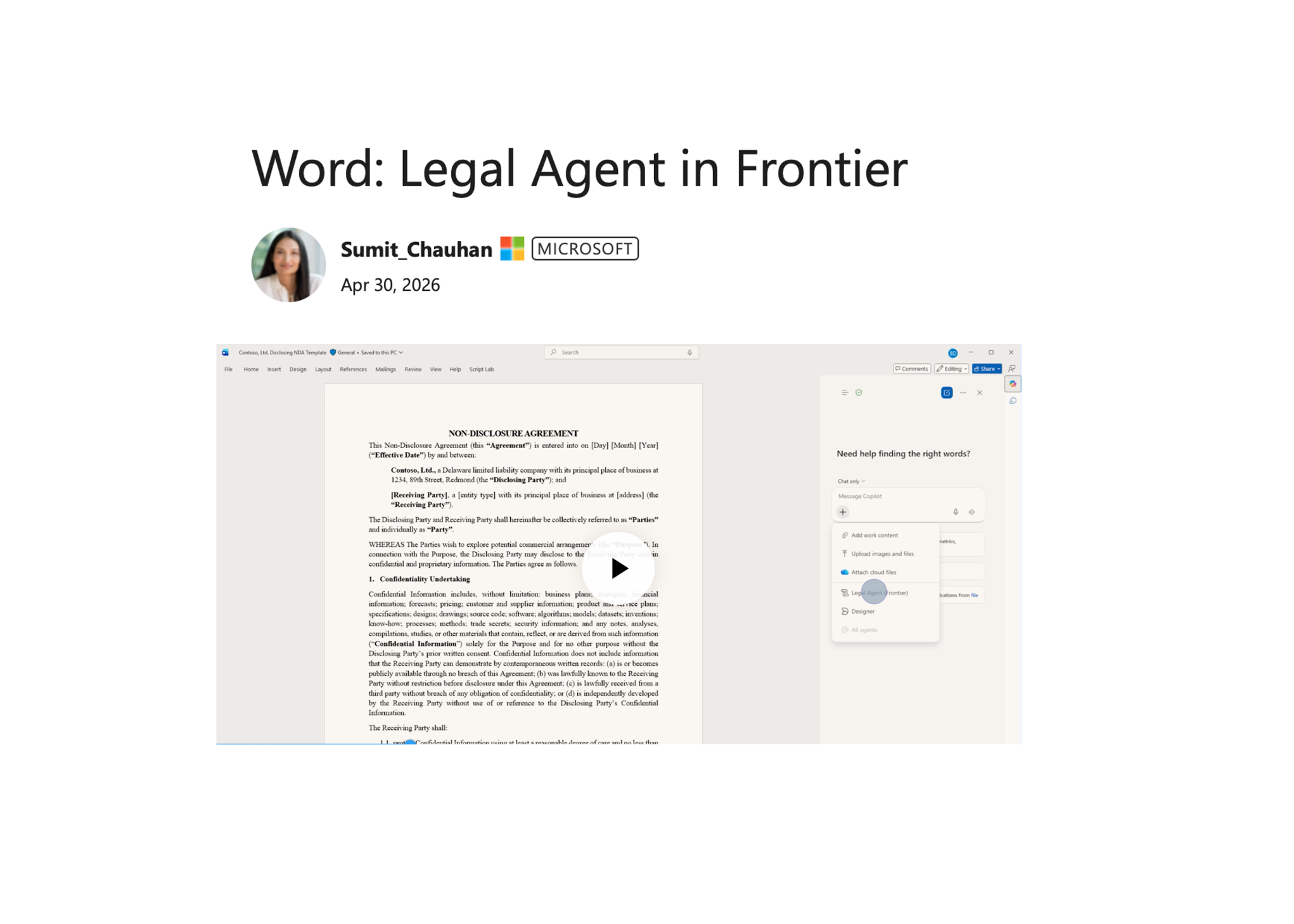
Microsoft just dropped a bombshell. A dedicated Legal Agent in Microsoft Word. It’s like they suddenly remembered the entire legal profession exists and happens to live in Word documents. The team from Robin AI, now part of Microsoft, apparently had a hand in this. Probably whispered sweet nothings about efficiency into Redmond’s ear.
Sumit Chauhan, bless his Office Product Group heart, claims general AI tools aren’t good enough for legal precision. He’s right, of course. They’re often about as useful as a screen door on a submarine. But is this bespoke solution the answer, or just another layer of corporate jargon wrapped in AI promises?
Does This Thing Actually Understand Contracts?
Microsoft says the agent is built with legal engineers. It’s supposed to follow structured workflows, not just parrot back keywords. It analyzes contracts clause by clause, against a playbook. Sounds… familiar. Many legal tech tools have claimed this for years.
The devil, as always, is in the details. Or rather, in the insertion algorithm. They boast about a “purpose-built insertion algorithm” that drives consistency. And an engine that understands the structure of a Word document. Not just the visible text. It apparently preserves formatting, lists, tables, and tracked changes. That’s… not entirely trivial. General LLMs often mangle formatting like toddlers with crayons. This deterministic resolution layer sounds like damage control for potential LLM meltdowns.
The agent applies edits in the document through a purpose-built insertion algorithm to drive consistency regardless of how each edit was introduced. The agent’s redlining engine understands the structure of a Word document, not just visible text.
So, it can spot risks, generate redlines, negotiate with existing tracked changes intact, and flag non-conforming clauses. It also claims to maintain trust and control with citations and pre-approval review. And it runs within Microsoft 365’s security. Which is… where most legal documents already live. Color me surprised.
Is It Just Marketing Hype?
Microsoft’s PR machine is in overdrive. They point to “strong interest” and legal professionals valuing its “domain expertise.” They’re touting “full control” and security. It’s all very… polished. Too polished, perhaps.
The kicker? It’s available in Word on Windows desktop through the Frontier program in the US. Frontier. Sounds appropriately experimental. And, of course, the obligatory CYA disclaimer: it doesn’t provide legal advice. AI-generated content may be inaccurate. Users are solely responsible. Well, that’s reassuring. So, it helps you do the tedious work, but you’re still on the hook for any AI-induced blunders. A classic legal tech paradox.
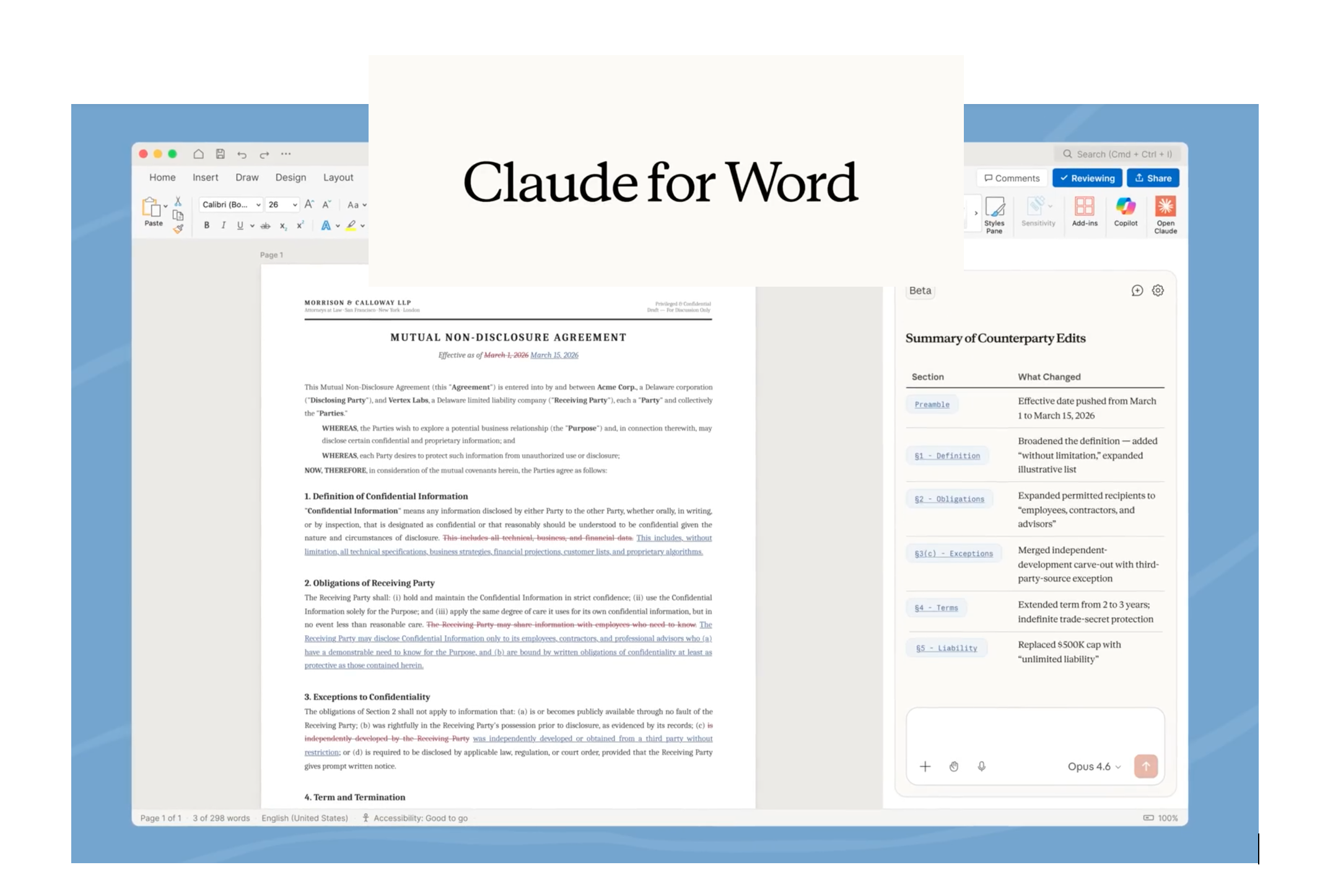
This move is clearly Anthropic’s Claude plugin for Word’s fault. Competition breeds… well, more AI tools for Word. The market is getting crowded. Soon, Word will need its own AI department just to manage the AI agents.
Microsoft wants to own the legal workflow. They’ve got the ubiquitous document editor. Adding a specialized agent feels like a logical, if slightly overdue, expansion. It’s a play for stickiness. Keep lawyers inside the Microsoft ecosystem. Don’t let them wander off to other specialized tools.
But here’s the real question: will this “Legal Agent” be a genuinely useful assistant, or just another shiny AI object that requires more management than it saves? The industry’s seen enough of those. It’s easy to build an agent. It’s harder to build one that truly understands the nuanced, often messy, reality of legal practice without needing constant supervision. Time will tell. Or, more accurately, early adopters and their inevitable support tickets will tell.
Microsoft’s foray into specialized legal AI within Word signals a broader trend. Big Tech is no longer content to let legal tech startups have all the fun. They’re wading in, leveraging their existing dominance. This isn’t just about a new feature; it’s about Microsoft planting its flag deeper in the legal tech landscape. They’re betting that convenience and integration will trump specialized, standalone solutions. It’s a gamble that, given their market position, might just pay off.