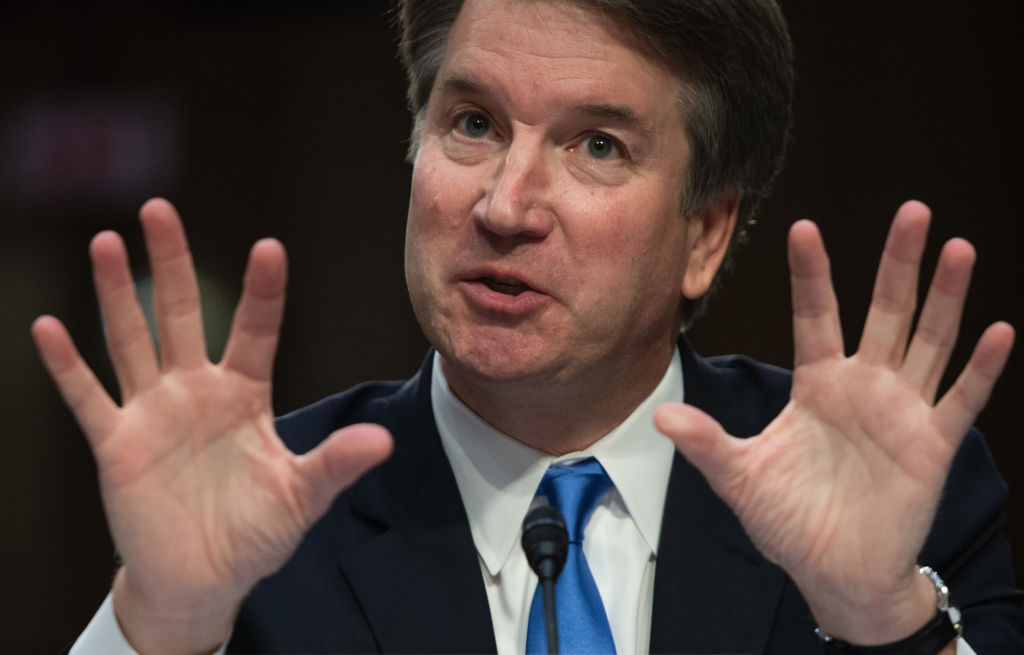
So, Matt Damon’s drunk Brett Kavanaugh, four beers and three shots deep, apparently stumbles upon the “original Constitution” and scribbles “SIKE” at the end of it, thus allowing Donald Trump a third term. Funny? Sure. But what does this have to do with us, the folks who actually have to do the legal work? It means we’re entering an era where the legal profession’s absurdities are becoming fodder for prime-time comedy, and that’s not just about Hollywood’s latest bit. It’s about the very real perception that legal frameworks, and the institutions upholding them, are being treated with something akin to a frat party’s logic.
Look, I’ve been covering Silicon Valley and its perpetual quest for the next big thing for two decades. The sheer speed at which “legal AI” has gone from a whispered possibility to a full-blown industry buzzword is frankly nauseating. And this SNL sketch? It perfectly encapsulates the public’s growing skepticism. It’s not about whether the Supreme Court will find a way to let Trump run again, though that’s a terrifying thought for many. It’s about the image the Court projects, and by extension, the image of the entire legal system.
And that’s where the supposed “legal AI” angle comes in. We’re bombarded with press releases about AI platforms designed to “reduce manual docket work” and provide “on-demand full docket summarization.” Sounds swell, right? On paper. But when you see a skit like this, it underscores a fundamental disconnect. The public sees the law and its enforcers as potentially arbitrary, subject to drunken pronouncements and scribbled afterthoughts. Does a fancy AI tool that summarizes case law really matter if the foundational principles it operates on are perceived as being so… flimsy?
The ‘SIKE’ Clause: A Metaphor for Legal Tech Hype?
The gag itself — a doctored Constitution — is genius in its simplicity. It’s the legal equivalent of a toddler drawing on the walls. And yet, it resonates because we believe it’s not that far off from what people are arguing in courtrooms. This is where the “AI revolution” in law faces its biggest hurdle: trust. If the public’s mental model of legal interpretation involves finding loopholes with Sharpie, how can we expect them to trust algorithms to provide fair and accurate legal guidance? Who’s actually making money here? It’s the companies selling the slick interfaces, the ones promising efficiency, while the messy reality of legal interpretation—and the public’s perception of it—remains stubbornly analog, and in this case, hilariously crude.
It’s the kind of joke that works because it feels only marginally more ridiculous than the actual legal theories currently floating around American politics. This isn’t just about SNL finding a target; it’s about a deeply held sentiment that the pillars of justice are, at best, teetering. And when you’re trying to sell AI tools to a legal world that, in the public imagination, is wrestling with a “SIKE” clause, well, that’s a tough market.
The cold open was less “political satire” and more “lightly fictionalized documentary.”
That quote, from the original piece, hits the nail on the head. It’s not a stretch to see this as a commentary on the perceived arbitrary nature of legal rulings. Legal tech companies are pitching solutions for a system that, in popular culture, is now depicted as being run by drunken justices doodling on founding documents. The irony isn’t lost on me. We’re building sophisticated AI to navigate a legal landscape that’s being portrayed as utterly unprofessional.
Is This a Warning for Legal AI Innovators?
Perhaps the most valuable takeaway from this sketch isn’t about politics, but about public perception. Legal AI is being sold on the premise of order, logic, and efficiency. But if the public perception is one of chaos and arbitrary rule-making—conveniently summarized by a drunk justice and a Sharpie scribble—then these AI tools are trying to bring order to a perception of pandemonium. The real question isn’t whether AI can summarize a brief faster; it’s whether the underlying legal system it’s meant to serve is even perceived as rational enough to benefit from that speed. The companies selling these tools need to grapple with this perception gap. Because right now, the dominant image isn’t about efficient AI; it’s about a constitutional amendment being invalidated with a childish doodle.
This isn’t to say legal AI tools are useless. Far from it. They can streamline workflows, identify patterns, and assist overloaded attorneys. But the narrative surrounding them needs to acknowledge the broader context. If the public thinks the Supreme Court is deciding things after a few too many, then pitching AI as the ultimate arbiter of legal truth is a tough sell. It’s like trying to sell a state-of-the-art navigation system to someone who believes all roads lead to a giant, unreadable treasure map.
So, what’s the net effect for actual lawyers and legal professionals? It means you’re not just fighting opponents in court; you’re fighting a creeping public cynicism that paints your entire profession—and the tools you might use—as potentially absurd. The humor is dark, but the implications for the legal tech market, and frankly, for the public’s faith in justice, are far from funny.
🧬 Related Insights
- Read more: SCOTUS Justices’ Pets: The Furry Side of the Robes We Never Hear About
- Read more: CAFC Shoots Down Trade Secret Claims: What It Means for Innovation
Frequently Asked Questions
What does the SNL Kavanaugh sketch mean for legal tech?
It highlights a significant public perception gap. While legal tech promises efficiency and logic, the sketch portrays the legal system as potentially arbitrary and unprofessional, making it harder to build trust in new AI tools.
Will this sketch impact how people view the Supreme Court?
Likely. It taps into existing anxieties and reinforces a humorous, albeit exaggerated, image of the Court as less than solemn, which can influence public opinion and trust.
Can AI actually help with complex legal interpretations like the ones in the skit?
AI can assist by analyzing vast amounts of legal text and identifying precedents. However, it cannot replicate human judgment or creativity in interpreting ambiguous laws, nor can it overcome the public’s perception of a flawed legal system.