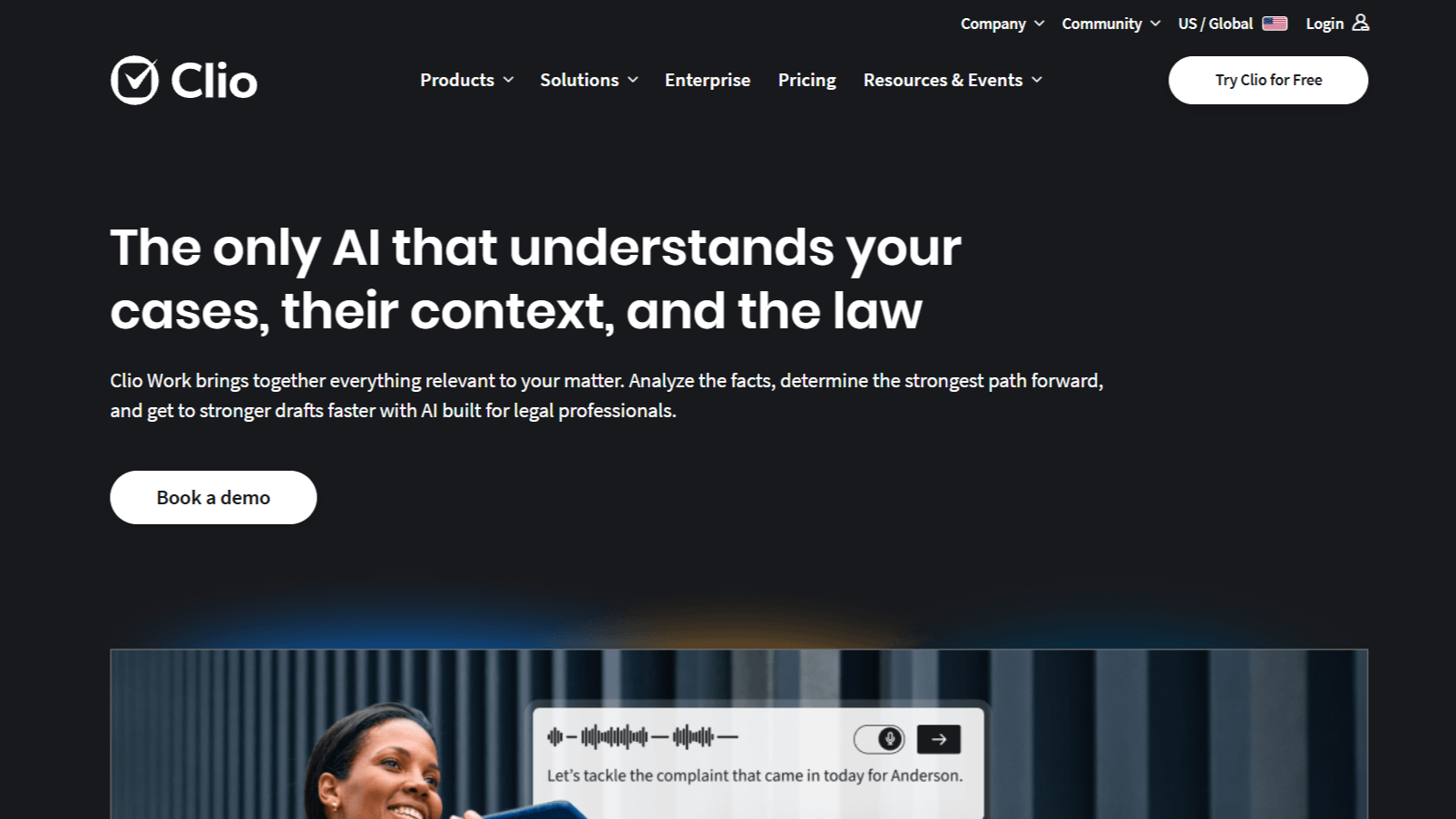
Everyone figured Clio Work would stay locked behind the paywall of their flagship practice management software, Clio Manage. Big firms with deep pockets? Sure, they’d pony up. But solos and small shops scraping by on flat fees? Nah, too pricey, too integrated. Wrong. Clio just flipped the script, making Clio Work a standalone buy for any firm under the mid-size mark. This isn’t some side hustle—it’s their fastest-adopted product ever, launched last October and already rewriting how lawyers grind through research and strategy.
And here’s the market shake-up: Clio’s betting legal AI isn’t just a bolt-on anymore. It’s the entry point. With vLex’s billion-document library in their pocket—thanks to that $1B buyout—they’re pitching this as the real deal, not ChatGPT dressed in a briefcase.
What Does Clio Work Actually Do?
Clio Work chews through your case files, spots issues, crafts arguments. Goal-based prompts? It plans, executes, refines. Litigation pleadings to contract reviews—it’s got workflows for all that jazz. Pulls from firm-specific context too, so outputs sharpen as you feed it matters.
“Firms of all sizes are turning to Clio Work to get work done,” CEO and founder Jack Newton said in the announcement. “Its rapid adoption shows that legal AI is becoming where work begins, and Clio is defining that starting point. Expanding access to the wider legal market is the next step, giving more firms direct access to the AI setting the standard for the profession.”
Newton’s not wrong on adoption speed. But let’s pump the brakes—that quote reeks of founder hype, positioning Clio as the profession’s North Star. Reality check: eight of the top 10 global firms use their vLex corpus. Impressive. Yet solos aren’t Big Law. They’re hustling family law in strip malls, not billing $1,200 hours on M&A.
This move echoes LexisNexis’s pivot in the ’90s—when they unbundled research from full suites to snag the solo market. Clio’s doing the same, post-vLex acquisition and that $500M Series G round valuing them at $5B. Smart timing. Agentic updates this month mean it handles multi-step tasks from one prompt. No more hand-holding.
But does it make sense? Absolutely—for Clio. Market dynamics scream opportunity: legal tech’s exploding, with AI tools projected to hit $37B by 2028 (Statista data). Solos represent 50% of U.S. lawyers (ABA stats), underserved by bloated platforms. Standalone at $199/user/month? That’s a steal compared to Westlaw’s $100+/search habits.
Why Offer Clio Work Standalone Now?
Look, Clio launched this at ClioCon in October 2025—keynote vision of an ‘intelligent legal work platform’ blurring business-of-law and practice-of-law lines. Initially gated behind Manage subs. Six months later? Boom, standalone. Why? Data. They’ve got traction—early adopters raving.
A partner at Williams & Hamilton calls it a ‘force multiplier’ for tedious tasks. King Law Offices says it lifts junior work, cuts senior interventions. Matechik Law ditched generic AI for this. Testimonials check out, but they’re curated. My unique insight: this is Clio’s Trojan horse. Hook solos on AI smarts, upsell Manage later. Retention math works—AI stickiness breeds platform lock-in. Bold prediction: 30% of standalone buyers upgrade within a year, juicing Clio’s $300M+ ARR.
Skeptical take? vLex integration’s gold—110 jurisdictions, verified docs. Beats Harvey or Casetext’s narrower scopes. Yet ‘agentic’ sounds buzzwordy. Does it hallucinate less than GPT-4o? Clio claims context fixes that, but no independent benchmarks yet. We’ll see.
Early reactions glow. But small firms worry about data privacy—uploading client files to Vancouver servers? Clio’s got SOC 2, but trust’s earned.
And the mobile app, Vincent? Standalone too. iOS, Android. Perfect for depos on the go.
This widens the moat. Competitors like PracticePanther or MyCase scramble— their AI’s bolted-on, not corpus-deep.
Newton wraps with: “This is just the beginning.” Understatement. If Clio Work scales, it redefines solo viability. No more Westlaw bills killing margins.
But here’s my sharp position: it’s a winner for Clio, not a solo savior—yet. Hype meets reality when billing cycles hit. Watch churn rates.
Is Clio Work Worth $199 for Solos?
Price point’s aggressive. BigLaw laughs it off. Solos? That’s 10% of monthly revenue. If it saves 5 hours/week on research (per early users), ROI’s there. Historical parallel: LexisNexis unbundling crushed solo research costs 40% by 2000. Clio could halve AI entry barriers.
Critique the spin: ‘Global leader in legal AI’? Self-proclaimed. Harvey’s got AmLaw 100 lock. Clio’s playing catch-up, but vLex gives edge.
Global rollout underway. U.S., Canada, UK first—then everywhere.
Market verdict: bullish. Clio’s valuation jumps on this.
**
🧬 Related Insights
- Read more: Remote Work’s GDPR Blind Spots: Encryption, Policies, and the NIST Lifeline
- Read more: The Pentagon Is Using Claude to Make War Decisions. Should We Be Terrified?
Frequently Asked Questions**
What is Clio Work and what does it do?
Clio Work’s an AI workspace for legal research, analysis, strategy. Upload facts/files, give goals—it plans/executes using a billion-doc library plus your matter context.
Do I need Clio Manage to use Clio Work?
No—now standalone for solos/small/mid firms. $199/user/month.
Is Clio Work better than ChatGPT for lawyers?
Yes, per Clio—specialized corpus, firm context cut hallucinations. Early users ditched generic AI.