The air in New Orleans is already thick with the smell of cheap coffee and desperation, the annual Association of University Technology Managers (AUTM) meeting kicking off tomorrow. Amidst this predictable industry circus, there’s a quiet anniversary being marked: 90 years of the Wisconsin Alumni Research Foundation (WARF). Nine decades. That’s a long time to be figuring out how to monetize the intellectual output of a public university.
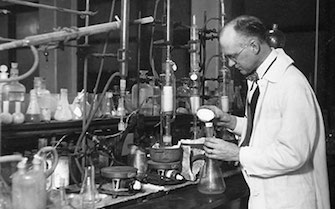
Founded way back in 1925, WARF’s whole gig is simple: snag patent rights for UW-Madison’s inventions and then, you know, try to sell ‘em. They’re sitting on a cool $2.6 billion endowment, which sounds like a lot, but let’s talk about what actually comes back to the university. Over the years, they’ve bragged about pulling in over $800 million in patent royalties, translating to a cool $1.25 billion for the institution. Numbers. Gotta love ‘em when they’re big. They point to the usual suspects: Harry Steenbock’s UV light trick for vitamin D (saved kids from rickets, good for them), the blood thinner Warfarin (widely used, less drama), and embryonic stem cells (always a buzzword).
But here’s where it gets interesting. WARF wasn’t just some passive IP shop; they were there for the Bayh-Dole Act of 1980. That’s the law that basically handed universities the keys to patent inventions funded by the federal government. And who was instrumental in that? A guy named Howard Bremer, WARF’s patent attorney. They practically canonize him, calling him the “father of university licensing,” especially in biotech. One industry insider apparently mused that half the room owed their jobs to Bremer and his posse. High praise. And Bremer, along with Norman Latker from NIH, apparently buttonholed Senator Bayh to streamline the whole messy process. It worked. Bayh-Dole. The Economist even called it the most successful domestic legislation post-WWII. Not bad for a bunch of academics and lawyers.
And even after Bremer shuffled off this mortal coil in 2013, WARF kept chugging along. In 2013, UW-Madison was 6th globally for U.S. patents. Prostate cancer vaccines, clean engines, prosthetic control tech – WARF was apparently involved. They still dutifully list new patents on their website, along with info on injection molding and compression ignition. Very exciting stuff. A quick peek at Innography data from 2014 shows 151 U.S. patents. What were they focused on? Stem cells (shocking), influenza A, pharma, and biotech. Seems pretty much the same old song and dance.
The Bayh-Dole Buyout: Did it Really Pay Off?
Look, the Bayh-Dole Act was a seismic shift. Before it, the government held most patents on federally funded research. After, universities got to keep ‘em. The idea was to speed up commercialization, create jobs, and generate revenue. And on the surface, WARF’s 90-year run, buoyed by its role in advocating for Bayh-Dole, looks like a win. They’ve demonstrably facilitated the transfer of knowledge from lab coats to the marketplace. Billions in revenue. Technologies that have changed lives.
But let’s be real for a second. This entire ecosystem of tech transfer offices, patent lawyers, and licensing agreements? It’s a massive bureaucracy. And bureaucracies are expensive. Who really makes the most money in this game? It’s not always the taxpayer or even the university itself, once you strip away the administrative costs, the legal fees, and the inevitable patent litigation. It’s often the intermediary, the licensing firms, and, down the line, the corporations that acquire these technologies. WARF is the middleman, and like any good middleman, it takes its cut. The question is whether the net benefit to society is as rosy as the headline royalty numbers suggest.
Is WARF’s Model Built for the AI Era?
This is where things get dicey. We’re awash in AI research right now. Algorithms that can churn out novel designs, predict protein structures, and even write code. Universities are producing AI research at a dizzying pace. But how does WARF’s 90-year-old patenting model handle something like generative AI? Can you patent an algorithm developed with federal funds? Can you effectively license a continually evolving piece of software that can retrain itself?
The very nature of AI innovation is different. It’s often iterative, collaborative, and sometimes open-source. The traditional linear path from lab discovery to a defensible patent, then to a licensing deal, feels… quaint. Companies are already building massive AI models using vast datasets – some of which undoubtedly originate from university research. The legal and ethical quagmire around AI patenting and ownership is only just starting to form. WARF, and its brethren in university tech transfer, are going to have to get very, very creative. Or perhaps, they’ll have to accept that some of the most impactful innovations in AI won’t fit neatly into their century-old playbook.
“For the past 90 years WARF has promoted scientific research and innovation at UW-Madison and has earned more than $800 million in patent royalty revenues over the years and has generated $1.25 billion in revenue for the institution.”
The foundation’s longevity is undeniable. Its success in navigating the patent landscape, especially its foundational role in the Bayh-Dole era, is a historical footnote worth remembering. But as AI continues to reshape the innovation landscape, WARF’s next 90 years will likely look very different. It’ll be fascinating to see if they can adapt, or if they’ll be remembered as a relic of a bygone era, much like a vitamin D-enriched cracker at a CRISPR conference.
🧬 Related Insights
- Read more: EFF Targets EU Digital Fairness Act: Privacy Over Surveillance
- Read more: Federal Circuit Kills Driver Distraction Patent [2026 Ruling]
Frequently Asked Questions
What does WARF actually do?
WARF is the non-profit tech transfer organization for the University of Wisconsin-Madison. Its primary role is to manage the university’s inventions, obtain patent rights for discoveries, and license those patents to companies for commercial development, generating revenue for both WARF and the university.
Is the Bayh-Dole Act still relevant?
Yes, the Bayh-Dole Act of 1980 remains highly relevant as it governs the patenting and commercialization of federally funded research inventions by universities, non-profits, and small businesses. It has been credited with stimulating innovation and economic growth.
Will WARF patent AI discoveries?
It’s highly probable that WARF will attempt to patent AI discoveries from UW-Madison. However, the patentability and commercialization of AI technologies present unique challenges compared to traditional inventions, and WARF will need to adapt its strategies to this evolving landscape.