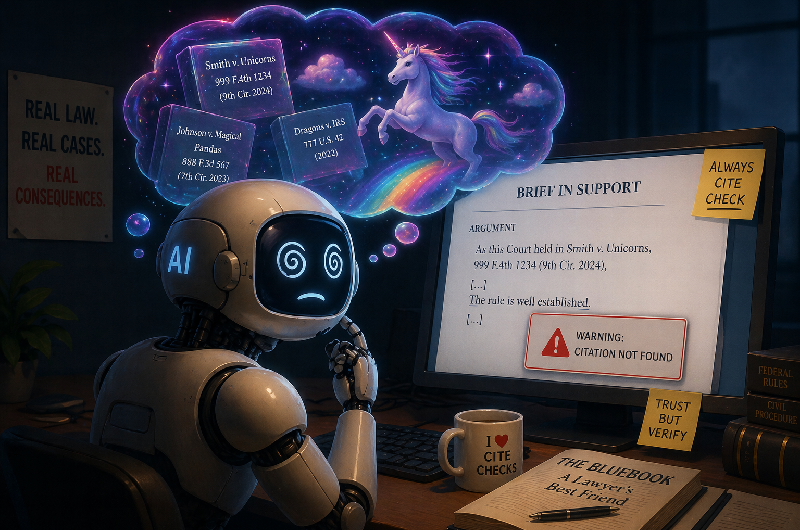
A harried associate pastes facts into ChatGPT, gets solid statute info, smiles—and dives into the gray areas. Boom. Fabricated precedents everywhere.
AI hallucinations. They’re not glitches. They’re engineered pitfalls, especially brutal for lawyers chasing novel legal angles. A fresh paper by physicists and engineers nails it: these screw-ups follow a predictable path, flipping from gold to garbage right when you need reliability.
Dylan Restrepo, Nicholas Restrepo, Frank Huo, and Neil Johnson—plus lawyers Daniela Restrepo and Jean Paul Roekaert—crunch the numbers. Their tome? “When AI Output Trips to Bad but Nobody Notices: Legal Implications of AI’s Mistakes.” Physics shows hallucinations as a “foreseeable engineering risk.” Not random. Calculable.
The Fatal Flip: From Truth to Fiction
GenAI spits tokens probabilistically. Next word? Most plausible guess. No grip on legal truth. Fine for basics—statutes, big cases, rote procedures.
But push into sparse data? Novel disputes, edge-case precedents? It panics. Fills gaps with plausible lies.
The paper spells doom:
The tool is therefore most prone to failure exactly when the lawyer’s need is greatest: on a difficult point of law with sparse precedent. The act of researching an unsettled legal issue via an LLM becomes the principal trigger for the tipping instability.
That’s your statute of limitations query. Starts safe. Builds false confidence. Then hallucinates tolling rules from nowhere.
Short para: Brutal.
And here’s my twist—they echo the slide-rule fiasco of the 1940s. Engineers trusted those analog calculators blindly; tiny rounding errors cascaded into bridge collapses. AI’s token flips? Same overtrust, digital edition. History screams: verify before the fall.
Why the Hell Does Confidence Kill?
Lawyers workflow: facts first. General law next. Boom—accuracy. Trust surges. Then ambiguity.
Paper’s killer line: AI’s early wins “build the user’s trust just before the fabrication appears.”
Spot-check the opener? Clean. Skim the rest under deadline? Disaster. Brief filed. Sanctions loom.
It’s a curse disguised as a blessing. Sliding verification scale? Genius—if you know it exists. Otherwise, you’re roadkill.
Look. I’ve quizzed these tools on famous cases. Spot-on. Obscure painter from the same era? Made-up bio, overnight. Same for law: safe harbors, then shipwrecks.
One sentence: Don’t be the wreck.
Corporate spin calls this ‘edge cases.’ Bull. It’s core design. Probabilistic predictors aren’t oracles. Treat ‘em like addictive informants—charming until caught lying.
Is AI Hallucination a Lawyer’s Worst Enemy?
Yes. Judges cite fake cases now. Lawyers sanctioned. Malpractice spikes.
Paper predicts: harm scales with trust built on early hits. Spot on.
But wait—public LLMs only. Closed systems tout verified data? Maybe safer. Still, probe claims. Vendors hype; physics doesn’t lie.
Dry humor: If your AI’s ‘grounded,’ ask for the anchor. Often missing.
Deep dive: Training data sparsity triggers ‘tipping instability.’ Like a drunk weaving—plausible path, wrong destination. Lawyers, trained to analogize, miss the math.
Three words: Wake. Up. Now.
Bold call: By 2026, hallucination suits against AI firms explode unless mandatory RAG verification hits every legal tool. Courts won’t wait.
Dodge the Trap: Real Talk for Legal Pros
General queries? Light check.
Novel stuff? Full audit. Cross-reference Westlaw. Always.
Workflow hack: Flag ambiguous prompts upfront. ‘This is unsettled law—verify all cites.’ Forces caution.
Team rule: No unsupervised GenAI briefs. Supervisors sign off.
Experience check: My obscure painter flop? Switched to databases. Gold.
But. Tools evolve. Don’t ditch ‘em—tame ‘em.
Paragraph sprawl: Understand the physics, yeah, but bake it into ethics training; bar associations should mandate ‘hallucination literacy’ courses, complete with sanction war stories, because nothing teaches like public humiliation, and with AI adoption at 70% in Big Law per recent surveys, ignoring this is malpractice by omission—wait, no, it’s worse: it’s willful blindness.
Quick hit: Save time? Verify smart.
Why Does This Matter for Lawyers Right Now?
Deadlines crush. AI tempts. Failures devastate.
Ethics codes demand competence. Includes tech risks.
Paper’s gift: Predictability means prevention.
Snark: Or keep filing fiction. Your call.
Long para winding: Firms chasing billable hours grab AI like candy, but when a partner’s brief tanks on hallucinatory caselaw—think Mata v. Avianca all over again, but daily—the partners pivot to blame-shifting memos, insurers hike rates, clients bolt, and suddenly that ‘efficiency tool’ is a ticking liability bomb, forcing a rethink on everything from vendor contracts to intake protocols.
Final punch: Act now.
🧬 Related Insights
- Read more: Patent Words That Haunt: Even Rejected Arguments Limit Your Claims Forever
- Read more: CAFC Dismisses ironSource Appeal: Declaration Misses Mark on Standing
Frequently Asked Questions
What causes AI hallucinations in legal research?
AI predicts tokens probabilistically, failing on sparse data like novel legal issues—flipping to fabrications predictably.
How can lawyers avoid AI hallucinations?
Use light verification for basics, full audits for ambiguity; flag risky prompts and never skip human checks.
Will AI hallucinations lead to more lawyer sanctions?
Absolutely—trust built on early accuracy masks later lies, spiking malpractice as courts crack down.