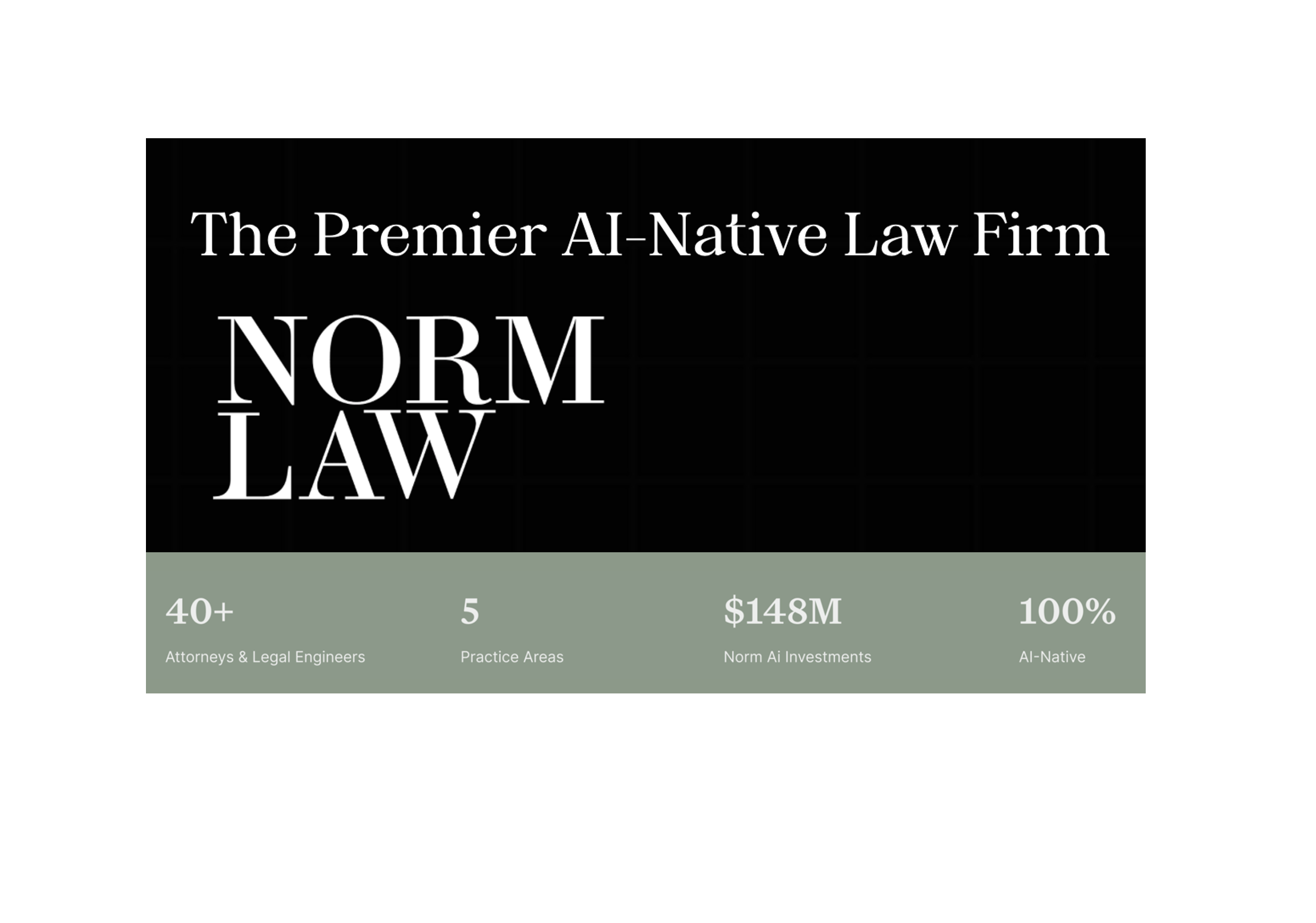
$140 million. That’s the war chest Norm Ai — and its legal arm, Norm Law — has amassed from heavyweights like Blackstone, Bain Capital, and even Marc Benioff. But here’s the real eyebrow-raiser: they’ve now poached Bill Mone, a Ropes & Gray partner who’s spent years knee-deep in private equity’s murkiest deals, to head up their PE practice.
It’s not just another hire. Norm started as this quirky outfit building AI agents to babysit other AI agents — think digital hall monitors for rogue bots. Then they pivoted hard into NewMod territory, slapping together a full-blown law firm wired directly into their tech stack. And the lawyers? Not some junior paralegals grinding through NDAs. We’re talking New York partners from the tippy-top of the AmLaw 100.
Bill Mone’s move screams signal over noise.
Why Are BigLaw Partners Flocking to AI Upstarts Like Norm?
Look, private equity law isn’t for the faint-hearted. It’s a pressure cooker of billion-dollar M&A, LBOs, and restructurings where one missed covenant can torch a fund. Mone’s quote nails it:
‘Private equity lawyering has always been about creativity, commercial judgment and smoothly execution where speed is paramount. The next level is technology that actually understands the structure and nuance of these transactions. Norm Law’s model integrates AI directly into the legal workflow in a way that aligns with how deals get done. That creates a real advantage for clients.’
He’s not wrong. But — and here’s my unique take, one you won’t find in the press release glow — this feels eerily like the quant revolution on Wall Street in the ’90s. Back then, Goldman and Renaissance hired PhDs from MIT to model chaos into profits, sidelining old-school traders. Norm’s doing the same for law: blending grizzled PE vets with legal engineers and frontier AI to re-architect deal workflows from the silicon up. Don’t sleep on it; by 2027, I predict AI-native firms like this will shave 40% off PE transaction costs, forcing BigLaw to either adapt or atrophy.
Norm’s CEO John Nay chimes in too:
‘Bill has built his career advising leading private equity firms on their most important transactions. He brings deep domain expertise and a practical understanding of how legal work happens in high-stakes environments. That perspective is critical as we continue building a fundamentally better model for institutional legal services.’
Practical. That’s the word. Norm isn’t hawking chatbots for cookie-cutter contracts — yawn. They’ve got 40+ lawyers and engineers tackling ‘complex, high-stakes transactional matters.’ The architecture? Proprietary legal reasoning systems fused with embedded regulatory smarts, all for global institutional clients. It’s PE deals on steroids: AI that groks nuance, anticipates risks, and executes faster than a human team bleary-eyed at 3 a.m.
But skepticism’s my job. Is this genuine disruption, or PR spin masking a talent grab?
Can AI-Native Law Firms Like Norm Actually Outpace BigLaw?
Short answer: yeah, if they nail the hybrid model. Traditional firms are dinosaurs in this race — billable hours chained to associates who bill $1,000/hour to review diligence dumps. Norm flips the script: lawyers direct AI workflows, not drown in them. Mone’s role? Advising PE clients while co-piloting with engineers to birth ‘AI-native’ processes. Imagine drafting a credit agreement where the model auto-flags covenant breaches based on 10 years of deal data, then suggests tweaks with commercial bite.
The why here is architectural. Norm didn’t bolt AI onto a legacy firm; they built from atoms up. Started policing agents (a nod to AI safety), evolved into a platform marrying frontier models with legal DNA. Backers like Vanguard and Coatue aren’t sprinkling pixie dust — they’re betting on scalable law at institutional scale.
Critique time. Corporate hype screams ‘smoothly execution,’ but PE deals live or die on relationships. Can algorithms schmooze LPs over steak? Probably not yet. Still, Mone’s defection — from Ropes & Gray, no less — validates the bet. He’s not jumping for stock options; he’s chasing the ‘next level.’
And the hires keep coming. Over 40 bodies now, blending Bar-admitted rainmakers with code wizards. That’s not a firm; it’s a machine shop for legal ops.
Here’s the thing.
This shift echoes software eating the world — but for law. Remember how Salesforce gutted on-prem CRM? Norm’s eyeing transactional law the same way. PE funds, squeezed by dry powder and rising rates, crave speed without errors. If Norm delivers, incumbents like Kirkland or Simpson face a reckoning.
What Does This Mean for Private Equity Clients?
Cost. Speed. Precision. Pick your poison — Norm promises all three. But the real win? Workflows that learn. Today’s AI isn’t just regurgitating precedents; it’s reasoning through structures, sniffing out nuances humans miss in fatigue.
Bold call: within five years, half of mid-market PE deals will touch an AI-native firm. Norm’s positioned as the vanguard, thanks to hires like Mone.
Ignore the conference plugs at the end of the original note — Legal Innovators Europe, California shindigs. That’s noise. The signal is clear: AI law isn’t coming. It’s here, hiring from the top, rewriting the rules.
**
🧬 Related Insights
- Read more: Ring’s AI App Store Turns Doorbells into Elder-Care Spies—and Worse
- Read more: Supreme Court to ISPs: You’re Not the Internet’s Copyright Cops
Frequently Asked Questions**
What is Norm Law and how does it differ from Norm Ai?
Norm Law’s the AI-native law firm for big clients; Norm Ai’s the tech platform powering it with frontier AI and legal reasoning systems.
Why did Bill Mone leave Ropes & Gray for Norm Law?
Mone’s chasing AI that understands PE deal nuances, integrating tech directly into workflows for faster, smarter execution.
Will AI law firms like Norm replace traditional BigLaw?
Not fully — yet. They’ll hybridize, slashing costs on high-volume work while partners handle relationships and judgment calls.