Legal AI’s new infrastructure.
LexisNexis has tossed a significant stone into the legal AI pond. It’s not just an incremental update; it’s a fundamental reframing. Their Lexis+ AI platform is getting a serious overhaul with the introduction of Protégé Work, and with it, a bold declaration: their LLM-based offering is now the “foundational infrastructure for legal AI.” This isn’t about a slick new prompt interface for side tasks; this is a wholesale architectural play.
A System, Not a Single Reply
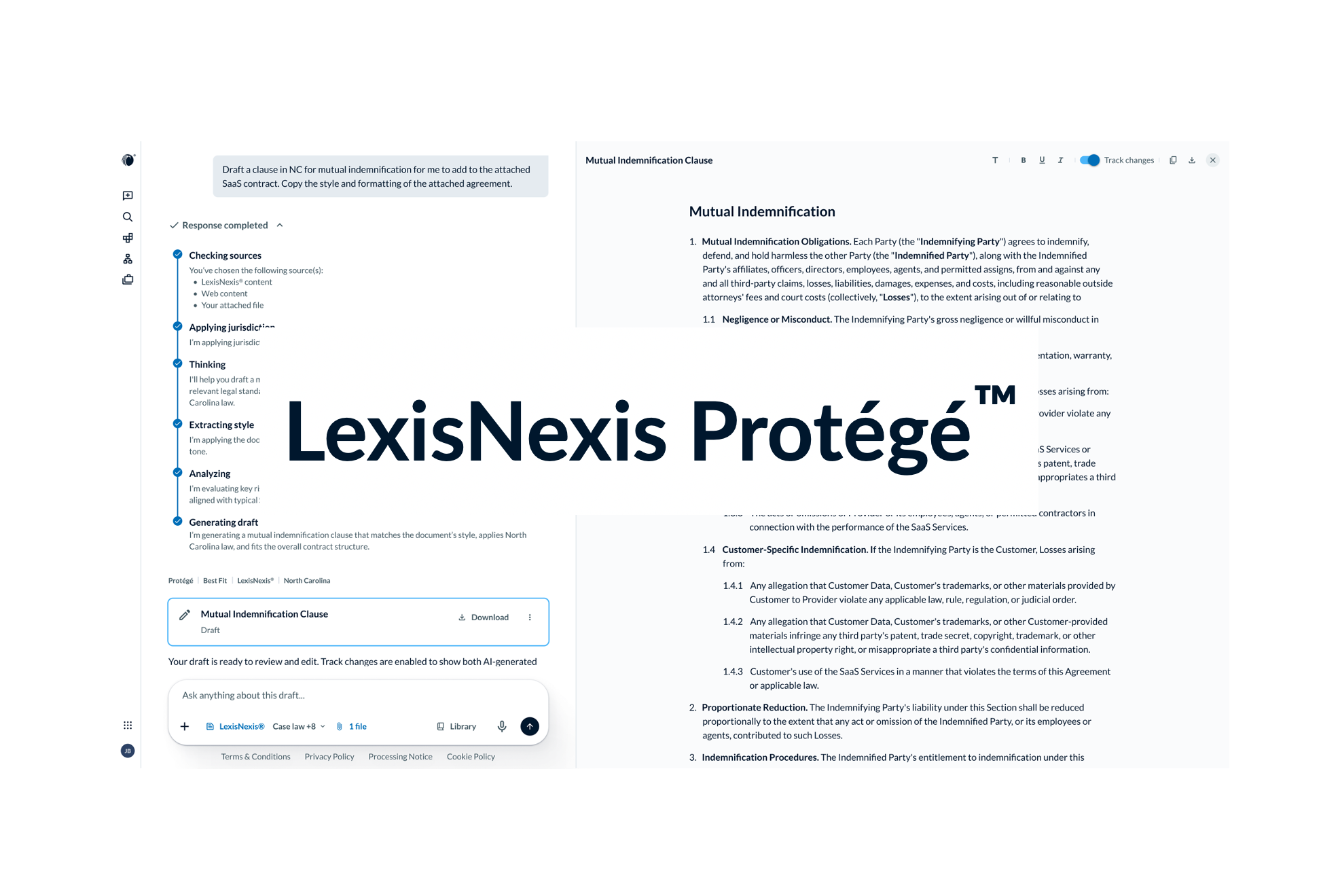
Forget the idea of just firing off a query and getting a single, plausible answer back. That’s so last year’s AI. Protégé Work operates on a different principle. You can either select a specific legal task—a “skill”—or articulate a broader legal objective in plain English. The system then intelligently navigates this request, routing it to the precisely correct skill or workflow within the LexisNexis ecosystem. This means it’s deeply woven into the fabric of the platform, not an add-on.
As they explained, the goal is to move beyond mere response generation:
‘Instead of generating a single response, Protégé presents a structured plan for the work, giving users visibility and control as it executes tasks and produces review-ready legal work product.’
This structured, plan-driven approach is key. It’s about building out the entire workflow, from initiation to a final, polished output. The “skills” they’re talking about aren’t just generic functions; they’re designed for repeatable, high-value tasks critical to legal practice: contract comparison, complaint analysis, research synthesis, the generation of checklists, due diligence, compliance reviews, and even playbook-based assessments. The promise here is clear: firms can codify and reuse proven methodologies, ensure consistency with established standards, and tap into market innovation, all while keeping the work firmly anchored to the authoritative content and established workflows LexisNexis is known for.
And here’s where it gets particularly interesting: LexisNexis has integrated its own proprietary skills alongside those powered by Anthropic. This suggests a hybrid model, blending their deep understanding of legal data with the raw power of cutting-edge large language models.
The “Infrastructure” Claim: What Does It Actually Mean?
The shift in language from “AI features” to “foundational infrastructure” is telling. It signals a move away from treating AI as a supplementary tool and towards viewing it as the underlying operating system for legal practice. This isn’t just about making existing processes faster; it’s about fundamentally changing how legal work is structured and executed. This new architecture is designed to interconnect their vast data reserves, specialized skills, and established workflows, creating a cohesive and intelligent environment.
Sean Fitzpatrick, CEO of LexisNexis Global Legal, hammered this point home:
‘Legal AI must do more than produce plausible answers. It must produce work that lawyers can verify, defend and trust. Lexis+ with Protégé brings together the content foundation, workflow intelligence, security and model flexibility legal professionals need to use AI at scale without compromising the standards of the profession.’
This isn’t just about speed; it’s about trust and verifiability, qualities paramount in the legal domain.
Beyond the Core: Expanding the Ecosystem
Protégé isn’t just about ‘Work.’ LexisNexis has also detailed several other expansions:
-
Protégé Agentic Drafting: This is the engine designed to churn out review-ready work product with remarkable speed. Critically, the outputs are designed to slot directly into existing legal workflows, generating drafts in Microsoft Word, structured findings in Excel, client-ready summaries in PowerPoint, and polished PDFs.
-
Protégé Workrooms: This feature extends AI collaboration into secure, permission-aware environments. Law firms and corporate legal departments can now work together on AI-assisted projects, sharing documents, drafts, and analyses only with authorized parties.
-
Shepard’s Verify Trust Markers: This integration brings the well-known citation authority of Shepard’s directly into AI-assisted work. It’s designed to scan AI-generated and human-drafted content for legal citations, cross-reference them against LexisNexis’s authoritative sources, and flag any that can’t be verified. This addresses a significant pain point in AI-generated legal text: the potential for fabricated or incorrect citations.
-
Reimagined Protégé Vault: For handling massive datasets in complex matters, the Vault supports up to 100,000 documents. It can ingest diverse file types—documents, spreadsheets, images, audio, and video—and provide analysis. Crucially, its outputs link directly back to the source material, enabling users to trace findings to exact passages, rows, or timestamps, facilitating verification and defense of work product.
-
Protégé BYOK (Bring Your Own Key): Addressing the heightened security concerns of enterprise and government clients, this feature allows customers to manage their own encryption keys through their chosen key management services, giving them granular control over sensitive data.
The Underlying Architecture: A New Framework?
What LexisNexis seems to be building isn’t just another AI feature set; it’s an integrated AI operating layer. The emphasis on “infrastructure” suggests a move toward a more distributed, skill-based AI architecture rather than a monolithic, general-purpose model. This approach allows for specialized AI agents (the “skills”) to handle specific legal tasks, drawing from curated LexisNexis data and executing predefined workflows.
This architectural shift has echoes of how operating systems evolved. Initially, applications ran in isolation. Then came frameworks and APIs that allowed for better integration and richer functionality. LexisNexis appears to be positioning Protégé as the legal equivalent of such a framework – a platform upon which more sophisticated and integrated legal AI applications can be built. The implications for how legal knowledge is accessed, processed, and generated could be profound, moving us closer to a genuinely intelligent legal assistant that understands context, workflow, and professional standards, rather than just pattern-matching text.
The legal AI arms race, it seems, has just entered a new phase.
**
🧬 Related Insights
- Read more: Temple Law Students Draw Line: No ICE Recruiters, No Campus Raids
- Read more: [USPTO Post-Alice Memo: Software Patents Safe]
Frequently Asked Questions**
What exactly is Protégé Work? Protégé Work is an integrated suite of AI-powered features within Lexis+ designed to assist legal professionals with repeatable tasks, workflow generation, and the production of review-ready legal documents.
How does Protégé Work differ from a standard AI chatbot? Unlike typical AI chatbots that provide single answers, Protégé Work presents a structured plan for tasks, allowing users to control execution and produce detailed legal work product. It’s designed as foundational infrastructure for legal AI, not just a conversational interface.
Is Protégé Work secure? LexisNexis emphasizes security with features like Protégé Workrooms for secure collaboration and Protégé BYOK for enterprise customers to manage their own encryption keys, addressing data control concerns.