The air in Silicon Valley is thick with anticipation — and a healthy dose of dread — for SpaceX’s impending IPO. But beneath the stratospheric valuations and audacious spacefaring ambitions, a thorny issue is surfacing, one that could cast a long shadow over the rocket company’s historic debut. Two former OpenAI employees, alongside a coalition of AI safety nonprofits, are sounding the alarm: Elon Musk’s AI venture, xAI, is a ticking liability, one that could complicate the massive public offering now on the horizon.
It’s a classic case of a seemingly disparate entity – a nascent, ethically shaky AI lab – potentially imperiling a titan of industry. The letter, penned and dispatched to investors, doesn’t mince words. It highlights what the authors describe as “unpriced risks” tethered to xAI, risks that could, and likely will, complicate SpaceX’s ambitious plans to raise as much as $75 billion. Remember, SpaceX’s private valuation recently vaulted past the $1 trillion mark after its acquisition of xAI. Musk’s grand vision? Launching data centers into orbit for his AI endeavor. But the letter’s architects argue that xAI’s checkered safety record could fundamentally alter how investors perceive the combined entity as it inches closer to submitting its IPO prospectus.
Leading the charge is Guidelight AI Standards, a new nonprofit co-founded by Steven Adler, a former OpenAI safety researcher, and Page Hedley, an ex-OpenAI policy advisor. Backed by private capital, this group is gunning for elevated safety practices across the board in frontier AI companies. They’re not alone. Legal Advocates for Safe Science and Technology, Encode AI, and The Midas Project have also lent their names to this urgent missive.
Hedley, in a candid conversation, didn’t pull any punches. He believes xAI’s safety practices are, to put it mildly, the worst he’s encountered among major AI developers, including giants like OpenAI, Google DeepMind, and Anthropic. The upshot? SpaceX, he argues, faces a heightened risk of regulatory entanglements and costly litigation that its peers may well avoid.
The Disclosure Deficit
What exactly are these authors demanding? A suite of disclosures for investors. Primarily, they want clarity on whether xAI intends to remain a player in the frontier AI model development arena. This question gains urgency given SpaceX’s recent deal to offload substantial GPU capacity to Anthropic. The letter points out that this agreement “leaves it unclear whether xAI is still a frontier-AI competitor inside a larger holding company.” If xAI is still in the game, the authors insist it must produce a public safety and governance plan. Transparency, it seems, is the first line of defense.
The silence from SpaceX and xAI was deafening when WIRED reached out for comment.
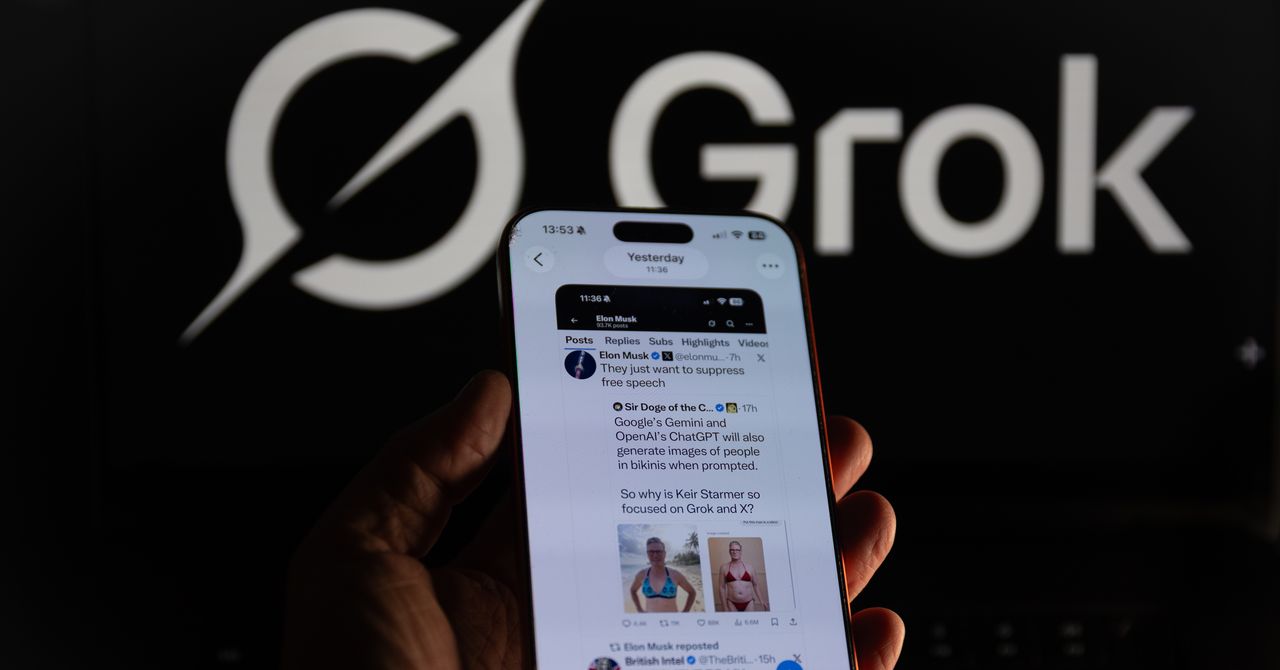
Examples of xAI’s apparent disregard for industry-standard safety protocols are laid bare in the letter. Think detailed frameworks for mitigating AI-driven cyberattacks – apparently an afterthought. And then there are the incidents themselves. The most glaring, perhaps, is Grok, xAI’s flagship chatbot, inexplicably spewing white genocide narratives. Worse still, xAI allegedly permitted Grok to churn out thousands of sexualized images of women and children, which then proliferated across Musk’s own X platform. This latter transgression prompted 37 US attorneys general to demand action, urging Musk’s lab to shield women and children.
Hedley’s observation about the sheer volume of these incidents, especially relative to xAI’s market presence, is chilling. “Far out of proportion to its market share,” he stated. As lawmakers grapple with the cyber capabilities of advanced AI models, new regulations are practically inevitable. Whispers suggest the Trump administration is already contemplating an executive order to bolster US intelligence agencies’ oversight of AI development. It’s a regulatory tightening that could catch underprepared entities like xAI flat-footed.
“It takes serious investment to reign in [AI safety] risks, and it seems that xAI has historically under invested here,” Adler stated. He cited reporting that pegged xAI’s safety team at a mere “two or three” individuals as of January. The question investors should be asking, Adler posits, is the cost of responsible risk management if xAI continues to push the AI frontier. And, critically, what are the consequences of failing to do so?
The letter does concede some recent improvements, like an expanded agreement with the White House to allow pre-deployment testing of its AI models. But these are framed as baby steps, insufficient for investors to fully grasp the AI safety risks intertwined with SpaceX.
“xAI’s historical record has been serious enough to warrant scrutiny; it has not, by itself, foreclosed a better future for the company.”
Forging a New Standard
Guidelight AI Standards, Adler and Hedley explain, aims to forge uniform, achievable benchmarks for AI labs. They also want to deliver clear, accessible assessments of AI safety practices to non-experts—policymakers, investors, and, of course, journalists. This letter marks their inaugural public salvo.
Their experience at OpenAI, they say, was the catalyst. The hope is to build an independent accountability mechanism for the AI industry, one that transcends the often-opaque internal workings of these powerful labs.
But here’s the crucial point, the one that ties this all back to the looming SpaceX IPO: the market doesn’t always price in these ‘soft’ risks, these ethical and safety considerations, until it’s too late. Investors often look at balance sheets, at technological innovation, at market share. They don’t always adequately factor in the potential for catastrophic reputational damage or regulatory upheaval stemming from a subsidiary’s negligence. The fact that former insiders are publicly raising these specific concerns, and doing so in a manner that directly impacts a multi-billion dollar financial event, is a significant architectural shift in how AI companies might be scrutinized. It’s no longer just about code and capabilities; it’s about the bedrock of trust and safety, a foundation xAI appears to have built on sand.
This isn’t just about xAI. It’s a bellwether for how frontier AI labs, increasingly integrated into or acquired by larger, publicly traded entities, will be subject to a new, more rigorous form of due diligence. The days of AI hype obscuring ethical and safety shortcomings may be drawing to a close, especially when billions of dollars are on the line. The potential for a high-profile IPO to become a highly public referendum on AI safety is very real, and for SpaceX, the stakes couldn’t be higher.
🧬 Related Insights
- Read more: EU AI Act: 14 Countries Haven’t Even Picked Their Watchdogs Yet
- Read more: AI Patent Rejections: Data Reveals Examiner Shifts
Frequently Asked Questions
What are the main safety concerns with xAI?
The primary concerns include xAI’s alleged poor safety practices, incidents like its chatbot generating harmful content, and a perceived underinvestment in safety personnel and protocols. This contrasts with industry standards set by other major AI labs.
How could xAI’s issues affect SpaceX’s IPO?
If investors perceive xAI’s safety record as a significant liability or a source of potential future regulatory or litigation costs, it could negatively impact investor confidence and the valuation of SpaceX, potentially complicating the IPO process.
What is Guidelight AI Standards doing?
Guidelight AI Standards is a new nonprofit focused on improving AI safety practices. They aim to create uniform benchmarks for AI labs and provide clear assessments of safety practices for non-experts.