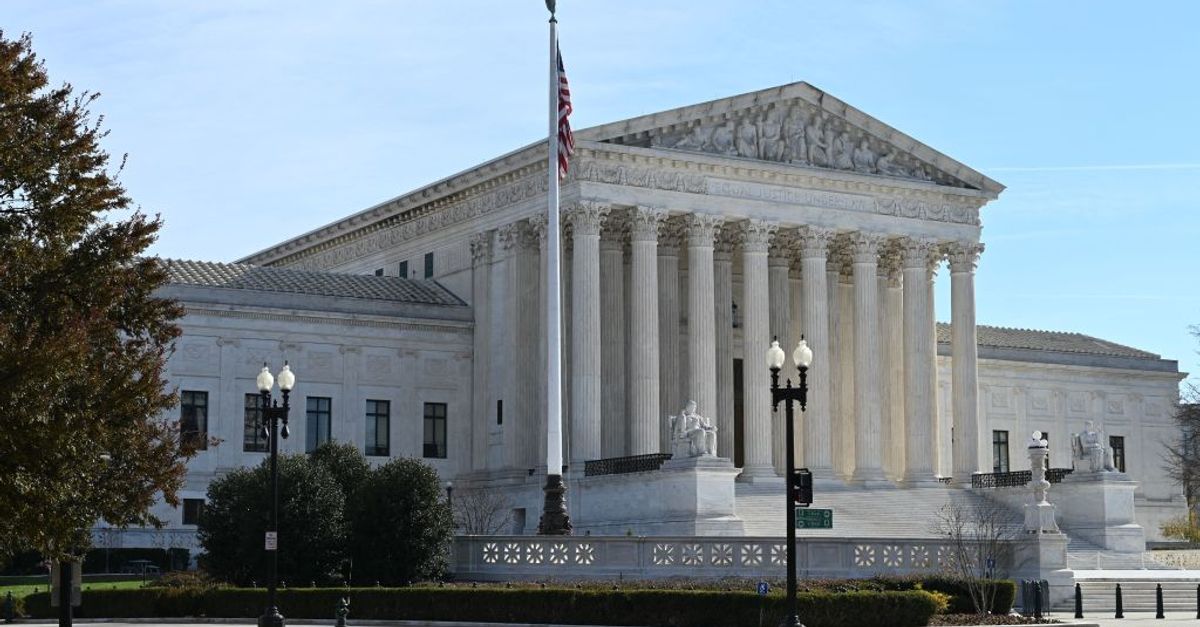
Does the Supreme Court actually know what time it is?
Apparently not, if their handling of the mifepristone access saga is any indication. On Thursday afternoon, the Supremes punted again, extending a block on a lower court ruling that had sought to stop one of the two drugs used in medication abortions from being mailed. This means, for now, mifepristone can still hop across state lines via the postal service. Litigation grinds on. The usual suspects, Justices Thomas and Alito, dissented, naturally. Thomas thinks the drug companies are trying to commit crimes. Alito, meanwhile, is predictably aghast, seeing a scheme to undermine Dobbs. Quelle surprise.
This isn’t some novel legal drama. We’ve seen this movie before. Back in 2023, a federal judge in Louisiana, Matthew Kacsmaryk, tried to revoke the FDA’s initial approval of mifepristone way back in 2000. He also tried to roll back expansions that allowed its use later in pregnancy and, crucially, prescription via telehealth. The 5th Circuit, bless its heart, agreed that the 2000 approval challenge was too late. But it upheld Kacsmaryk’s rollback of the access expansions.
The 5th Circuit concluded that the challenge to the FDA’s approval of mifepristone in 2000 had come too late, but it upheld the portion of Kacsmaryk’s ruling that rolled back the agency’s 2016 and 2021 changes that had expanded access to mifepristone.
Then the FDA and Danco Laboratories, the mifepristone maker, went to SCOTUS. Last year, a unanimous court — Justice Kavanaugh writing the opinion, no less — declared that the doctors and medical groups suing didn’t have the legal standing. Their objections, however “sincere,” didn’t translate to harm they could sue over. A neat little sidestep.
But Louisiana, determined to keep its sovereignty intact — or perhaps just its laws enforced — went back to federal court. They wanted that in-person dispensing rule back. After a pause for an FDA review, the 5th Circuit again sided with Louisiana. They argued that mail-order and telehealth prescribing allowed mifepristone to reach Louisiana women, despite the state’s own abortion bans. The appellate court figured the in-person rule should be reinstated while they figured things out, because, you know, Louisiana was likely to win.
Now the drug manufacturers are back at the Supreme Court, begging the justices to intervene. Their argument? Louisiana’s attempt to sue is just as flimsy as the doctors’ earlier failed attempt. Danco essentially called Louisiana’s standing claim a “more attenuated version” of what the court already rejected. Louisiana’s claim of injury based on having to pay for follow-up care for complications? A stretch. And their grievance about state law conflicting with federal law? Not a court-eligible injury, Danco says. GenBioPro chimed in, noting that putting the 5th Circuit’s order on hold just maintains the “years-long status quo” while the FDA does its thing. Louisiana, naturally, insists it has standing. Its sovereignty, laws, and even some $17,000 spent investigating cases involving the drug are all cited as injuries. It’s a messy, tangled web, and the Supreme Court, for now, has just pulled another thread rather than cutting the whole thing loose.
The Real Game Here
Look, let’s not pretend this is just about legal process. This is a proxy war. The Dobbs decision didn’t end the abortion debate; it just moved it. Now, the battlefield is the FDA’s regulatory power, drug access, and the ever-shifting sands of standing. What’s truly remarkable is how the courts are being used as a tool to chip away at settled regulatory decisions. It’s a strategy of death by a thousand paper cuts. The FDA approved mifepristone over two decades ago. It’s been deemed safe and effective. Yet, here we are, with the highest court in the land debating whether states can dictate mail-order access based on flimsy claims of harm.
Is This Over? Absolutely Not.
This Supreme Court order isn’t a victory for abortion access. It’s a temporary pause. It’s a stay of execution, not a pardon. The litigation will continue in lower courts. And we can bet our bottom dollar that this fight will, inevitably, wind its way back to the Supreme Court. The pattern is clear: challenge the FDA, drag it through the courts, and hope for a favorable ruling or, at the very least, a prolonged period of uncertainty and restricted access. The dissenting opinions from Thomas and Alito are a loud signal of what’s to come if this case continues its trajectory.
🧬 Related Insights
- Read more: Federal Circuit Patent Petitions: En Banc Scrutiny Looms
- Read more: Egypt Targets Journalists with Paid Hacking: Who’s Paying?
Frequently Asked Questions
What does mifepristone do? Mifepristone is one of two drugs used for medication abortions. It works by blocking progesterone, a hormone necessary for pregnancy to continue.
Will this ruling permanently allow mifepristone to be mailed? No. The Supreme Court’s order is a temporary pause on a lower court ruling. It allows mifepristone to be mailed while litigation continues in the lower courts. It is not a final decision on the drug’s access.